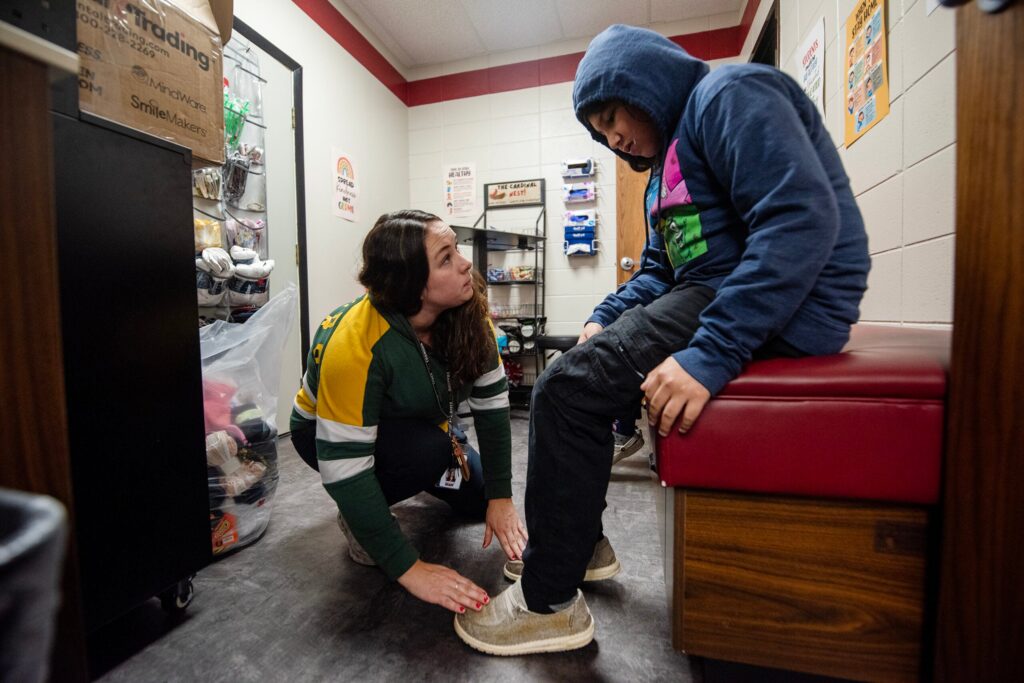
As Wisconsin students return to classrooms, the pivotal role of school nurses in ensuring their well-being comes into sharp focus. These healthcare professionals are key to managing a variety of student health needs, from chronic conditions to public health initiatives.
Nurses are not only tasked with handling conditions like asthma and seizures but also engage with families on vaccination updates. According to an episode of WPR’s “Wisconsin Today,” two nurses shed light on the challenges and priorities for the new school year.
Staffing Challenges for Wisconsin School Nurses
Like many states, Wisconsin faces a critical shortage of school nurses due to significant budget cuts. The absence of state-mandated nurse-to-student ratios makes these positions particularly susceptible to reductions, as reported by the National Association of School Nurses.
Shannon Jones, a school nurse and president of the Wisconsin Association of School Nurses, remarked, “If you were going to dream a big, beautiful dream, it would be one school nurse to each school. That is not necessarily the reality that we face in Wisconsin.”
Many nurses serve multiple schools, responding only to urgent situations due to the high demand for their time. “Typically, that nurse is only going to respond to situations that are significant, elevated and require immediate attention,” Jones explained.
To address staffing challenges, increased access to Medicaid funding could be beneficial. Currently, only 60% of federal Medicaid reimbursements are returned to schools, with the remainder going to the state. Efforts are underway by the Wisconsin Association of School Nurses to advocate for legislative changes to retain more funding at the school level.
Vaccination Conversations with Parents
In light of declining vaccination rates, Wisconsin school nurses are preparing to tackle potential measles outbreaks. The state’s kindergarteners are among those with the lowest measles vaccination rates in the country.
Nurses like Tashanda Edelen, who manages health services at Milwaukee Public Schools, emphasize the importance of trust when discussing vaccinations with parents. She stated, “I try to be very transparent in the information that I’m providing families, so they don’t feel like we are trying to provide them misinformation or sway them one way or another.”
Jones added that connecting families to primary care providers can reinforce vaccination messages, enhancing the overall healthcare support for students.
Impact of SNAP Changes on Student Nutrition
School nurses are also focused on ensuring students have access to nutritious meals, a key factor in their ability to learn effectively. Recent federal changes, enacted through the One Big, Beautiful Bill Act, have resulted in over 24,000 Wisconsinites losing food aid.
This reduction in assistance could lead to decreased access to nutrition for students outside of school hours. Edelen mentioned that when school nurses identify children lacking adequate nutrition, they work to connect families with food resources and services to optimize their SNAP benefits, often collaborating with school social workers.
Moreover, Milwaukee Public Schools utilize the Community Eligibility Provision program to provide free meals to all students in high-poverty settings, though reduced SNAP enrollment could jeopardize future eligibility. The Marinette School District, meanwhile, has lost a nutrition educator role due to funding cuts, affecting nutrition education for young students.
Jones lamented the loss of such support: “It’s unfortunate to see some of that funding go away, knowing the impact that it’ll have long term on children’s health.”