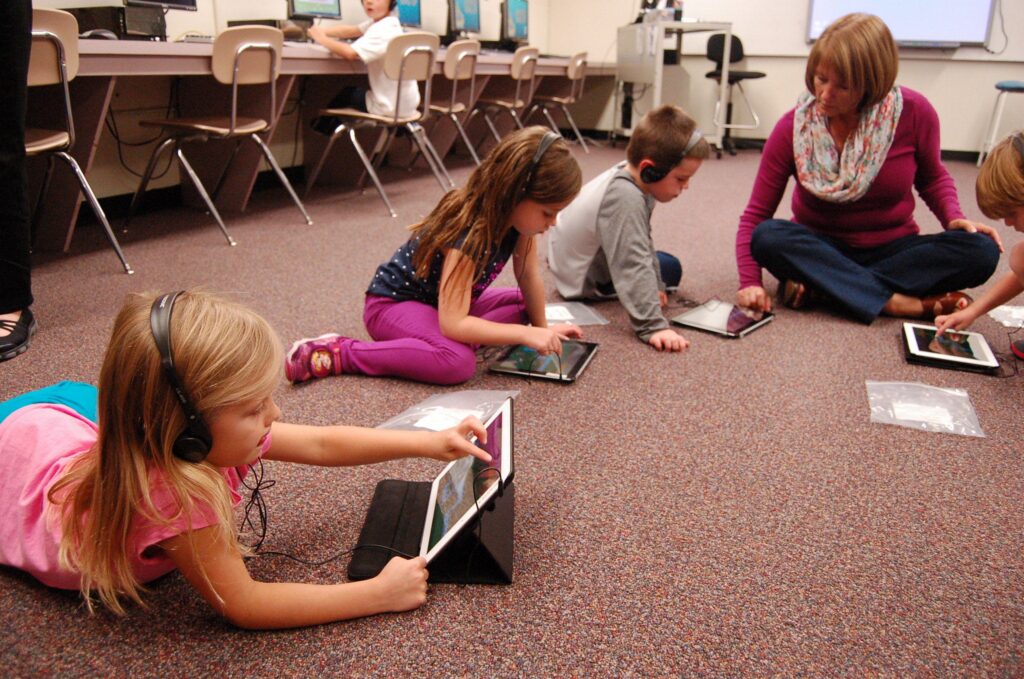
As debates over technology’s role in education continue, a new legislative proposal in Wisconsin aims to create screen-free classrooms for the state’s youngest learners. State Representative David Steffen, a Republican from Howard, is spearheading the initiative, which seeks to eliminate screens in classrooms through second grade.
Legislative Proposal for Screen-Free Classrooms
Rep. David Steffen argues that the youngest students have more to lose than gain from screen exposure. He believes that a focus on traditional learning tools like paper and pencils could better support early childhood education. “My hope is that we can provide a better environment for learning for our students across the state,” Steffen stated. “And one of the ways the research has shown, and teachers and parents have asked for, is to eliminate laptops and tablets for our youngest learners.”
The proposal aligns with the American Federation of Teachers’ “Devices Down, Eyes Up, Hands-on” initiative and will be introduced in the 2027-28 legislative session. The bill would enforce screen-free policies from pre-kindergarten through second grade, allowing exceptions for standardized assessments, computer science education, and special needs support.
Growing Trend of Screen Time Regulation
Wisconsin is not alone in these efforts. The state’s initiative follows recent legislation in Utah and Alabama, which have passed similar measures. Iowa has also limited digital instruction to 60 minutes per day for kindergarten through fifth grade, while Tennessee requires schools to develop age-appropriate device policies. Across the nation, large districts like New York and Los Angeles have imposed their own screen time restrictions.
In Madison, Wisconsin, parent groups are actively advocating for reduced screen usage in schools, prompting the Madison Metropolitan School District to review its digital policies. However, the district emphasizes that “eliminating computers and technology entirely isn’t the right answer.”
Challenges and Support for the Initiative
While the proposal garners some support, challenges remain, particularly regarding the practicality of a complete screen ban. Sauk Prairie’s Superintendent Jeff Wright recognizes the difficulties, stating that while individual device usage can be limited, removing shared screens from classrooms is more challenging. “We want to make sure that screen use is deliberate and never the default,” Wright explained.
Steffen acknowledges the role of technology in modern education but maintains that young children benefit more from traditional learning methods. “Returning our classrooms from pre-K through second grade back to paper, pencil, actual books with actual pages is the best solution to advance education for those youngest learners,” he said.