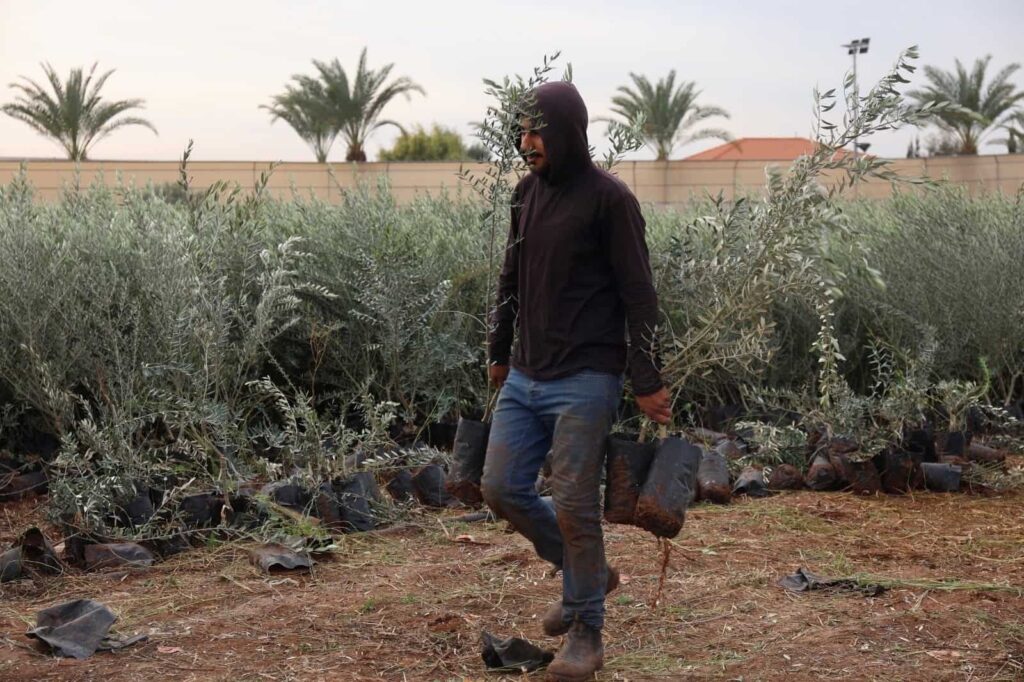
A revitalizing movement is sweeping across rural Palestine, giving hope to olive farmers by replanting olive saplings, which have long been integral to their livelihoods and identities. This initiative is being supported by tens of thousands of customers of Zaytoun, a fair trade company based in the UK.
For centuries, olive farming has been the backbone of rural Palestine’s economy. However, in recent times, olive trees have become a symbol of resistance. Since 1967, approximately 1 million trees have been uprooted due to land seizure in the conflict-ridden West Bank by Israeli authorities and settlers. This systematic act, aimed at destroying a way of life, has forced an estimated 25,000 Palestinian families out of olive farming, says Taysir Arbasim, Zaytoun’s Palestinian director.
Since 2006, the Palestine Fair Trade Association – Palestine’s largest fair trade union – has been striving to restore the livelihoods and landscape of Palestinian farmers through their ‘Trees for Life’ program. This initiative replaces lost olive, carob, fig and almond groves, supplying landrace seeds and promoting regenerative farming techniques such as intercropping with fava beans, peas, and clover, which enriches soil health and improves future olive harvests.
The Trees for Life program also nurtures olive saplings in nurseries until they are two or three years old, after which they are distributed to farmers. These trees begin bearing fruit after about five more years and reach maturity at around 15 years. Since 2011, Zaytoun has sponsored over 300,000 trees, with donations for the 2025-2026 planting season reaching over £190,000, enough to fund 40,000 saplings.
Local laws theoretically protect cultivated land from confiscation by Israeli authorities. As stated by a PFTA spokesperson, agriculture is more than just a livelihood for Palestinians, it is deeply intertwined with their history, identity, and resistance. Through cultivation, Palestinians assert their rights to reclaim their lands, sustain their communities, and fight for their freedom.
Despite the long wait for the saplings to mature, the act of planting brings an immediate sense of upliftment and optimism to farmers, says Arbasim. “You can see the happiness in their eyes. Olive trees are considered part of the family, so it’s like getting a new family member. We have a saying: they planted for us to eat, and we will plant for them to eat. We are planting for the next generation. We are planting for hope.”