UNC-Chapel Hill Faculty Challenges School of Civic Life and Leadership
UNC-Chapel Hill’s School of Civic Life and Leadership (SCiLL) has stirred considerable debate among faculty, leading to the adoption of two resolutions expressing concerns. The program, which aims to foster interdisciplinary learning through civics-based education, has faced scrutiny since its inception.
SCiLL became a focal point of controversy when the university’s Board of Trustees expedited its creation in 2023, a move intended to address the perceived absence of “right of center views” on campus, according to former Board Chair David Boliek. Boliek described it as “a space for free speech, a culture of civil and open inquiry” during a January 2023 BOT meeting.
The state legislature later mandated the establishment of SCiLL, allocating substantial public funding for the initiative. Critics argue that the school’s creation bypassed customary faculty-led processes, fueling ongoing controversies surrounding its curriculum and governance.
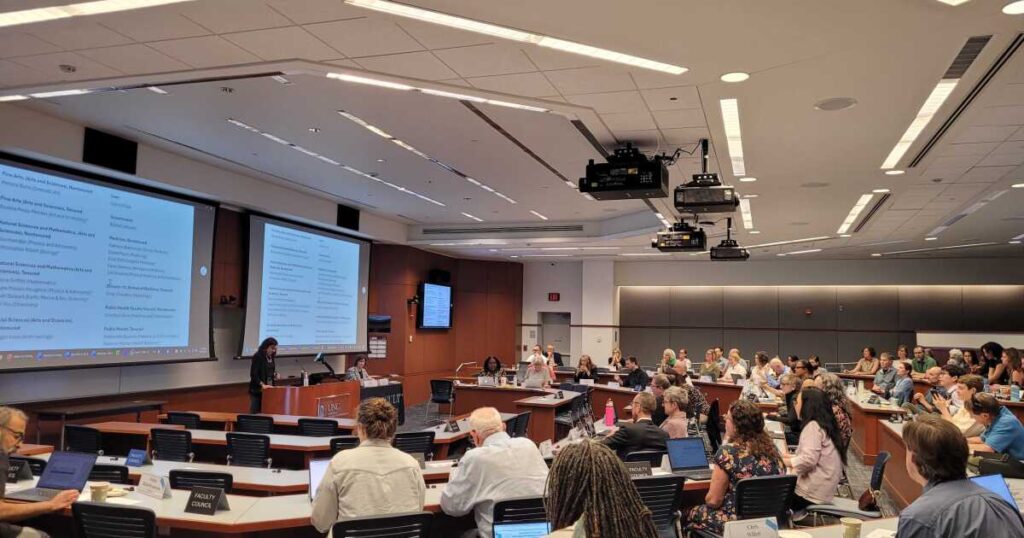
A recent faculty resolution calls for the release of a $1.2 million report on SCiLL, which remains confidential due to legal concerns, including attorney-client privilege. Maxine Eichner, a law professor who helped draft the resolution, highlighted issues of academic rigor, referencing a class assignment that involved students planning a date and marriage, which she deemed inappropriate for tenure-track faculty.
Protests by student groups and faculty have underscored demands for transparency from the university administration. Chancellor Lee Roberts and university lawyers maintain that the report cannot be disclosed, citing privacy and legal constraints. However, Eichner pointed to a precedent set by the release of a 2014 sports scandal report, suggesting similar action could be taken with SCiLL.
While the resolution on the report’s release saw divided support among faculty, a second resolution concerning university processes received unanimous backing. This measure seeks clarity on the protocols for establishing new schools, emphasizing the need for faculty involvement in governance.
This development coincides with broader efforts by the UNC System to promote civil discourse across its universities. System President Peter Hans announced initiatives like the “UNC Common Ground Collaborative,” aiming to enhance civic engagement through debate training and grants for course development. At UNC-Chapel Hill, plans include a high school summer civics institute, bolstered by a $10 million National Endowment of the Humanities grant.
Chancellor Roberts has reiterated SCiLL’s mission to enhance civic knowledge and leadership, promising continued evolution and improvement of the program. For further coverage on higher education in North Carolina, WUNC collaborates with Open Campus and NC Local.