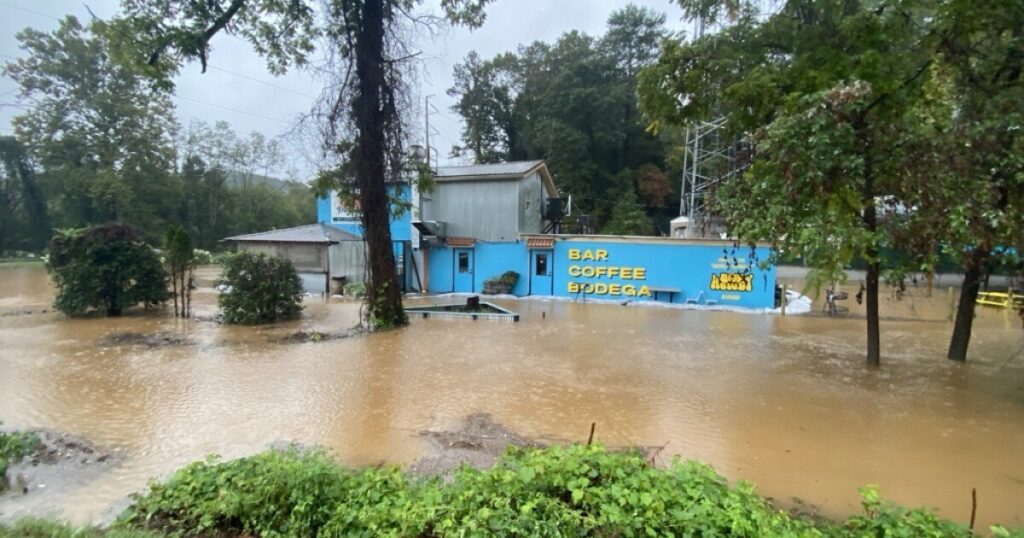
The aftermath of Tropical Storm Helene in 2024 left the French Broad River tainted with a hazardous mix of debris and pollutants. As the storm, which originated from Florida’s Gulf Coast, carved through the North Carolina mountains, it unleashed a torrent of raw sewage, pharmaceuticals, and other contaminants into the river. This led Shea Tuberty, a biology professor at Appalachian State University, to assess the environmental damage.
Tuberty, often referred to as “the water guy,” was prompted to take action by concerned friends in Tennessee. These friends, residing near the North Carolina border, were wary of official reports on the incident’s aftermath in Hot Springs, N.C., and sought reliable insights into the river’s contamination.
“I’ve got PTSD from back in my 20s, when I lost my sister to a Middle Tennessee flood on Christmas Eve,” Tuberty shared, highlighting his personal connection to such disasters. His friends’ concerns about sediment and water safety compelled him to collect samples from the river.
Seeking Expertise
Realizing the complexity of analyzing the collected samples, Tuberty reached out for expertise. At the North Carolina Society of Toxicology meeting, he connected with Imari Walker-Franklin, a research scientist at Research Triangle International. Walker-Franklin and her team employed high-resolution mass spectrometry to identify contaminants in the water.
Walker-Franklin explained that the technique allows for the detection of thousands of contaminants at minimal concentrations, including those not initially targeted. The testing focused on five locations along the river from Asheville, NC, to Knoxville, TN, approximately 15 days post-storm.
Toxic Findings
The study’s results, published in the journal Toxics, painted a grim picture of the river’s condition. The storm runoff had created a “toxic chemical soup,” according to Tuberty, encompassing everything from household chemicals to industrial waste.
The analysis identified a range of contaminants, including 11 types of PFAS, such as PFOA and PFOS, at levels surpassing the Environmental Protection Agency’s safety threshold. These “forever chemicals” are known for their persistence in the environment and potential health risks, including cancer and developmental harm.
Additional EPA “priority” contaminants detected included 4-nitrophenol and 2,4,6-trichlorophenol. The suspected source of these pollutants was a wastewater ramp near Site 4B, downstream from Asheville.
Long-Term Implications
One year after the storm, the water quality in the French Broad River has shown signs of recovery. Walker-Franklin noted that many contaminants have either settled or transformed over time. “I don’t think the water that we see today is probably what we saw post-storm,” she remarked.
French Broad Riverkeeper Anna Alsobrook corroborated this, stating that current water conditions are akin to those before the storm. However, she emphasized the importance of ongoing vigilance, especially after significant weather events.
Walker-Franklin suggested that the study underscores the need for heightened awareness and preparedness rather than alarm. Meanwhile, Tuberty called for regulatory measures to prevent similar incidents, advocating for buffer zones around rivers to minimize risk.
“There should be guidance created from either the state of North Carolina or EPA calling for a buffer between you and that river — not just distance, but also elevation,” Tuberty urged, stressing the importance of strategic planning to protect communities and ecosystems alike.
North Carolina Health News is an independent, non-partisan, not-for-profit, statewide news organization dedicated to covering all things health care in North Carolina. Visit NCHN at northcarolinahealthnews.org.