
Teen’s Gender Journey Halted by New Federal Directives
Alex, a self-assured 17-year-old who joyfully embraces his identity, likens his build to that of a “young Danny DeVito.” However, his journey as a transgender individual has been unexpectedly thrust into the political spotlight, as shared in an interview with WPR, which has chosen to use only first names to protect Alex and his family’s privacy.
“Why are we telling trans and queer people where we can and can’t go, and what we can and can’t do?” Alex questions, reflecting the broader debate on transgender rights.
In a significant policy change, former President Donald Trump issued an executive order in December, restricting hospitals from offering “sex-rejecting” services to minors under 18. This measure, backed by the U.S. Department of Health and Human Services, cites potential irreversible effects such as infertility and diminished bone density from early medical interventions.
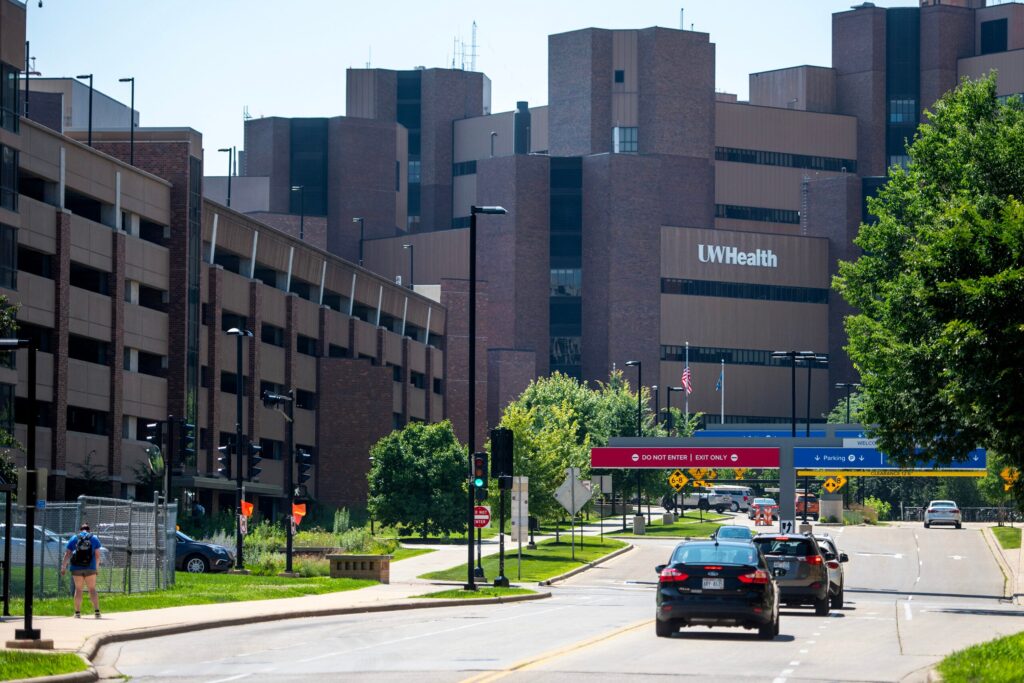
Consequently, healthcare providers like UW Health and Children’s Wisconsin have suspended their gender-affirming treatments for minors. Non-compliance with federal mandates could result in losing crucial Medicare and Medicaid funding.
Alex, a patient at UW Health’s Pediatric and Adolescent Transgender Health clinic, has experienced what he describes as “gender euphoria” from transitioning. However, the new restrictions have paused his access to necessary care.
“There’s nothing I can do at the moment — I’m still under 18,” Alex laments. His transition, supported by his parents Luke and Meghan, began with hormone therapy during high school.
The abrupt halt in care was challenging for the family. Meghan recounts, “My husband read about it on Reddit first that UW Health was pausing care,” and they confirmed the news during a scheduled check-up with Alex’s doctor.
To mitigate the impact, Alex’s physician adjusted his testosterone prescription, allowing him to ration doses until he reaches adulthood in July.
Before hormone therapy, Alex struggled with anxiety and gender dysphoria, leading to a hospitalization for suicidal thoughts—a distressing but not uncommon experience for transgender youth, as noted by The Trevor Project.
Meghan recalls a particularly painful moment in the hospital with Alex. “We’re in a room that has everything removed that someone could hurt themselves with,” she describes. However, Alex’s demeanor changed positively post-testosterone therapy, even allowing him to discontinue anxiety medication.
Anti-trans Legislation in Wisconsin
Wisconsin is currently considering more than 20 anti-trans bills, as tracked by Fair Wisconsin. Recently, the state Senate, led by Republicans, approved measures restricting gender transition surgeries for minors and regulating sports team participation for transgender students.
Luke, Alex’s father, points to misunderstandings about transgender rights, highlighting that some bills could force students to disclose their gender identity to parents prematurely. For Alex, this would have meant revealing his name change before he was prepared.
With the upcoming elections, Alex’s parents are closely monitoring the governor’s race. Meghan notes, “Gov. Tony Evers has been the one to veto the bills any time they pass. If we lose an ally — that’s going to be really hard.”
Luke hopes to dispel misconceptions about youth gender-affirming care, emphasizing the lengthy and comprehensive process involved, including years of psychological counseling and therapy.
“I think we all want our kids to be happy. We want them to be safe,” Luke asserts, underscoring the universal parental desire for their children’s well-being.



