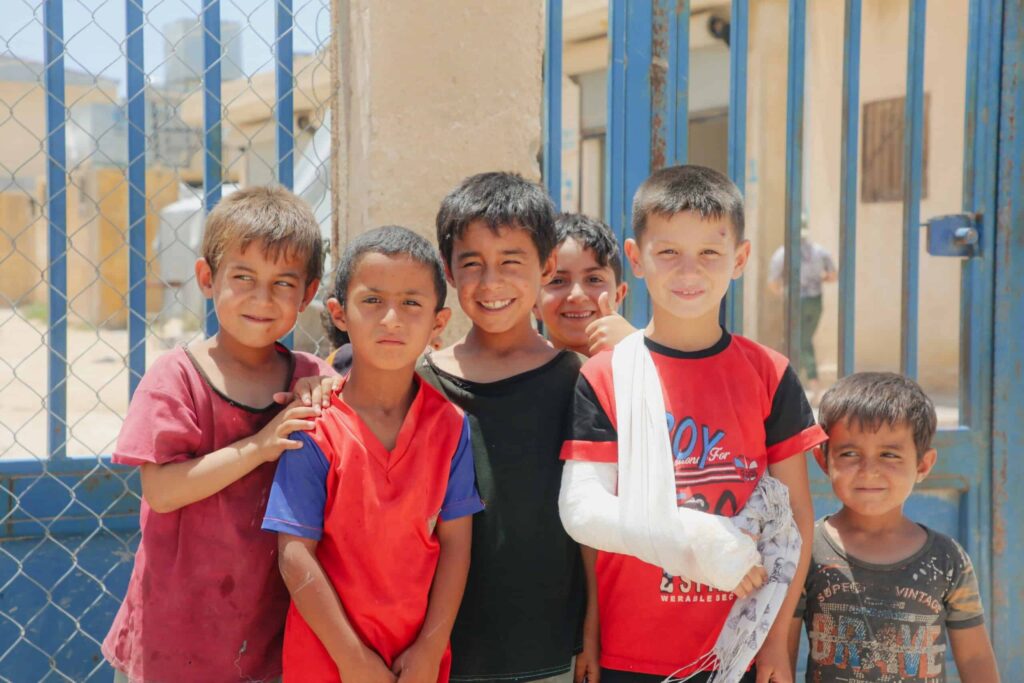
In the face of widespread devastation, local citizens in Talbisseh, Syria, have taken the initiative to rebuild their war-torn schools, advocating for a safe and dignified learning environment for their children.
Talbisseh, part of the Central Homs countryside, has seen approximately a quarter of its schools destroyed during the years of conflict. Rather than waiting for external aid for the reconstruction of these educational institutions, the locals have decided to take matters into their own hands. The citizens’ self-sufficiency in rebuilding their schools is changing the conventional approach to post-war recovery.
The schools’ damages are substantial and evident, impeding the students’ learning process and experiences. For instance, Salim, a fifth-grader, resorts to a seatless metal chair frame for his studies, while bathrooms, windows, doors, desks and blackboards are either damaged or missing. The city, which previously boasted 24 schools, currently operates only 18. The situation is similar throughout Syria, with over 6,000 schools needing restoration, and less than 800 having been rehabilitated so far.
The catalyst for this local-led reconstruction movement was Mustafa al-Daher, a blacksmith and father of five, who expressed concern over the compromised education of his teenage sons due to these conditions. His proposal to the community: why not fix the schools ourselves? Aided by Nidal Al-Okaidi, an activist who initiated a campaign to document the state of the schools via social media, a volunteer network of carpenters, metalworkers, and laborers promptly responded to call.
Among these volunteers was Ahmed Issa Al-Juma’a, a returning local of Talbisseh who offered his carpentry skills, despite his son not being school-aged yet. Mustafa al-Daher lent his prowess in metalwork, fabricating bathroom fixtures, installing security grilles on windows and mending destroyed school doors. Abdul Monim Al-Moayni, a workshop owner, contributed his services, driven by his deep-rooted desire to serve his country.
Initiated at the start of the school year, the campaign has successfully supported 13 schools and raised over £75,000. In acknowledgment of the initiative’s impact, Syria’s education ministry has supplied 380 desks. Classrooms are being equipped with blackboards, bathrooms are regaining functionality, windows are being installed, and students are transitioning from bare metal frames to proper chairs.
Despite the daunting task ahead, with thousands of schools across Syria still awaiting restoration, the residents of Talbisseh are demonstrating that change does not necessarily need to wait for external aid. By showing up, believing in the value of education, and investing their time, skills and efforts, they are driving the transformation of a city marked by destruction. In doing so, they’re redefining the concept of reconstruction, making it a community-led, hands-on endeavor.