As the nation grapples with the implications of a federal government shutdown, many Americans are left wondering how they will make ends meet. Danielle Rodriguez, a hardworking single mother from Throop, is among millions facing uncertainty due to the pause in Supplemental Nutrition Assistance Program (SNAP) benefits this November.
Rodriguez, who juggles a customer service job and a role on the advisory board at the United Neighborhood Centers of Northeastern Pennsylvania, relies heavily on her $400 monthly SNAP benefits to feed her two children. “It hurts me to know people belittle people that get the SNAP benefits,” she expressed. “A lot of us are working people, but things just cost so much that we’re just trying to get by.”
With the SNAP benefits on hold, Rodriguez finds herself in a difficult position, negotiating with her landlord and weighing financial sacrifices just to ensure her children, aged nine and 14 months, do not go hungry. Her oldest child has already begun questioning if they will have enough to eat. “My oldest is very aware. She’s nine, and she asked me, ‘Mommy, are we gonna go hungry?’ And I said, ‘No.’ And you know, it breaks my heart,” Rodriguez shared.
SNAP Benefits on Hold Nationwide
The U.S. Department of Agriculture’s announcement earlier this month confirmed that November’s SNAP funding would not be possible due to the ongoing government shutdown. This halt affects more than 2 million Pennsylvanians, leaving many without crucial support.
In Pennsylvania, congressional districts represented by U.S. Rep. Rob Bresnahan and U.S. Rep. Dan Meuser are particularly affected, with 140,000 and 115,000 SNAP recipients, respectively, as reported by the state’s Department of Human Services. The shutdown stems from disagreements over the expiration of Affordable Care Act enhanced premium tax credits, which could lead to insurance premium hikes of up to 38% for Pennsylvanians if not extended.
Rodriguez’s caseworker informed her that the benefits are “on hold,” with no back pay expected. “We are not going to be getting back paid, and if anything, they will kind of prorate the amount that we’re gonna get,” Rodriguez explained. Her SNAP benefits app indicates a potential December 1 resumption.
Pennsylvania’s Officials Respond
Governor Josh Shapiro has taken legal action against the Trump administration, challenging the decision to pause SNAP payments. “For the first time since the program began in 1964, SNAP payments have been halted across the country because the Trump Administration has decided to use critical food assistance as a political bargaining chip,” Shapiro said. He emphasized the availability of contingency funds that could be used to maintain SNAP funding.
The lawsuit aims to contest the USDA’s choice not to utilize a $6 million contingency fund to sustain SNAP throughout the shutdown, a move supported by several Democratic state attorneys general and governors.
Meanwhile, U.S. Rep. Dan Meuser criticized the Democrats for the gridlock, urging them to pass the continuing resolution to restore SNAP funding. “Democrats can either continue holding out for unrelated priorities or reopen the government so America’s most vulnerable populations can receive critical nutrition assistance,” Meuser declared.
U.S. Rep. Rob Bresnahan also urged for government reopening, stressing the impact on the 58,000 households in his district reliant on SNAP. “This shutdown is not about politics or polling numbers. It is about the impacts on real people in NEPA,” Bresnahan stated, calling for bipartisan cooperation to resolve the impasse.
Impact on Food Pantries and Community Support
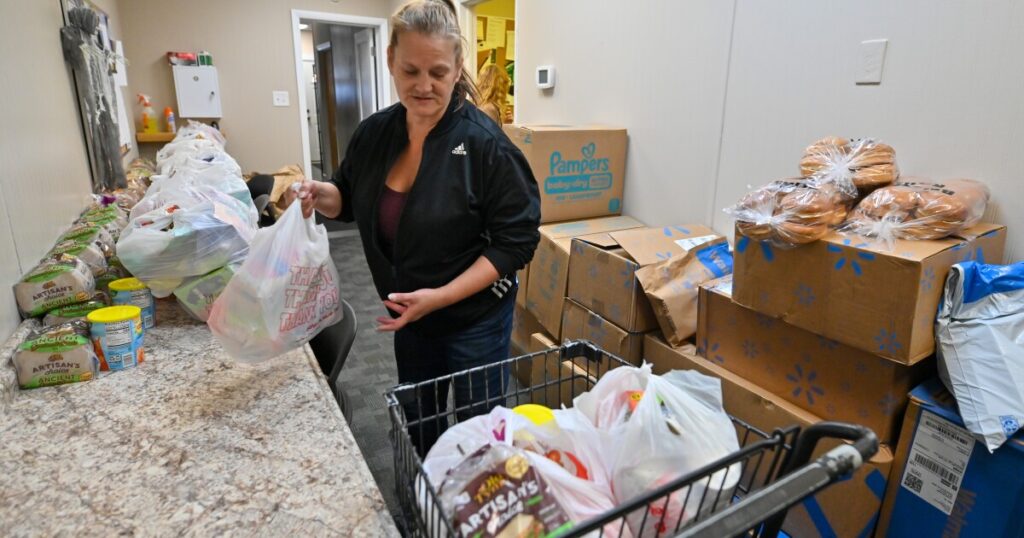
Local food pantries, already operating under financial strain, brace for an increased demand as SNAP benefits remain suspended. Jennifer Warabak of the Commission on Economic Opportunity noted the challenges posed by the pause, highlighting reduced purchasing power and increased demand.
Food banks like CHOP Out Hunger, which serve numerous counties across the state, emphasize their role as a support system rather than a replacement for SNAP. Dani Ruhf, CEO of CHOP Out Hunger, underscored the rising need and the organization’s limited capacity to fill the gap left by SNAP.
Community leaders, including Scranton City Council member Mark McAndrew, are calling on residents to support local food pantries through donations and volunteering efforts to mitigate food insecurity.
Children and Families Bear the Brunt
With children comprising nearly 40% of SNAP recipients nationwide, the suspension’s impact on young ones is significant. John Rosengrant, executive director of the NEPA Youth Shelter, stressed the importance of maintaining food services for children affected by the SNAP pause.
As community organizations rally to provide resources, Rodriguez and others hope for a resolution that reinstates SNAP benefits, urging policymakers to recognize the real-world implications on families. “Look around at these little faces that look up to you, prove to them that you’re willing to fight for them, not just their parents,” Rodriguez implored lawmakers.