For the first time in over a decade, England’s government is set to revamp school food standards. The primary challenge lies in getting students to adapt and enjoy the new meal offerings.
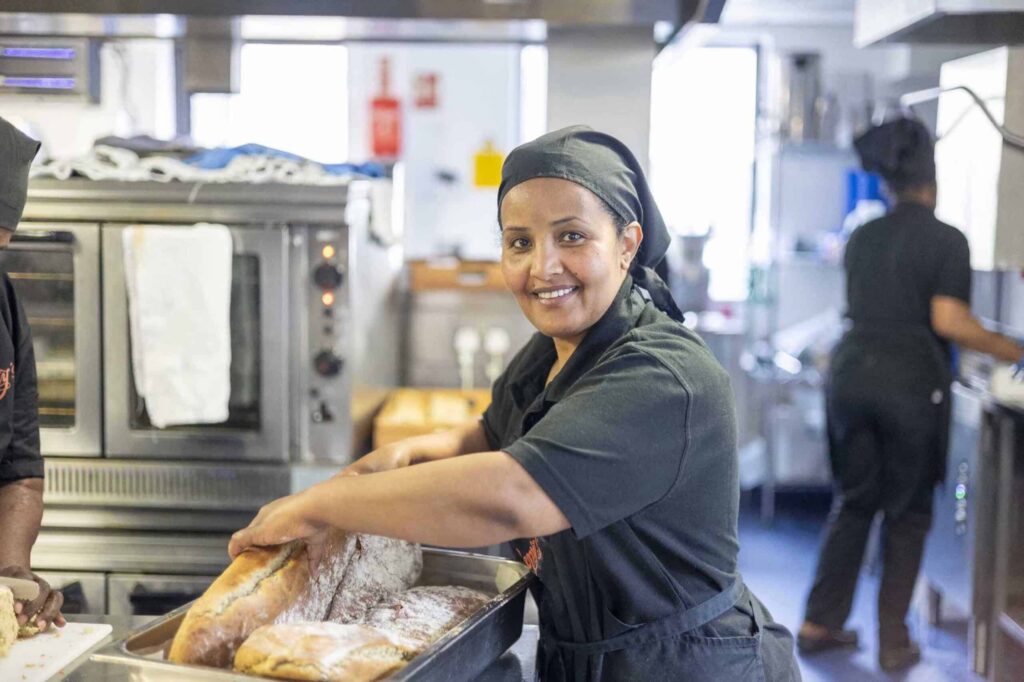
Greenside primary school in West London exemplifies this change. At midday on Fridays, students crowd into the lunch hall for trays of chickpeas and spicy rice, roasted sweet potatoes, green beans, and spinach sautéed with garlic. These healthy lunch options can all be wrapped in a burrito, and students can choose their favorite toppings. In addition to the main course, homemade loaves of focaccia bread add a sweet, malty aroma to the school’s dining environment.
The focus on healthy, sustainable meals at Greenside primary is part of a growing trend among schools, two decades after celebrity chef Jamie Oliver declared war on unhealthy school food. Despite the positive changes, a recent government survey revealed that 75% of parents in the UK worry about their children’s school meals. Surprisingly, one in three children is either overweight or obese upon finishing primary school.
In a bid to address these concerns and improve child nutrition, the government plans to overhaul school food standards. These changes will see the banning of deep-fried foods like chicken nuggets and chips and limiting high-sugar desserts to once a week. In place of these unhealthy options, the revamped menu will feature more grains, pulses, and vegetables. The government expects to finalize the changes later this year and implement them by September 2027.
While the reforms are a significant step forward, food education will play a critical role in their success. Food writer and campaigner Bee Wilson underscores the importance of teaching children to enjoy fruit and vegetables. Without such education, she warns, new dishes may end up uneaten and wasted. To prevent this, Chefs in Schools, a charity that employs qualified chefs to manage school kitchens, has initiated a campaign called Try Something New Day. This initiative encourages schools to allocate a small portion of their catering budget to offer tastings of healthy ingredients.
Sharing successful practices and putting food education at the heart of their curriculum are key strategies for schools seeking to implement the government’s plan effectively. Greenside primary school, for example, is helping other schools learn from their successful practices. Such cooperation and mutual learning are crucial to achieving consistency in the quality of school meals nationwide.
As England’s government prepares to overhaul school food standards, schools such as Greenside primary are leading the way. By integrating food education into their curriculum and actively encouraging healthier eating habits, they offer a model for other schools to follow, ensuring that students not only eat better but also understand and appreciate the importance of good nutrition.