Historic WWII Plane Wreckage Returns to Wisconsin, Fulfilling a Family’s Dream
A determined group, including relatives of renowned pilot Richard I. Bong, has brought a significant piece of World War II history back to Wisconsin. This achievement follows an arduous journey across continents to retrieve a part of Bong’s iconic aircraft from the depths of the Papua New Guinea jungle.
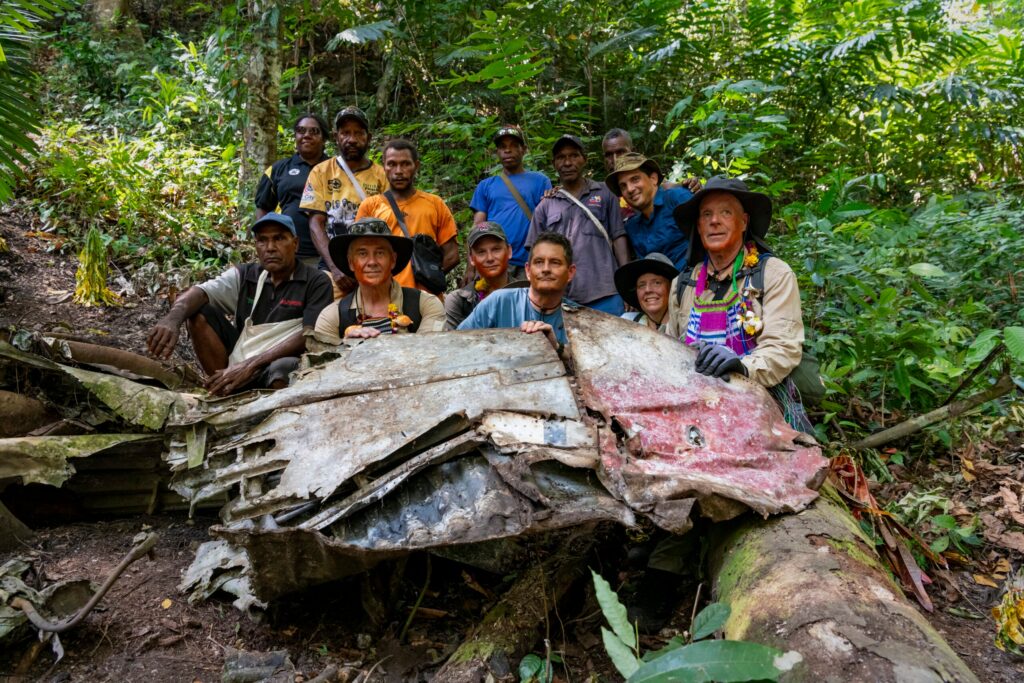
In collaboration with the nonprofit Pacific Wrecks, the Richard I. Bong Veterans Historical Center in Superior initiated a mission two years ago to locate the remains of the Lockheed P-38 Lightning fighter flown by Bong during WWII. Recently, they managed to bring back a wingtip of this legendary plane to Wisconsin.
Richard Bong, celebrated as the top flying ace of WWII with 40 confirmed aerial victories, named the aircraft “Marge” after his then-girlfriend, later wife, Marge Vattendahl. Jim Bong, Richard’s nephew, along with his cousin Mitch Erickson and the Bong Center team, embarked on a challenging expedition to the site’s remote location in the dense jungles of Papua New Guinea.
Journey into the Jungle
The P-38 Lightning crashed in 1944 when it malfunctioned under the control of pilot Tom Malone, who survived the incident. The wreckage remained untouched for over 80 years. Justin Taylan, founder of Pacific Wrecks, noted its historical significance, describing it as one of WWII’s most renowned aircraft wrecks.
“It was an honor and a privilege to lead them to the site, let them experience it, meet the people and see the plane that their uncle once flew,” said Taylan.
The expedition involved a 30-hour journey to Papua New Guinea, followed by a flight to Madang. From there, the team traveled by boat to a local village, where they were greeted with a traditional sing-sing ceremony. The journey continued with a dramatic welcome from villagers at the crash site’s entrance.

On June 23, the team set out for the eight-mile trek to the site. Jim Bong expressed the emotional impact of visiting the site, considering the legacy of his uncle and the family members who had passed away.
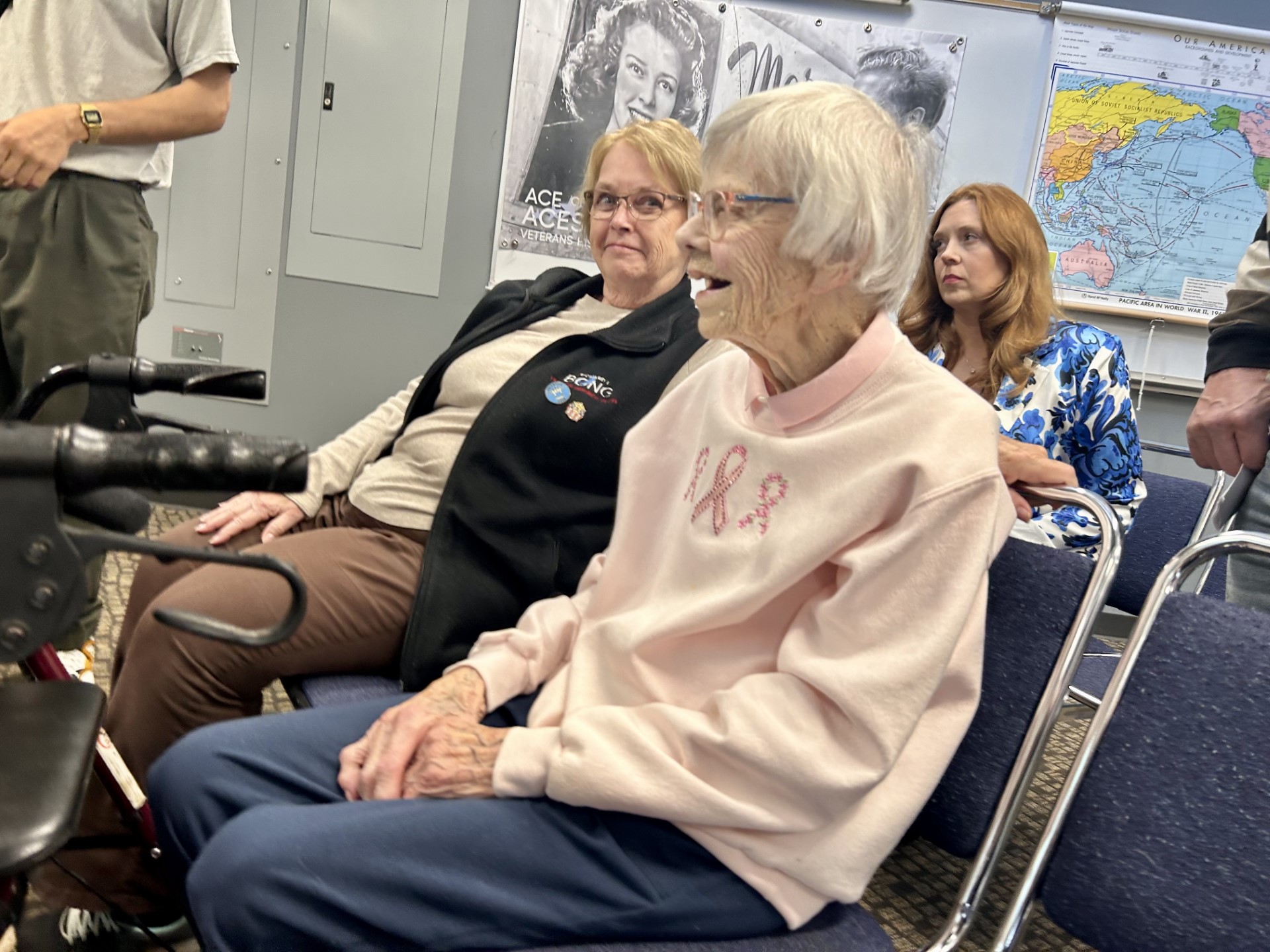
Jerry Fechtelkotter, Bong’s sister, who passed away shortly after the plane’s discovery, had wished for a piece of the wreckage to return home. “Now, Aunt Jerry, we’ve done it,” Bong remarked. “We got it back for you.”
Local landowners assisted in carrying the six-foot-long wingtip, using traditional methods to transport it out of the jungle. The retrieval required extensive negotiation with regional authorities and the Papua New Guinea National Museum, which retains ownership of the aircraft.
A Dream Realized
The wingtip’s journey back to the U.S. involved transport by the Papua New Guinea Defence Force to Port Moresby and then by the Wisconsin Air National Guard to Milwaukee. Brig. Gen. Adria Zuccaro expressed pride in bringing a piece of Bong’s legacy home in a news release.

Following its arrival, the artifact was showcased at the Experimental Aircraft Association’s airshow in Oshkosh before reaching its final destination at the Bong Center in Superior. “Everything we wanted to have happen happened,” said Fiandt. “This was our dream scenario.”
Jim Bong hopes the wingtip’s display will offer tangible insight into his uncle’s achievements, inspiring visitors to explore his remarkable story.

Richard I. Bong, who began his service in 1941, became a national hero in the Pacific Theater before being pulled from combat due to the risk to morale. He was awarded the Medal of Honor by General Douglas MacArthur in December 1944. Tragically, Bong died in a jet crash on the same day as the Hiroshima bombing in 1945.
The wingtip will soon be displayed at the Bong Center, with plans for an immersive exhibit to recreate the crash site experience.