A Lifelong Educator’s Journey Beyond the Classroom
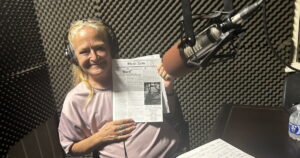
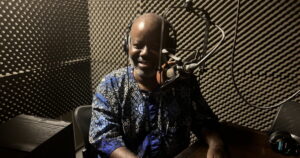
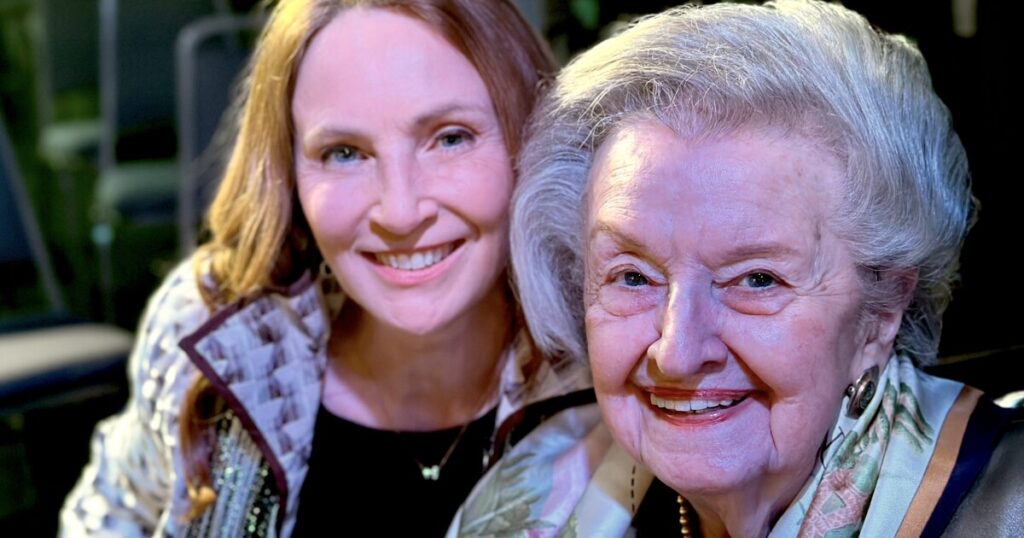
In the heart of Winston-Salem, a retired educator named Phyllis Dunning has left an indelible mark not just through her teaching, but through her broader influence on countless lives over decades. Now 92, Dunning’s contributions continue to resonate, illustrated by her recent collaboration with co-author Joyce Storey on a book titled A Life Well Lived: Mrs. Dunning’s Lesson Plan for Happiness. Despite a frozen vocal fold that makes speaking challenging, Dunning, alongside Storey, shared insights with WFDD’s David Ford about the book’s themes and her impactful career.
The duo is set to speak at Salemtowne in Winston-Salem on June 3, sharing stories and lessons from Dunning’s extensive career.
Adapting to Her Students’ World
Phyllis Dunning: “Oh, my students taught me. I mean, Oh, my word. There I was teaching in the 60s. Remember the music, popular music of the 60s? That was not my favorite kind of music, but, oh, my students were listening to it. So of course, I made myself listen to it, and lo and behold, what happens? You start liking it, you start understanding it, you start hearing it, even when you don’t know you’re listening.”
Dunning’s approach to education was both adaptive and inclusive, reflecting a commitment to understanding the cultural contexts of her students, many of whom were Black. “And of course, for me, you know, going to teach in the school, all my students were Black. And of course, I had read some Black writers, but I realized, oh, not enough. So, you know, it so broadened my reading,” she explains.
Joyce Storey: “I think one of the amazing things about Mrs. Dunning is the fact that she understood what it meant to meet them where they were, to meet her students, to meet a new person. She always, to this day, makes that extra effort. She meets a new person in town and says, ‘Oh, you look very interesting, tell me your story.’ And she starts there with a genuine interest and curiosity about a person.”
Reflections on Diversity and Inclusion
Joyce Storey: “Mrs. Dunning and I have had this discussion a lot. We’ve really talked about the parallel of 1970 when she was in the classroom, desegregating, helping with the process of desegregating, and where we are today. I think people are afraid of what they don’t know. Even as children — they’ve done a lot of psychological studies of children who gravitate towards sameness — and they’re afraid of something that’s different.”
Storey emphasizes the importance of recognizing commonalities among people. “But as Mrs. Dunning has stated, people at their core, we all want the same thing. We want love. We want people to care about us… Education teaches us that maybe we are a lot more alike than we think we are, and maybe we need to go back to our grassroots of reminding ourselves that life is about family, life, love, community and caring about one another.”
A Time of Gratitude
Phyllis Dunning: “I was teaching in a very magical time. In Winston, Salem, Forsyth County, it’s when we consolidated the city and the county systems, then we integrated faculties, then we integrated students. And I think it was during all of that that I became more and more aware of being so grateful that I was living in that magical time just to get to be a part of all of that.”