In an effort to combat the presence of hazardous “forever chemicals” in their water supply, schools and communities across Northeast and Northcentral Pennsylvania are taking significant steps to ensure public safety. One school in particular is implementing extensive measures to protect its students and staff.
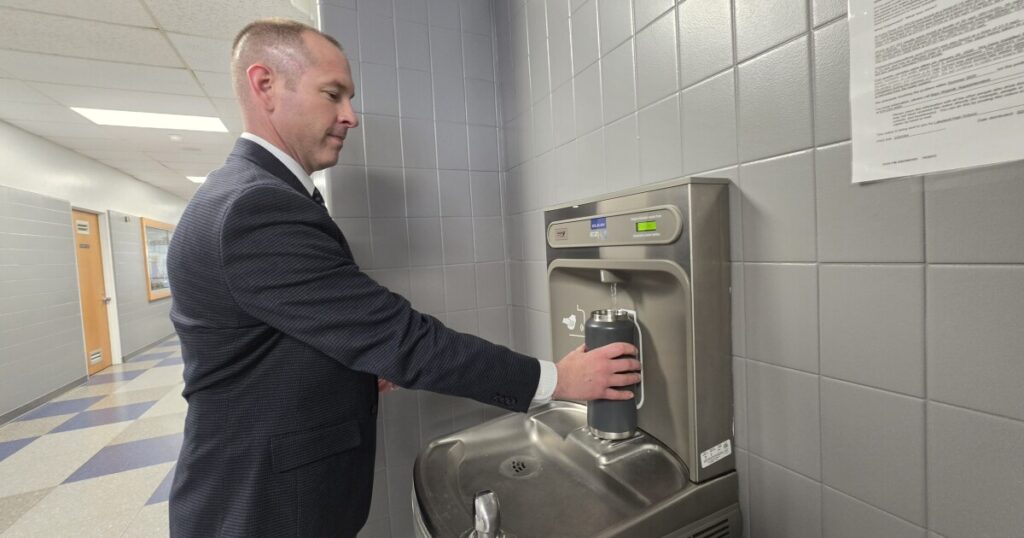
The superintendent of Lakeland School District in Scott Twp., Lackawanna County, was recently seen filling his reusable water bottle at a fountain equipped with a filter to make the water safe to drink. This comes after water tests indicated that levels of per- and polyfluoroalkyl substances (PFAS) were up to ten times higher than federal limits.
To address the issue, the school plans to install a comprehensive building-wide treatment system. “It’s an example of a microcosm of what’s happening across the state and a lot of different places,” said Superintendent Marc Wyandt. He emphasized the importance of prioritizing the health, safety, and welfare of students and staff.
Understanding PFAS
PFAS are synthetic chemicals used in numerous products since the 1940s. According to Faith Kibuye, a water resources extension specialist at Penn State, “PFAS are not naturally occurring. They are synthetic chemicals.” These substances are found in things ranging from firefighting foams to non-stick cookware and can eventually contaminate groundwater.
As technology advances, detecting these chemicals in the environment has become more feasible, though large-scale remediation remains a challenge. The U.S. Environmental Protection Agency (EPA) has deemed drinking water with PFAS levels above four parts per trillion unsafe, while the Pennsylvania Department of Environmental Protection (DEP) offers a striking analogy, noting that one part per trillion equates to a single drop of water in 20 Olympic-sized swimming pools.
The Impact of PFAS Contamination
Research indicates that exposure to PFAS can have serious health implications, including decreased fertility and developmental issues in children, as well as increased cancer risk and weakened immune systems, according to the EPA.
Efforts in Testing and Remediation
Under EPA regulations, water providers, including schools with private wells like Lakeland, must conduct PFAS testing. Two years ago, over 30 Pennsylvania schools with well water exceeded EPA standards. Lakeland’s high school recorded PFAS levels of 30 parts per trillion. Plans are underway to replace point-of-use filters with a full building treatment system.
Columbia County’s Ongoing Contamination Investigation
In Columbia County, significant PFAS contamination was discovered at a mobile home park, prompting an extensive DEP investigation. Testing across the county revealed contamination in 115 out of 285 wells. DEP is providing bottled water and installing home treatment systems as interim solutions. The initial contamination is believed to stem from sewage sludge spreading on agricultural land.
The DEP investigation, funded by the Hazardous Sites Cleanup Act, has a budget of $802,119. An open house and public hearing are scheduled to inform residents of ongoing efforts, providing a platform for dialogue.
Seeking Long-term Solutions
In Pike County, the Matamoras Municipal Authority is addressing PFAS levels of 30 parts per trillion by reducing the use of affected wells and exploring new treatment options. Meanwhile, Lakeland School District faces unknown contamination sources, possibly linked to the site’s agricultural history. The district is working with the DEP and state programs to fund and implement new treatment systems.
“We certainly would have preferred to not be in the position we’re in,” Wyandt remarked. “I’m thankful that we were able to No. 1, recognize the issue, and then, No. 2, inform the community and take quick action.”