Amidst the serene setting of his new office at the University of Wisconsin-La Crosse, where he serves as associate dean of the School of Education, Pao Lor reflects on a journey that began in the tumultuous landscapes of Laos. With the comfort of a large desk, sunlit windows, and a nearby eatery offering Hmong delicacies, Lor’s present stands in stark contrast to his past.
Born in a small village amidst the chaos of war-torn Laos, Lor’s journey to Wisconsin seemed unfathomable as a child. In his memoir, “Bamboo Son: A Hmong Refugee’s Search for Identity and the American Dream,” published by the Wisconsin Historical Society Press, he captures this remarkable transformation.
Tragedy struck early in Lor’s life following the assassination of his father in the aftermath of the Secret War, a covert CIA mission during the Vietnam War. As his family fled to Thailand, the Mekong River claimed the lives of his mother and sister, leaving Lor and his siblings orphaned. Two years in Thai refugee camps ensued before they resettled in the United States, eventually starting anew in Green Bay, Wisconsin.
Lor’s initial memoir, “Modern Jungles: A Hmong Refugee’s Childhood Story of Survival,” published in 2021, offered a window into his early years. His latest work, “Bamboo Son,” delves into his teenage years in Green Bay during the 1980s, chronicling his journey through high school, college, marriage, and a thriving career in education.

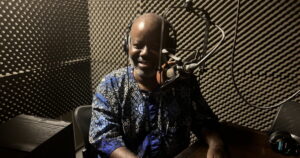
Both memoirs explore Lor’s struggle to blend into Wisconsin while retaining his Hmong heritage. This journey into his past required revisiting painful memories, as Lor recounted to WPR’s “Wisconsin Today.”
“Growing up, I’ve always wondered why these particular memories stay with me — they would play over and over in my head,” he said. “It took a very long time to find a medium in which I felt comfortable to share those memories.”
The search for Hmong identity
The title “Bamboo Son” symbolizes resilience in Hmong culture, as the bamboo plant is used in making qeej instruments for funerals. The Hmong word for bamboo, “ntsuag,” meaning “orphan,” resonates with Lor’s personal narrative.
“When each of us becomes an orphan is a pivotal moment as to how we understand life,” he said.
Lor’s book details his ongoing struggle with his identity as a Hmong American. As an orphan distant from his homeland, he rarely participated in traditional ceremonies, often feeling like an outsider. A notable experience was attending a Hmong New Year celebration in St. Paul in 1986.
“On our drive back to Green Bay, I reflected on the gathering. Despite being surrounded by so many Hmong people, I still felt disconnected from my Hmong identity,” he writes. “I’d spent the first eight years of my life surrounded by Hmong people in Laos and Thailand, but I was coming of age in a predominantly white American community. I didn’t know exactly where I belonged.”

In school, Lor often felt academically inferior due to cultural and language barriers. Despite these challenges, he graduated high school early and pursued higher education at the University of Wisconsin-Green Bay and later UW-Oshkosh, where he earned his degrees. He was the first in his family to achieve this milestone, eventually obtaining advanced degrees in education leadership.
Reflecting on his academic insecurities, Lor attributes them to his humility and focus. “I think in many ways, for me, that was a positive trait to have — not to be overly confident, not to be overly arrogant,” he told WPR.
At 19, Lor married Maya in a traditional Hmong ceremony involving an elopement and a multi-day ritual with their families.
“It is a ceremony that has been refined over the decades and hundreds of years,” Lor said. “Underneath all of the festivity — the drinking, the rituals, the social gatherings, people enjoying the event — embedded within all of that is an incredible emphasis on love, on cherishing your family, cherishing your new family, cherishing your community. This is the next phase in your life.”


Returning to Laos, finding peace
In “Bamboo Son,” Lor juxtaposes moments of life and death, joy and sorrow, often haunted by wartime memories. A pivotal moment came in 2004 when he returned to Laos and Thailand as a Fulbright scholar, laying flowers in the Mekong River in memory of his mother and sister.
“With a heavy burden finally lifted from my spirit, I placed the flowers in the river and let them drift off. As they floated away, I imagined my family’s life in heaven being just as beautiful as the scene in front of me,” Lor writes in the book. “Before walking away from the Mekong River, perhaps for the last time, I paid a silent homage, To everyone else who perished here, I wish you peace. May heaven look favorably upon you and all your loved ones who have survived. May you know that your sacrifices weren’t forgotten.”

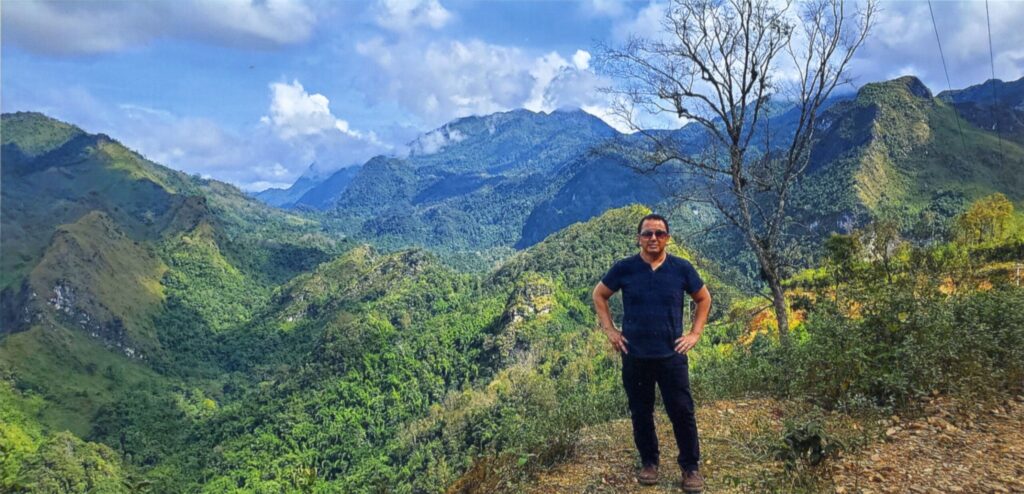
In 2022, Lor and his wife returned to Laos, visiting previously restricted areas, including the CIA headquarters in Long Tieng, a site pivotal to Hmong history.
“Just to have that opportunity when Laos opened up that area to the outside world, and to be able to go back and see for the first time many of the landmarks that I grew up hearing about,” Lor said. “The CIA headquarters in Long Tieng — I saw a few photos of it in the past, but it is nothing compared to being there myself and knowing that my family lived there, knowing that I was born not too far from there, and knowing that that’s the center of what led the Hmong to eventually come to the U.S.”
Through his memoirs, Lor shares stories of resilience and hope, aspiring to resonate with readers’ own experiences. “On the surface level, they’re memoirs, and you could say it’s an adventurous story, and it’s a story about my journey. My hope is really that readers get to see beyond that,” Lor said. “It’s really a story about all of us.”