North Carolina Faces Budget Stalemate Amid Medicaid Funding Concerns
As North Carolina lawmakers resume their session in Raleigh, a pressing call for action on Medicaid funding and the state budget has gone unanswered. Despite Governor Josh Stein’s urging for legislative movement, anticipation for progress remains dim.
The primary focus of the legislature’s return has been to pass a new congressional map favoring an additional Republican seat. However, consensus on fiscal matters between House and Senate Republicans is notably absent.
The budgetary deadlock encompasses both a comprehensive budget bill and a separate legislative package crucial for Medicaid funding. This impasse has prompted the state Department of Health and Human Services (DHHS) to implement funding cuts, a situation Stein labels as a critical failure of responsibility.
“Both chambers agree that more funding is needed,” Stein remarked. “Both chambers agree on the amount of funding that is needed, and yet they have yet to appropriate it. It is a shameful abdication of their responsibility. State law requires DHHS to maintain a balanced budget. The legislature’s failure to appropriate adequate funding has forced the department to make painful choices.”
Previously, both legislative bodies had passed Medicaid funding measures, but disagreements arose from the Senate’s inclusion of funds for a proposed children’s hospital in Apex, a project not fully endorsed by the House. As a result, Medicaid reimbursement rates to healthcare providers were reduced, sparking concerns about potential treatment refusals for Medicaid patients and the cessation of new weight-loss drug coverage.
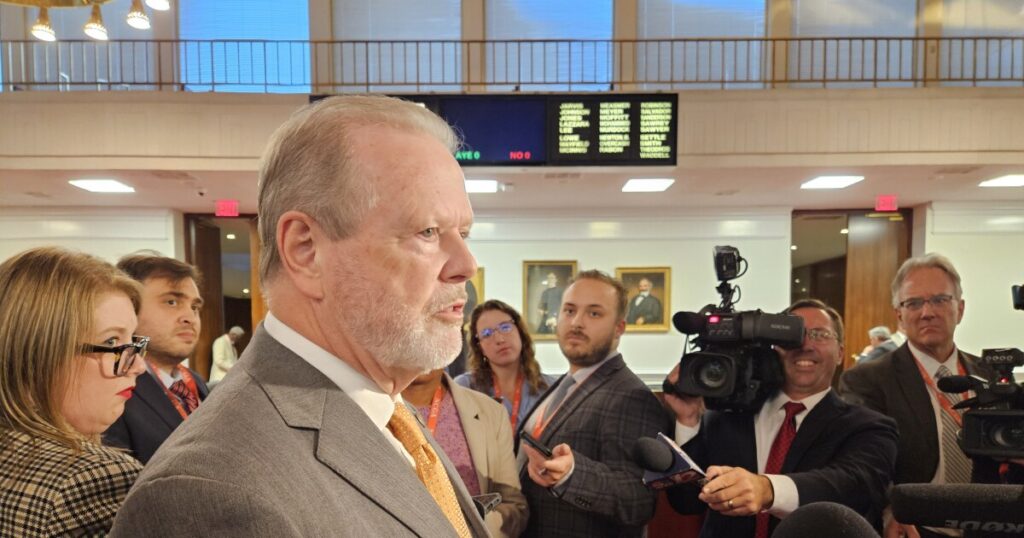
Senate leader Phil Berger questioned the urgency of these cuts, suggesting existing funds from a summer allocation should suffice. “What did the Stein administration do with that $600 million? The first $100 million went to administrative expenses,” Berger stated. “So it’s fairly clear that their priority is not making sure providers get paid. Their priority is not making sure that individuals get medical care that gets paid for. Their priority is protecting the bureaucracy.”
Highlighting the broader budgetary stalemate, Berger assured that North Carolina’s government continues to function at pre-approved spending levels, contrasting the situation with federal shutdown scenarios.
“It’s a simple fact that we’ve not been able to reach an agreement on additional matters for the budget, and we continue to have conversations” with the House, Berger noted. “If we can’t get agreement on anything beyond what we have, then what we have is certainly adequate for the functioning of state government at this time.”
Governor Stein emphasized North Carolina’s unique position, being one of just two states without a finalized budget for the year. He criticized the legislative inaction as a disservice to the state’s future and its residents.
“They are failing the people of North Carolina by not having a budget that invests in our people and invests in our future,” Stein asserted.