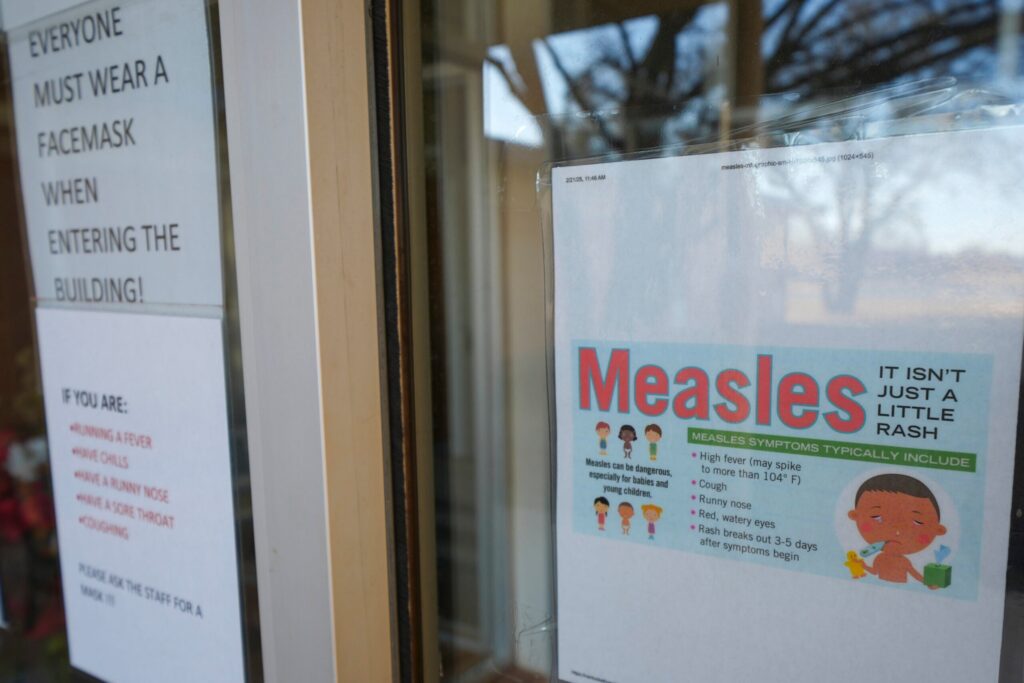
An alarming rise in measles cases has been reported in southwestern Wisconsin, prompting state health officials to launch an investigation. With 15 confirmed cases and more expected, authorities are working to stem the outbreak.
The Wisconsin Department of Health Services (DHS) recently confirmed 13 new cases in Iowa County, following initial reports of two cases earlier in the week involving residents from Iowa and Lafayette counties. State health officials are testing six additional probable cases as part of their comprehensive response.
The DHS is collaborating closely with county health departments and the U.S. Centers for Disease Control and Prevention (CDC) to address the outbreak. Dr. Ryan Westergaard, chief medical officer of the DHS Bureau of Communicable Diseases, indicated that most cases are among unvaccinated individuals, mirroring national trends.
A DHS dashboard reveals that 60% of measles cases in Wisconsin this year involve children 17 and under, including three under the age of four. Of the 23 confirmed and suspected cases, only one person was vaccinated.
Health officials have yet to identify public exposure sites for the highly contagious virus. They are actively interviewing those infected to trace potential exposure, with Dr. Westergaard noting that the outbreak indicates local transmission rather than travel-related cases. “That increases our level of concern a bit because that means that there is transmission happening in Wisconsin and there could be and likely are people who have been exposed that we don’t know of yet,” he stated.
The DHS advises residents to confirm their immunization status via the Wisconsin Immunization Registry or by contacting healthcare providers. Individuals with symptoms are urged to remain at home and consult with healthcare facilities by phone to prevent further spread.
Vaccination remains the most effective defense against measles, with the vaccine offering 97% efficacy. The DHS stresses the importance of the two-dose vaccine regimen as children return to school. Adults born before 1957 are generally considered immune.
In related developments, President Donald Trump issued an executive order advocating for the separation of combination vaccines, including the MMR vaccine. This move has faced criticism from public health experts. DHS Secretary Kirsten Johnson expressed concern, emphasizing the need for credible information for healthcare professionals and parents. “We are deeply concerned about the lack of scientific evidence in statements from top federal officials, and potential implications for the health of children in our state,” Johnson remarked.
The DHS continues to endorse the vaccination schedule recommended by the American Academy of Pediatrics and the American Academy of Family Physicians. Despite declining vaccination rates due to misinformation, the urgency of maintaining immunization is underscored by the current national measles outbreak, which has reached its highest level in 35 years with 2,465 cases.
This year, the initial measles cases in Wisconsin were linked to international travel, occurring in Dane and Waukesha counties. The virus spreads through the air or surfaces for up to two hours post-exposure, with the CDC noting that 90% of unprotected individuals will contract measles if exposed. Hospitalization is required for one in four infected individuals, according to DHS data.