This story was produced and republished by Wisconsin Watch and WPR.
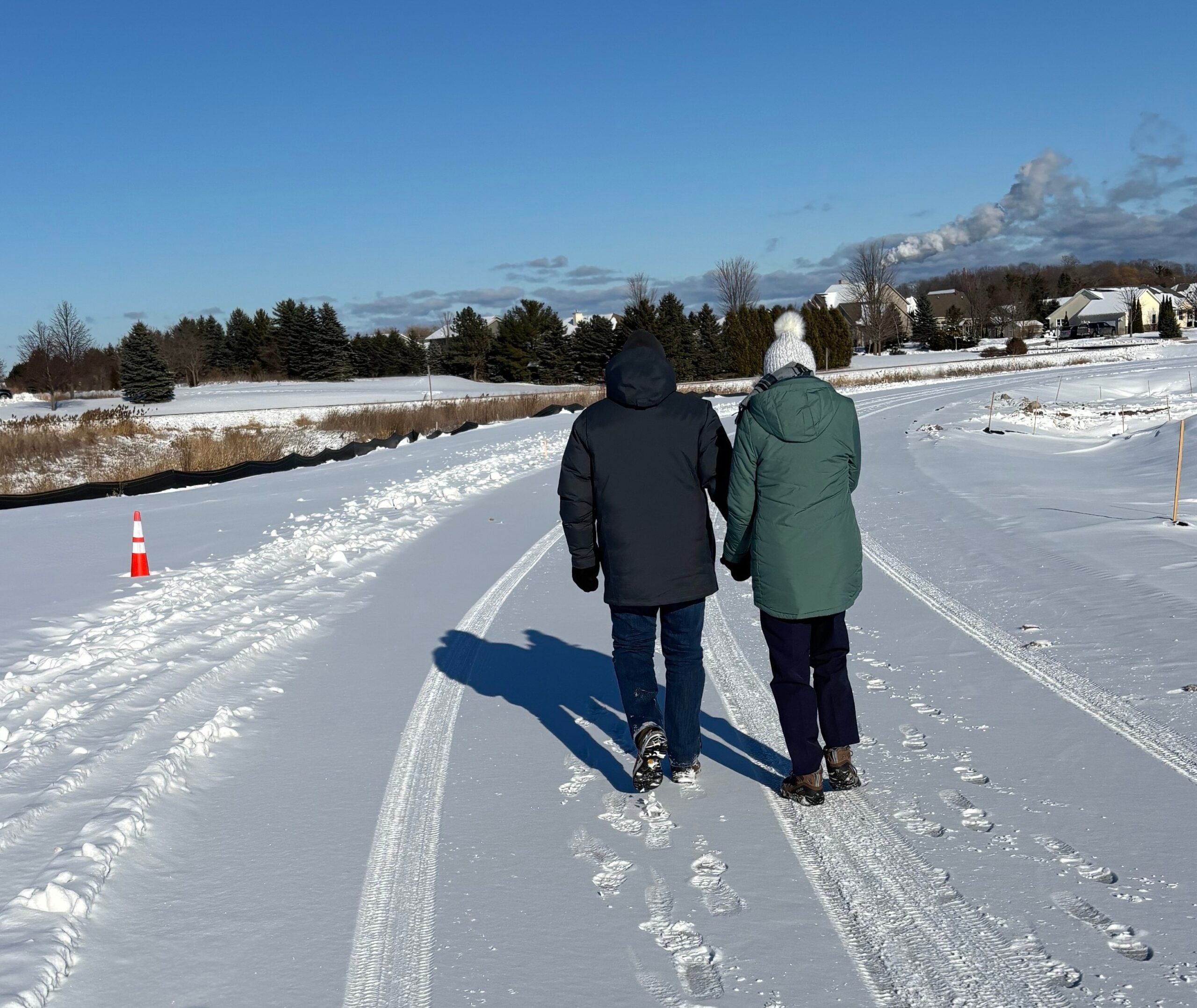
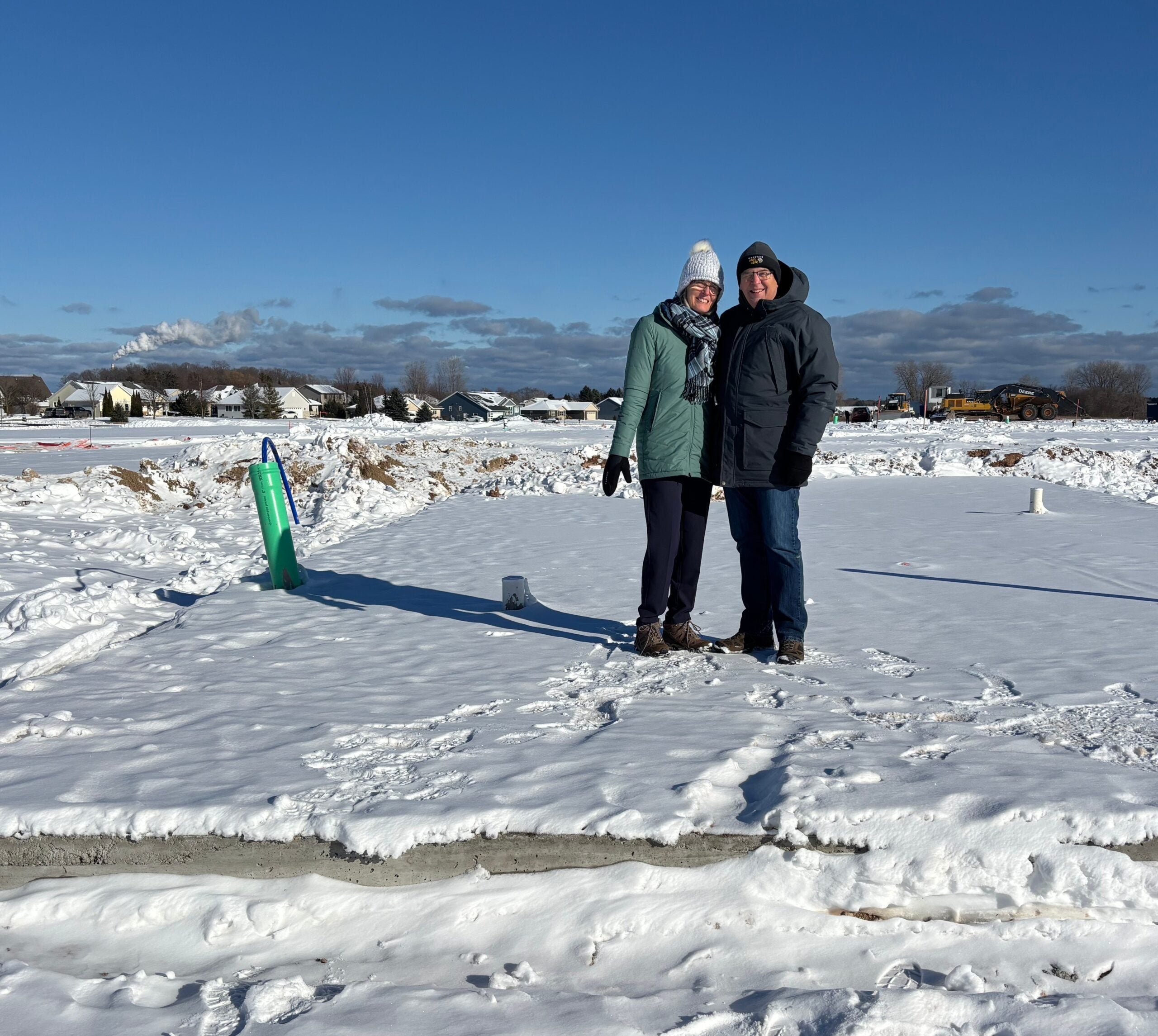
Footprints in the snow marked the path of John and Terri Cooper as they made their way cautiously along an icy road near Sheboygan, Wisconsin. Stopping at a series of concrete slabs, John pointed out, “This is our house,” gesturing towards a snow-covered block.
“It’s pretty big,” Terri added, standing on the foundation.
Each Sunday, the Coopers drive approximately 20 miles from their independent living community to visit the site of their future home. John operates a drone to capture aerial photos of the developing neighborhood, which will eventually feature a grocery store, a spa, and a gym. This 45-acre project is tailored for individuals like Terri, who has Alzheimer’s disease.
The couple, married for 50 years, is preparing for a unique move this summer. Dementia Innovations, a nonprofit in Sheboygan County, is pioneering a novel U.S. village designed for people with dementia to live independently. This initiative, named Livasu, derives inspiration from a European model that promotes autonomy for those with memory loss.
Livasu, short for “living as usual,” allows individuals with dementia to either live alone or with family, maintaining familiar routines as their condition progresses. Though this model has seen success overseas, replicating it in the U.S. presents challenges, according to experts. With an estimated cost of $14 million, the creators of Livasu hope to demonstrate its viability in Wisconsin and potentially other states.
Cost reduction is achieved through the use of manufactured homes, which offer an economical alternative to traditional site-built houses. Residents purchase their homes and determine care hours based on their needs.
Unlike conventional memory care facilities with restricted access, Livasu residents will have the freedom to explore the village, supported by staff. “We all take risks every day, but as we age, and especially as we age with dementia, there’s a safety-at-all-cost approach,” said Mary Pitsch, Livasu’s project lead. “That cost is actually a loss of personhood,” she explained.
The village employs landscaping, rather than fences or locked doors, to gently guide residents towards the community’s central area. Livasu’s 124 houses will provide access to a lodge where residents can dine with neighbors and watch sporting events.
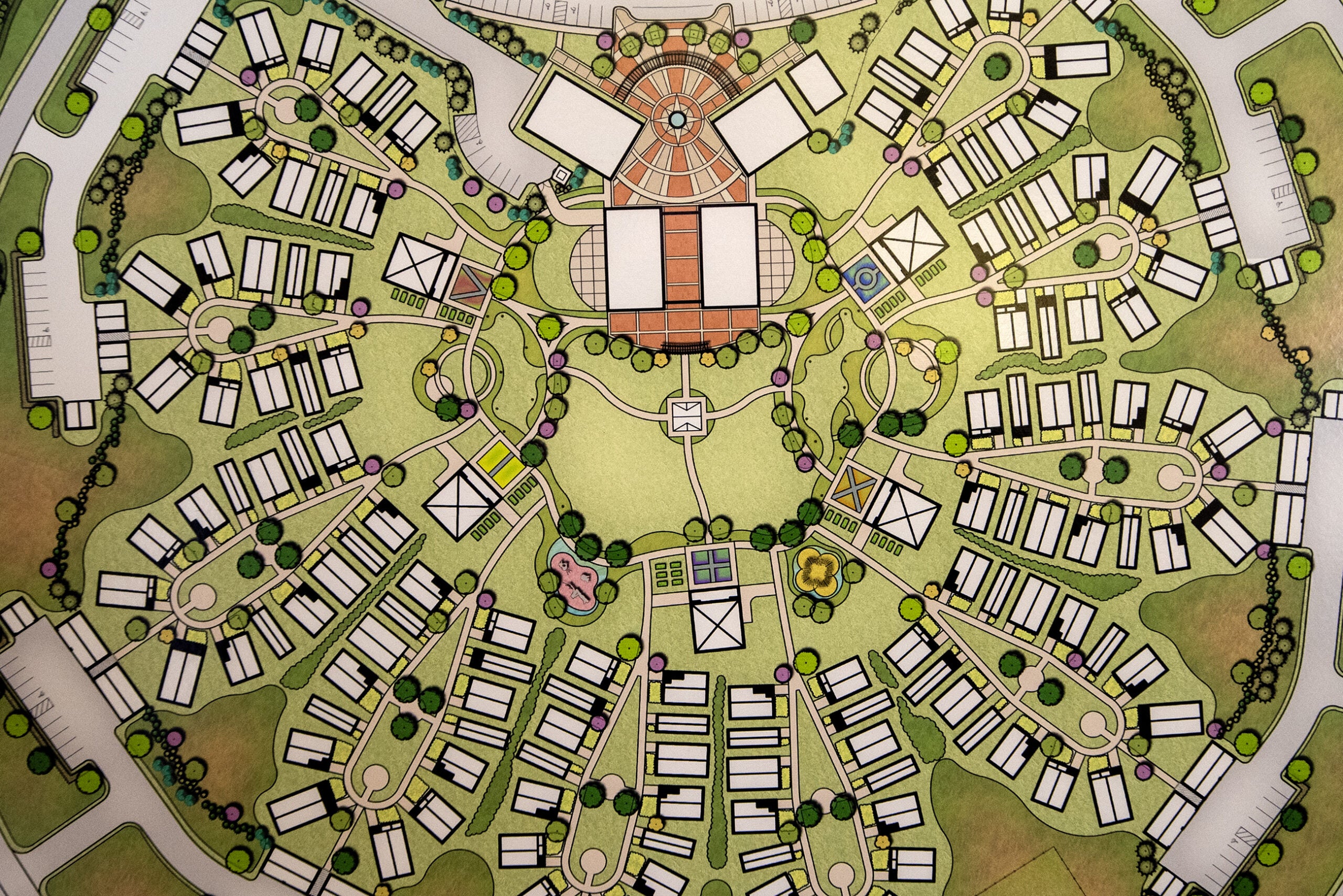
The development will eventually include a public grocery store and restaurant. “We are changing the way we are thinking about care and support,” Pitsch stated.
Aging at Home — Together
John and Terri Cooper’s journey began in college. “I picked Terri out almost immediately. It took me some months to convince her that I was the right guy,” John joked. “Thankfully,” Terri added with a laugh.
Throughout their marriage, they raised two daughters, with John working in technology and Terri as a structural steel detailer. Despite Terri’s efforts to avoid Alzheimer’s, including a healthy lifestyle, she was diagnosed in 2021 after John noticed changes in 2019.
Amidst the construction site, Terri asked John, “I think I’m OK, right?” to which he replied, “Yeah, you’re great!” eliciting more laughter.
After John’s cancer diagnosis, the couple moved to an independent living center, ensuring Terri would have support if needed. Livasu will enable them to age together at home.
Manufactured Housing Brings Savings
The Coopers are looking forward to homeownership once more, albeit in a more compact space. Their future residence in Livasu measures 1,140 square feet, smaller than their previous homes. Unlike their current rental, they will own this home.
Homes in Livasu are priced between $95,000 and $175,000, offering a cost-effective alternative to traditional housing. Manufactured homes are produced at scale, reducing costs through bulk material purchases and minimized waste.
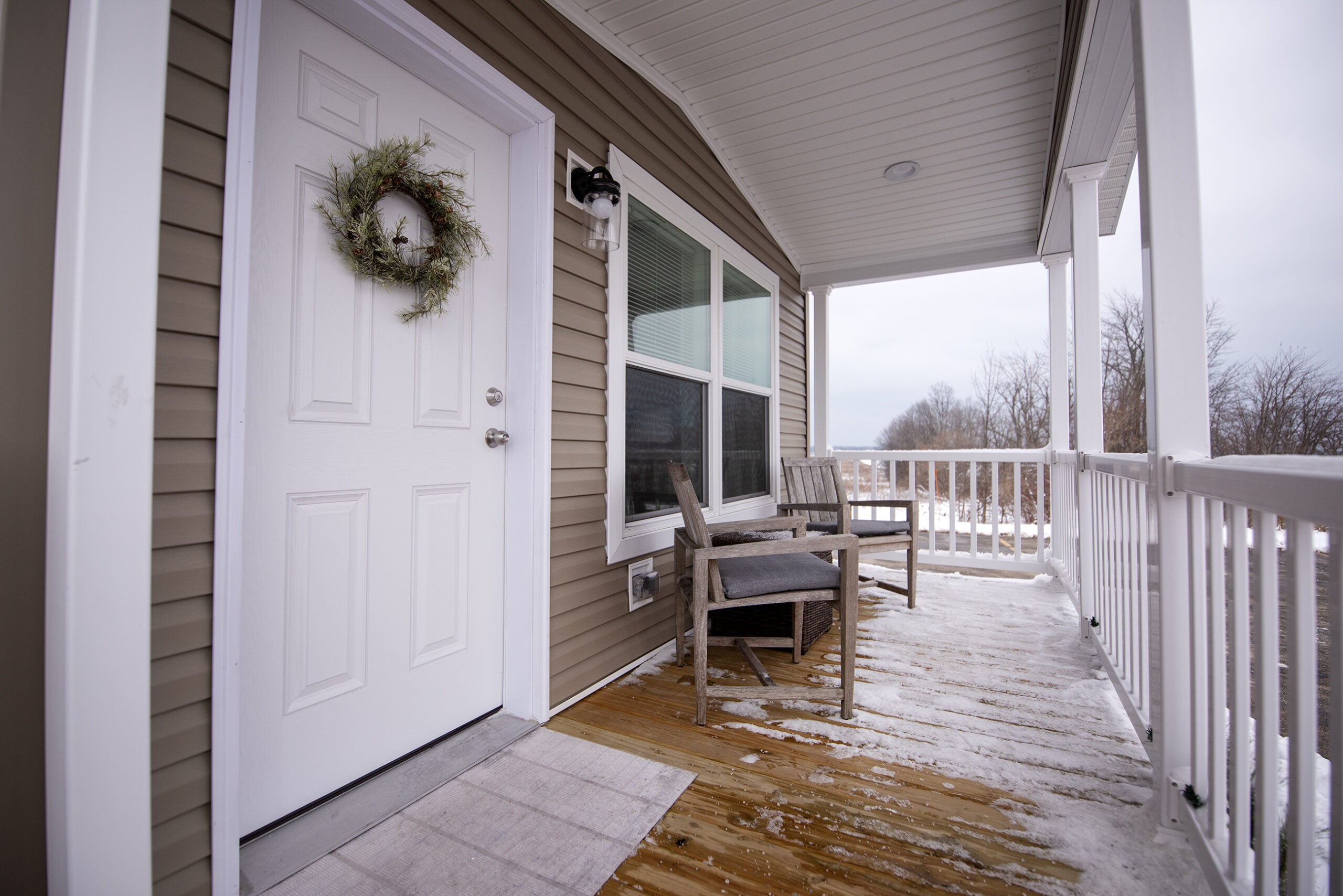
Constructed off-site, Livasu homes minimize construction noise and time as residents move in gradually. These homes come with a title, akin to a car, facilitating easier ownership transfers.
Terri’s past experience living in a mobile home contrasts with today’s higher-quality manufactured homes, John noted. “They’re actually built pretty nice,” he observed.
Pitsch highlighted the dementia-friendly design elements of each home, such as additional lighting, contrasting door handles, and electric stoves. Unlike conventional mobile home parks, Livasu’s homes are set at ground level, enhancing accessibility.
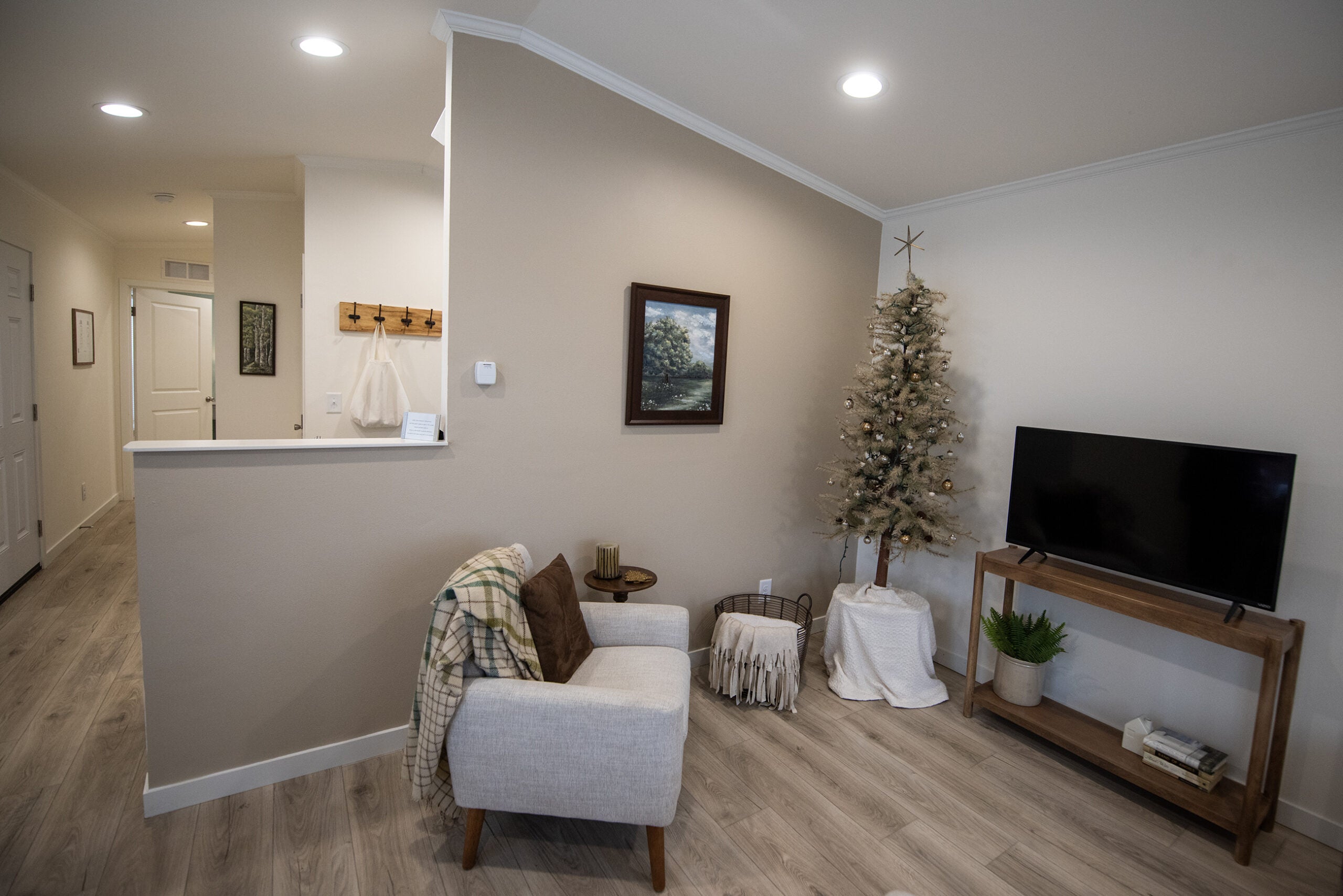
Bedrooms are designed with a clear view of the toilet to aid those with incontinence. The shower design, whether to use glass doors or curtains, was a topic of extensive discussion, Pitsch mentioned, leading to thoughtfully considered decisions.
Dignity in Dementia Care
Pitsch, a social worker dedicated to elder care, has spent nearly two decades operating an at-home care company. Her involvement with local law enforcement revealed frequent emergency responses involving dementia patients.
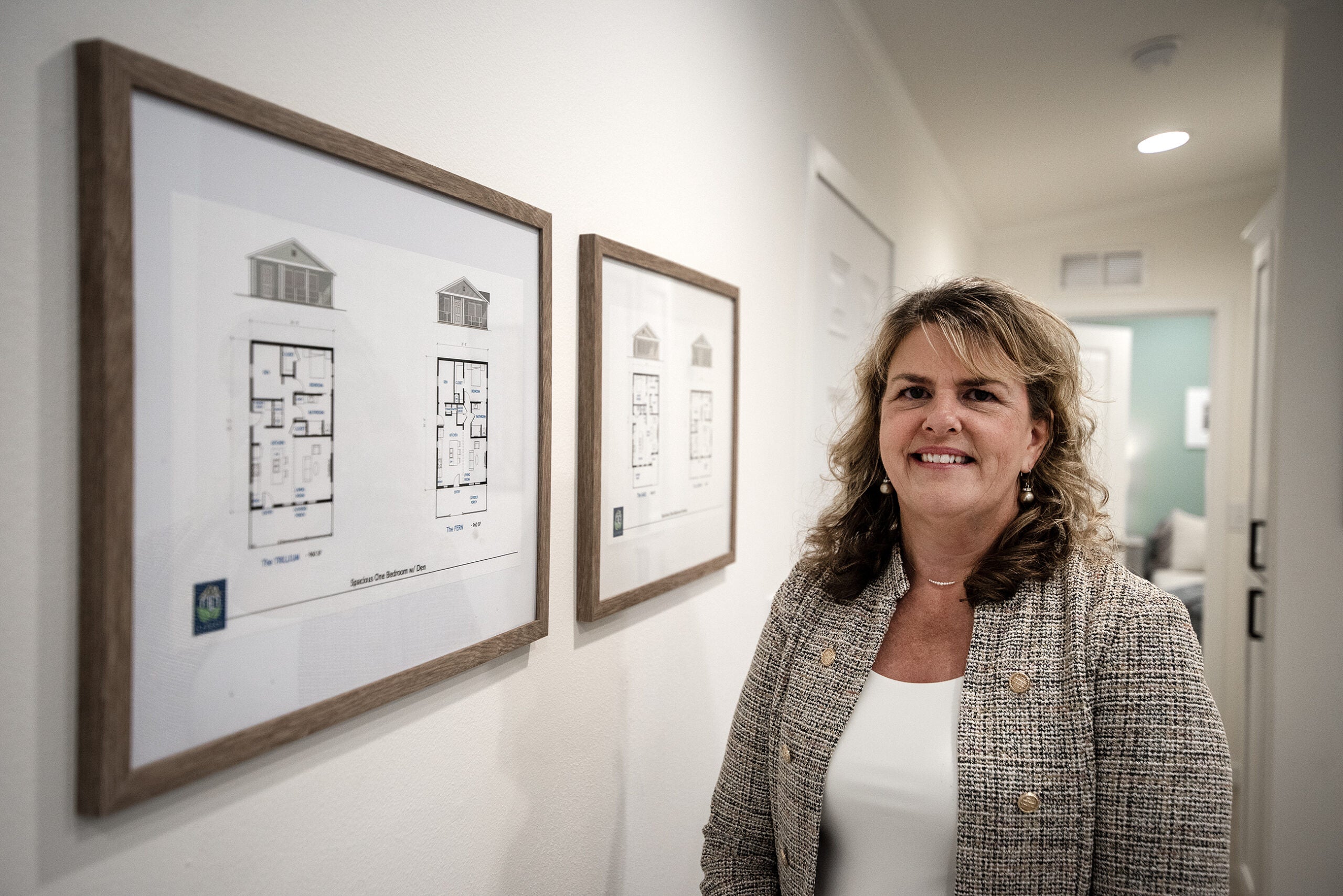
Collaborating with community members, she formed a task force that assessed the county’s response to dementia-related incidents, initiating reforms in emergency protocols and establishing Dementia Innovations.
“I’m kind of one of those people that if it’s not me, then who’s going to do it?” Pitsch expressed.
Pitsch and her team sought to create a proactive approach to dementia care, preventing emergencies by studying the Hogeweyk dementia village in the Netherlands.
“We are far behind other countries in a better, humanistic way of providing care for those with dementia,” Pitsch emphasized.
U.S. dementia care often prioritizes safety, according to Emily Roberts, an Oklahoma State University associate professor who studies the relationship between older adults and their environments. Creating supportive environments that enable choice and risk-taking can be costly, especially in the litigious U.S.
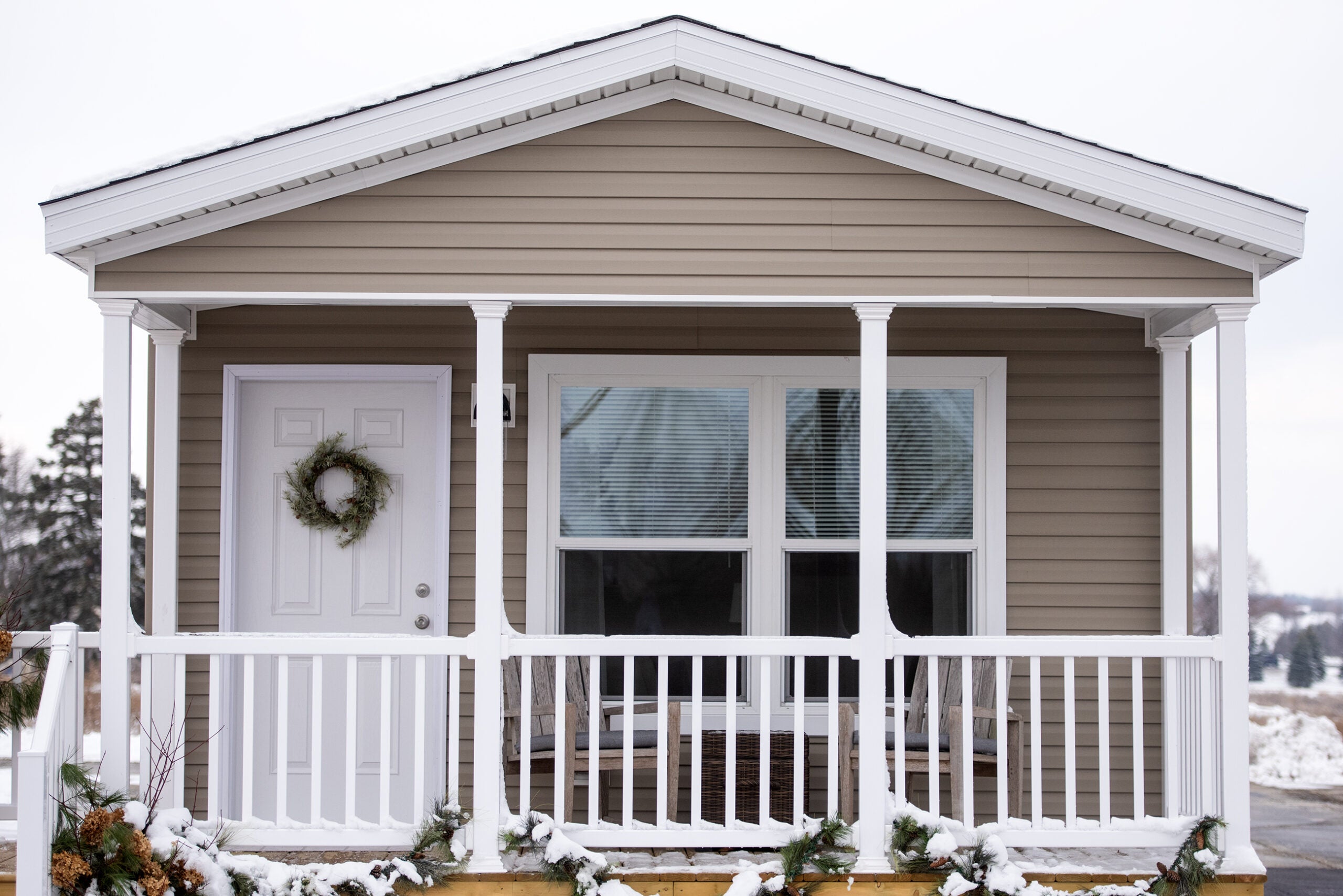
In Livasu, support staff will monitor the area, with cameras notifying them of unusual movements. Roberts noted that creating a homelike environment often deters individuals from leaving.
With dementia cases rising, more supportive living environments are necessary, particularly in aging Wisconsin. A private nursing home room in the U.S. averages $127,750 annually, according to the Alzheimer’s Association, which exceeds the cost of a smaller home in Livasu. Village residents will pay for care as needed, similar to at-home care, and Livasu volunteers assist potential homeowners in financial discussions, Pitsch explained.
As construction progresses, Livasu has raised over $8 million for its first phase, with an additional $6 million required for completion. The initial homes are ready to be placed on their foundations.
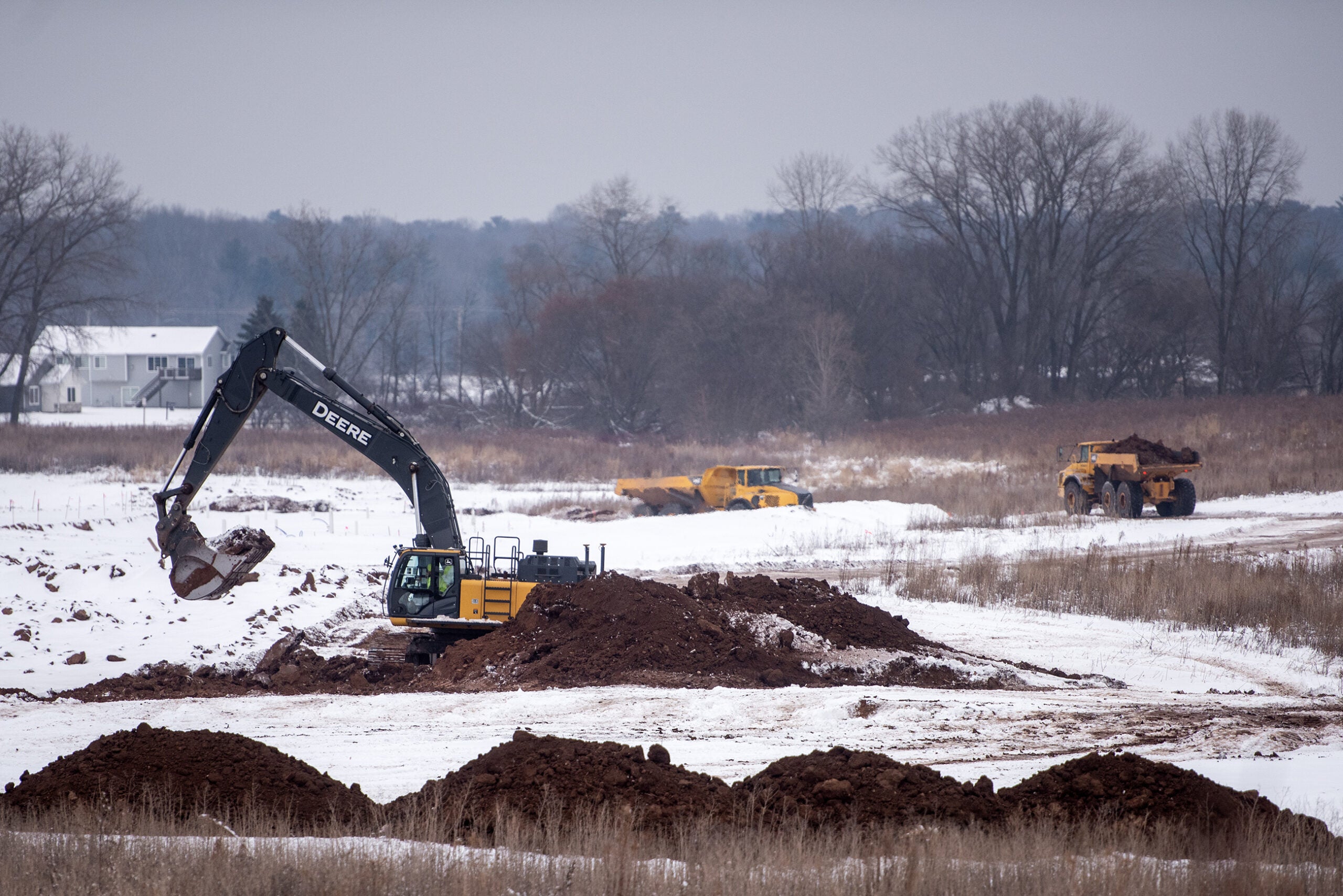
“I pinch myself,” Pitsch said. “It gets pretty emotional actually, to see that it’s actually happening,”
Wherever She Goes, I Go
Upon moving in, the Coopers do not anticipate needing caretaking services. They continue to visit their grandchildren weekly and enjoy extended hiking, camping, and cycling trips.
“Wherever I go, she goes, wherever she goes, I go. Except in the women’s bathroom,” John quipped, drawing laughter from Terri. “We kind of like each other, so that’s OK.”
After checking on their future community’s progress, the couple walked back to their car, still hand in hand.