Historic Black Hawk Bridge Demolition Draws Crowds and Nostalgia
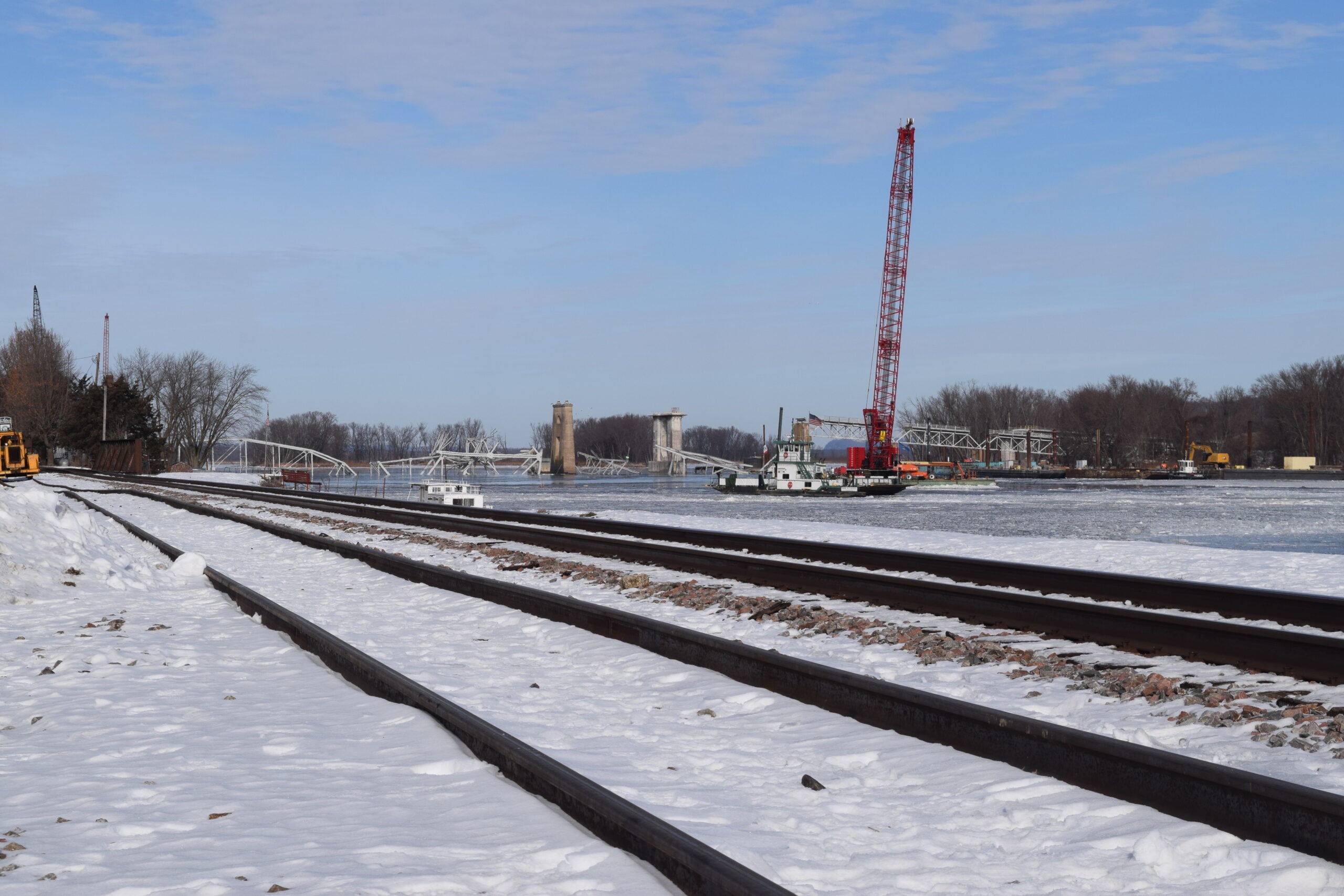
On a chilly Friday, over 100 vehicles lined the roads south of Lansing, Iowa, as spectators gathered to witness the demolition of the historic Black Hawk Bridge.
Constructed in 1931, the bridge’s removal was necessitated by safety concerns arising from a new bridge project connecting Lansing and rural Crawford County. The Black Hawk Bridge has long been a beloved fixture for residents of the Driftless Area, known for its distinctive steel grate driving experience.
Laurie Manning of Lansing captured the sentiment of many, saying, “Kids that go across that bridge, they hear that sound, they have the bumps, they can fly up in the air a little bit.” Manning, along with others from Wisconsin, Iowa, and Minnesota, gathered at the Driftless Area Education and Visitor Center to watch the event unfold. Despite the cold and a delay of an hour and a half, anticipation was high among the crowd.
Manning, who hails from De Soto, often made the drive across the river to visit family. Since the bridge’s closure earlier this fall, her commute has been more challenging, relying on a ferry service provided by the Iowa Department of Transportation or taking a 30-mile detour to the nearest bridges in Prairie du Chien or La Crosse. The absence of the bridge on her daily route is a significant change for Manning.
“I don’t want to visualize it not being there when I come into town,” she expressed. “The sun rises over here, it hits that bridge, and it just glows.”
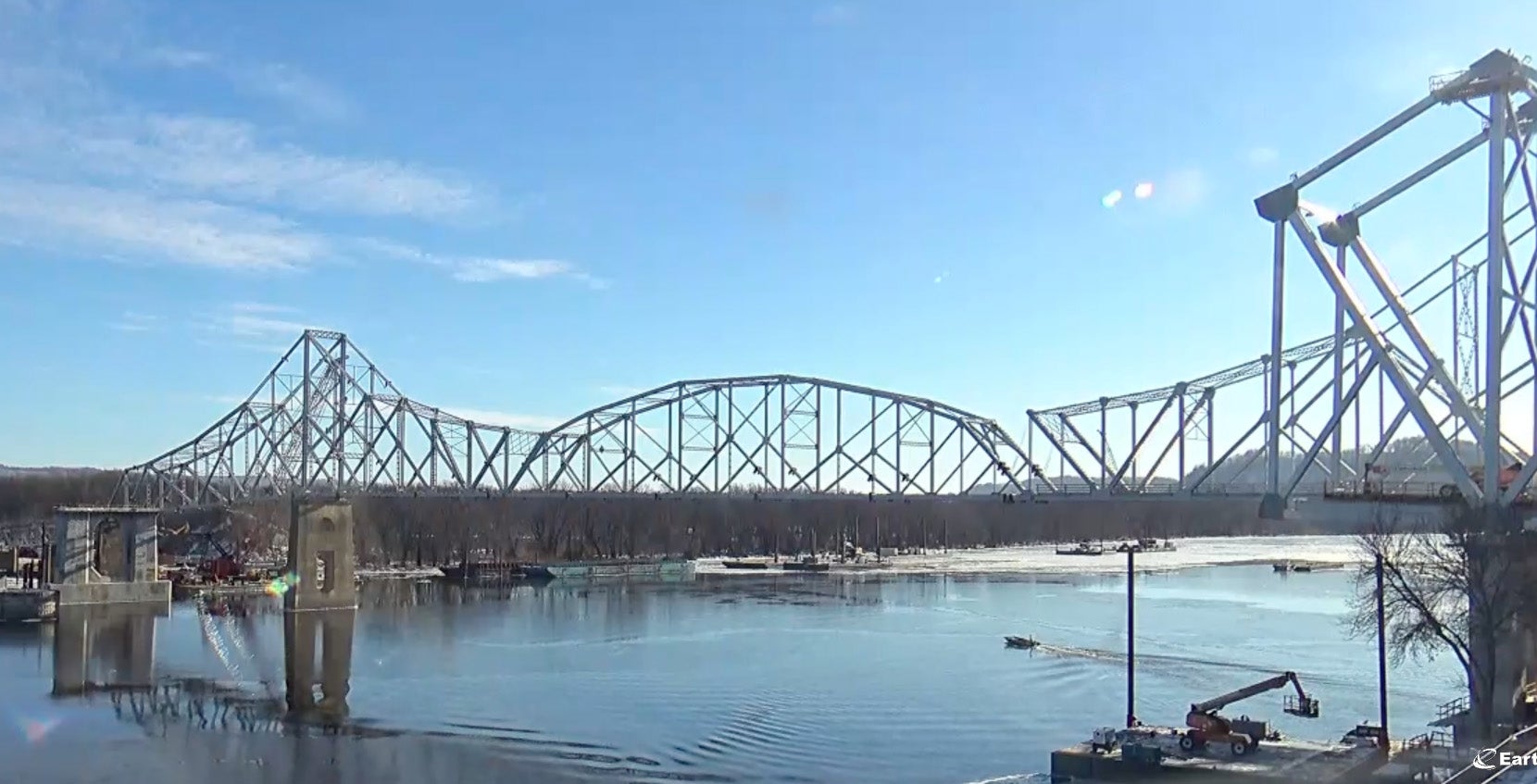
The Iowa Department of Transportation announced in July that the bridge would be demolished ahead of schedule due to safety risks posed by ongoing construction. Earlier in the year, the bridge had faced temporary closures due to safety concerns.
Ross Geerdes, director of the Allamakee County Conservation Board, noted a surge in visitors at the Driftless Center, many hoping to bid farewell to the bridge. The center is planning an exhibit to commemorate the bridge’s legacy.
“We have audio of cars going across the bridge, and we’re going to be able to play that audio for people,” Geerdes shared. “Everybody has a different memory of it, but for me, it’s the steel grate, and being able to look up as you’re going underneath it in a boat, and seeing the cars go across, and that unique sound that it has.”
Geerdes also mentioned the potential impact on educational visits, as the center works with approximately 20 schools in the region. However, he remains optimistic about the adaptability of travelers along the Great River Road.
To compensate for the bridge’s absence, the Iowa DOT intends to maintain ferry services across the river during the winter, using barges to manage ice conditions. The new bridge is slated for completion and opening in 2027.