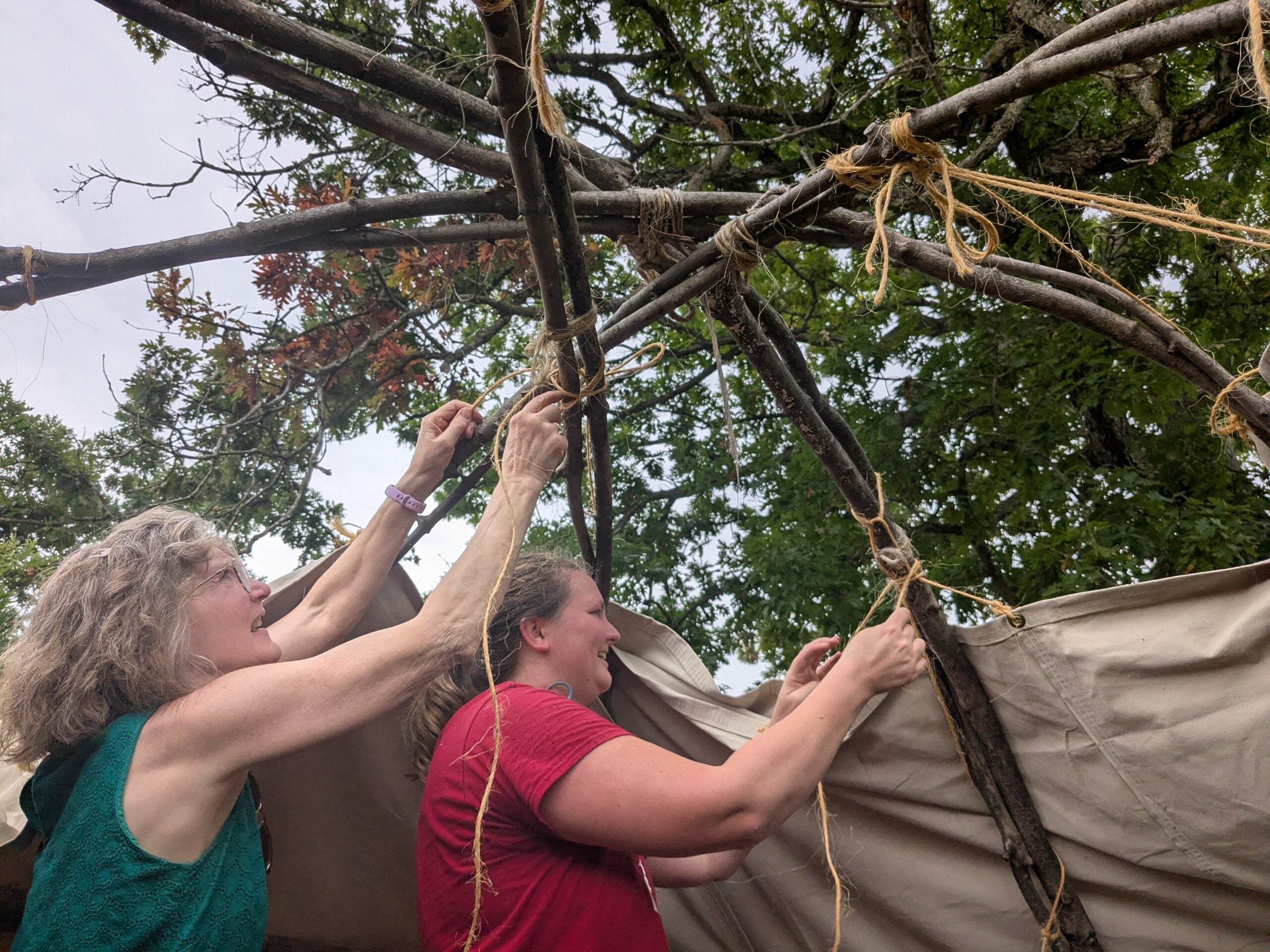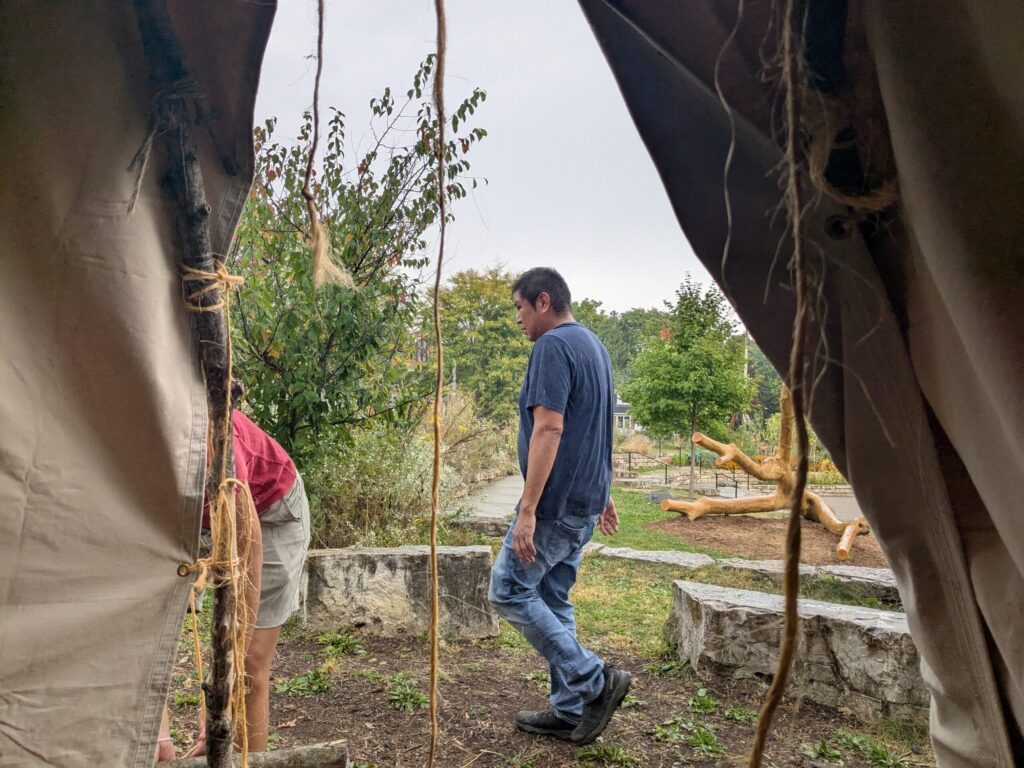
On a bright September day, the grounds of Wingra School in Madison buzzed with activity as Ho-Chunk artist and horticulturist Lightning New Rider prepared to guide students through a unique cultural project. The task at hand: refurbishing the school’s ciiporoke, a traditional Ho-Chunk structure crafted from bent tree saplings.
As New Rider measured canvas and readied twine, he explained the historical significance of ciiporoke, which were traditionally used for various purposes such as sleeping and storing harvest goods. “They did ceremonies every season to honor grandmother Earth and certain spirits like the four directions,” he shared.
Inside Wingra School, students ranging from kindergarteners to eighth graders gathered to hear New Rider speak about how ciiporoke once dotted the landscape of Teejop, an area known for its four significant lakes to the Ho-Chunk people. “Those were the first houses that were all spread out throughout this whole area,” he noted.
Two years prior, New Rider had worked with Wingra’s older students to gather tree saplings from tribal lands, which were then soaked in lake water to make them flexible. The students participated in building the ciiporoke, now positioned between the school and its basketball court. Andrea Sherry, a science and technology teacher at Wingra, reflected on the experience: “It was a really nice teamwork moment for the kids to actually be able to build something.”
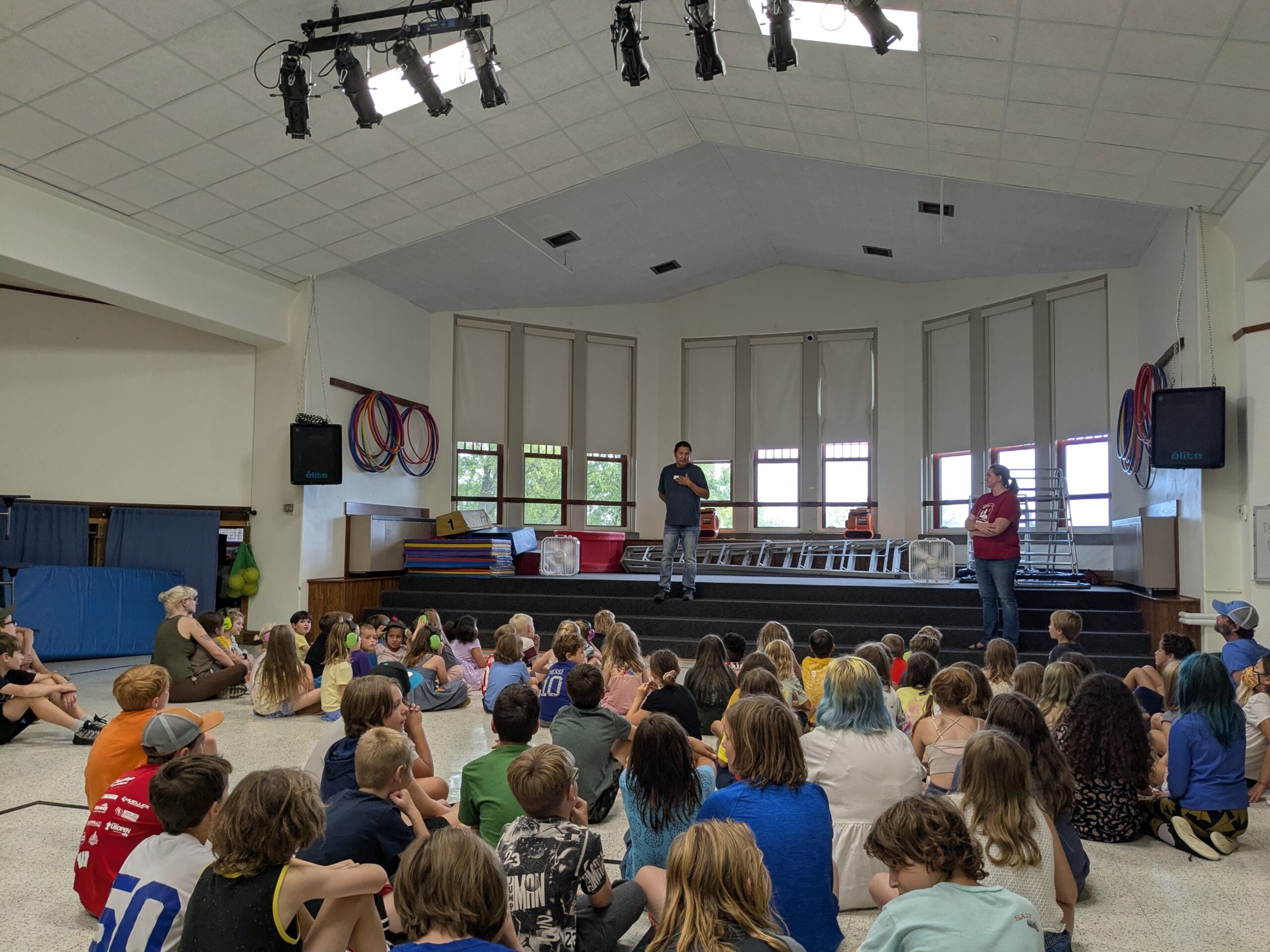
Over the past two years, the ciiporoke has been an open-air structure, serving as a playground feature for imaginative play. The students have transformed it into various settings, from a spaceship to a church. This year, New Rider returned to lead the effort to cover the structure with canvas, offering it a refreshed appearance and purpose.
The older students, known as Lakers and Skyers, learned to tie twine onto the canvas, which would be used to secure it to the frame. The younger students, called Nesters and Ponders, then helped transport the canvas to the structure. Together with the teachers, they attached it, with adults completing the task by covering the top.
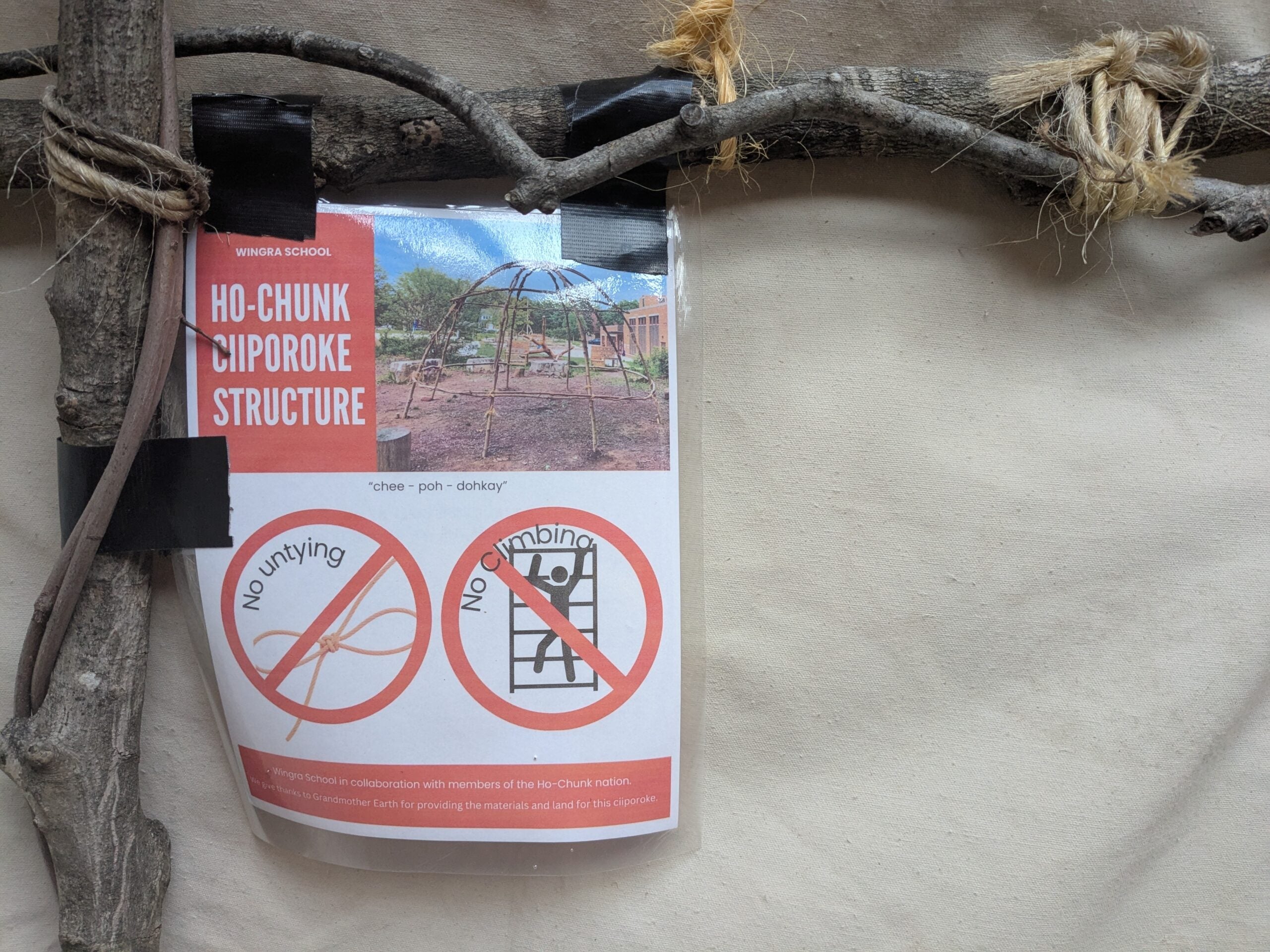
Standing by the finished structure, New Rider admired the ciiporoke nestled beneath an impressive oak tree. “This tree’s gotta be, like, 500 years old,” he mused. Building the ciiporoke with the students not only preserves Ho-Chunk traditions but also inspires a new generation. Looking ahead, New Rider plans to guide students at Tower Rock Elementary School in Prairie du Sac through a similar project.