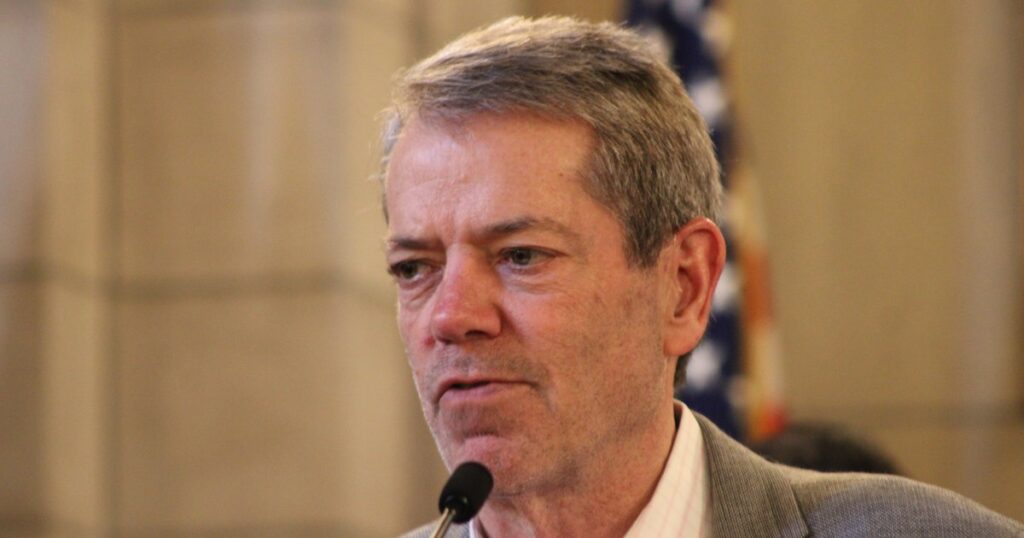
The governor of Nebraska, Jim Pillen, has announced plans to propose a state takeover of school funding as part of his strategy to alleviate the burden of property taxes. This initiative is expected to be a key focus in the upcoming legislative session.
During an interview with Nebraska Public Media News, Pillen outlined his vision where local school districts would continue using property taxes for infrastructure costs, but the state would assume responsibility for operational costs. According to Pillen, “We, the state, pay for educating the children. Pay for the operations. That would take a little over a billion dollars, maybe $1.2 billion.”
The governor’s plan to secure the necessary funds involves expanding the sales tax base. By redirecting these funds to replace property taxes, Pillen anticipates an overall tax reduction. Although his team is still finalizing the specifics of the sales tax modifications, he noted that while the current sales tax generates approximately $2.3 billion annually, eliminating exemptions could potentially increase this to $7 billion.
This is not the first time Pillen has suggested such a tax restructuring, though previous efforts faced resistance from critics who argued it would disproportionately affect middle-income residents and diminish local autonomy over schools.
Pillen has labeled high property taxes as a “crisis” that forces residents to leave their homes. He refutes claims that state-funded school operations would compromise local governance, citing the existing state support for community colleges as a precedent.
In response to questions about who would set school budgets under the new system, Pillen indicated that the current school aid formula, known as TEEOSA, would remain in place for determining financial needs. He also mentioned that school superintendents agree with his proposed 3% cap on annual budget increases. Any district wishing for greater increases would need voter approval and could cover the additional cost through property taxes.
When asked about the factors that might diminish opposition to his proposal, Pillen highlighted the recent changes within the Legislature and the increased awareness among senators regarding the issues with sales tax exemptions.
Senator Jana Hughes, vice chair of the Legislature’s Education Committee, responded to the governor’s renewed push by expressing her appreciation for Pillen’s efforts to boost state funding for schools. She noted that state support has grown from 38% six years ago to 53% last year, as documented in a report by the School Financing Review Commission.