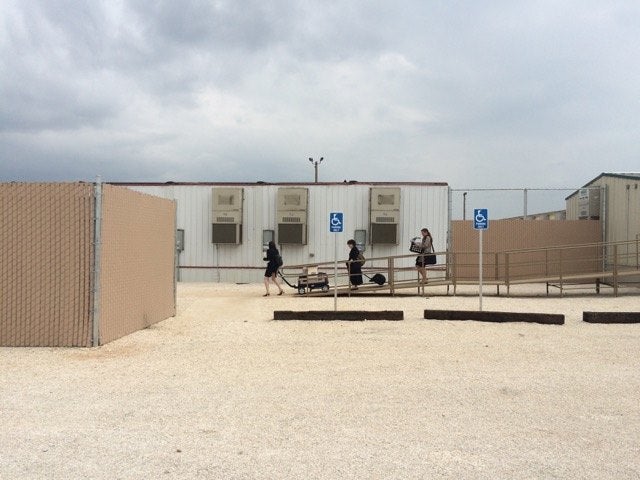
The detention of a Wisconsin woman and her son by U.S. Immigration and Customs Enforcement (ICE) in Texas has sparked concerns due to the facility’s history of poor conditions.
Diana Socha Torres, originally from Colombia, has been living in Wisconsin Dells while seeking asylum from the violence in her native country. Her immigration attorney, Marc Christopher, explained on WPR’s “Wisconsin Today” that Socha Torres missed a court hearing because the date was changed without her knowledge.
“The immigration courts, especially now, are changing dates very frequently,” Christopher stated. “And they do so sometimes with little or no notice … It’s very plausible that someone would not be aware of or could miss their court date.”
Following the missed hearing in April, ICE issued a deportation order for Socha Torres. She and her son were detained in Wisconsin Dells and transferred to the Dilley Immigration Processing Center in southern Texas.
Erin Barbato, director of the Immigrant Justice Clinic at the University of Wisconsin Law School, described the conditions at Dilley as “quite depressing.” She added, “We’re putting children in jail-like facilities and I think that we’re forgetting they’re children.”
Barbato, who visited the Dilley facility during the Biden Administration, noted detainee concerns about overcrowding and limited access to necessities like food, water, and medicine.
In a statement to WPR, ICE claimed that Socha Torres chose to return to Colombia with her son, asserting, “Being in detention is a choice. Parents can take control of their departure with the CBP Home app and reserve the chance to come back the right legal way.”
However, Christopher contested this claim, stating, “She wants to remain in the United States. She’s got a real and legitimate fear of returning to Colombia with her son, and that’s indicated by the fact that she’s followed every procedure. She’s filed her asylum application on time.”
Christopher expressed frustration with the difficulties of representing clients detained far from Wisconsin, noting that remote communication often suffers from poor sound quality and lacks confidentiality.
Socha Torres’ case is now with a judge to determine if the missed court date was reasonable, meanwhile, she and her son remain in ICE custody.
Supreme Court TPS, asylum rulings impact Wisconsin immigrants
The detention of Socha Torres coincided with the U.S. Supreme Court’s decision allowing former President Trump to revoke Temporary Protected Status (TPS) for Haitian and Syrian migrants and to deny asylum seekers entry at the border.
Barbato highlighted the implications of these rulings, stating, “Now we’re seeing that most people will not even be able to access the process of applying for asylum in the United States, because it will be impossible, eliminating the ability for someone to apply when they arrive at the southern border.”
Christopher, who represents many Haitian refugees in Wisconsin, expressed concerns about the ruling’s impact, noting that it may force his clients to return to unstable situations without adequate notice or evidence of improved conditions in their home countries.