From a child with a knack for numbers to a key player in NASA’s lunar explorations, Susan Lederer’s journey reflects a remarkable evolution. Despite her early disinterest in science, the Wisconsin native’s career trajectory has landed her at the forefront of space missions.
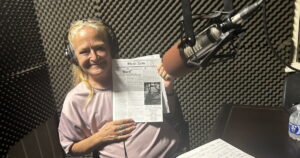
“I really wasn’t interested in science, says the future scientist. And I really didn’t like physics, says the future physics professor,” Lederer shared during an interview on WPR’s “Morning Edition.”
A graduate of the University of Wisconsin-Eau Claire, Lederer has been with NASA for over 15 years, contributing as a planetary and space scientist.
Recently, she witnessed NASA’s Artemis II mission, where astronauts ventured farther from Earth than ever before, culminating in a successful lunar flyby. This event marked the first of its kind since 1972.
Lederer serves as the lead project scientist for NASA’s Commercial Lunar Payload Services (CLPS) under the Artemis program. Based at the Johnson Space Center, CLPS is responsible for deploying scientific instruments on the moon to study its environment.
“We have over 50 instruments that have either been slated for future missions to the moon or that are on the moon right now,” Lederer noted.
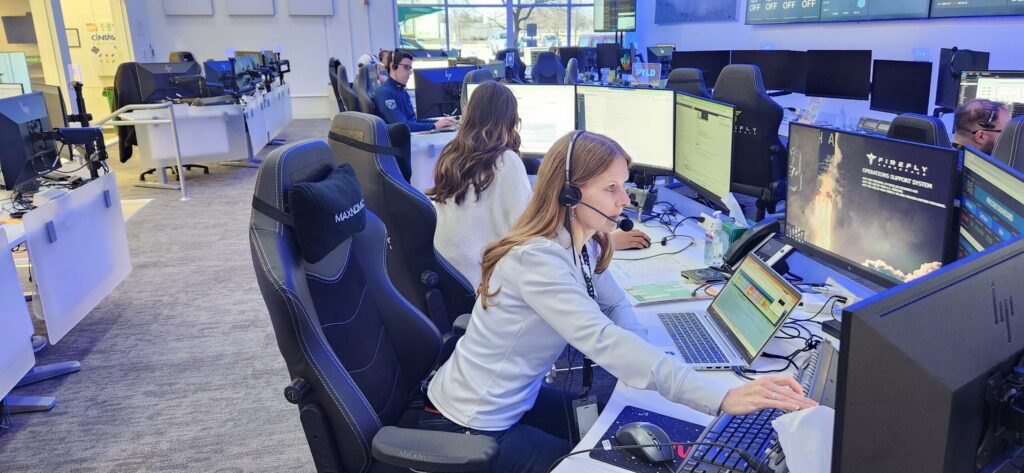
From her console, Lederer was astonished to observe flashes of light from the moon’s far side, caused by micro meteoroid impacts. She explained, “When that happens, it creates a flash of light.”
To better understand these occurrences, her team plans to study the moon’s seismic activity with seismometers during future missions.
Although the seismic mission is a few years away, Lederer remains inspired by the recent Artemis II mission, which she believes makes science “accessible” to the public.
NASA Scientist’s Wisconsin Roots
Lederer is keen on fostering an interest in science among young students, emphasizing the pathways available to NASA. “If I stopped the first time that I tried physics as a freshman, I wouldn’t be where I am today,” she stated.
While residing in Houston, Lederer maintains her connection to Wisconsin, where her brother, an educator at Appleton Public Montessori, facilitates her local talks on space exploration.
She fondly recalls inspiring teachers from her own school days. “They said, think about what you can do with math as a language that helps you understand things in a different way,” she reminisced.

At UW-Eau Claire, she pursued math and physics, leading to opportunities like a job at the planetarium. “My physics professor, Dr. Elliott, said ‘I’ve noticed that you’ve been in the (planetarium) an awful lot — would you like a job?’” she recounted.
Her career expanded to researching telescopes and eventually earning a PhD in astronomy and astrophysics. After a stint as a postdoctoral fellow, she joined NASA’s Johnson Space Center.
Lederer later transitioned to academia as a physics professor but continued her engagement with NASA, contributing to projects such as building telescopes and working with the Defense Advanced Research Projects Agency on discovering the TRAPPIST planetary system.
She encourages young minds to pursue opportunities in science and math, saying, “When those opportunities present themselves, grab them, try them, do things you never thought you would be interested in.”