In a remarkable effort to foster wildlife conservation, the University of Nebraska-Lincoln (UNL) has been selected as one of nine institutions nationwide to receive a grant from Mutual of Omaha’s Wild Kingdom this year.
This grant is part of a collaborative initiative between Mutual of Omaha’s Wild Kingdom and the National Wildlife Federation. It aims to support universities in advancing conservation, education, and research efforts for endangered species within their locales.
The University of Nebraska-Lincoln plans to utilize this financial support to conduct habitat assessments and install nest boxes for Southern Flying Squirrels on its East Campus.
Efforts Led by UNL Faculty and Students
Lord Ameyaw, an assistant professor and forester at UNL’s School of Natural Resources on East Campus, spearheaded the grant application process. Despite facing initial setbacks, Ameyaw and his team successfully secured the grant on their second attempt. “We almost made it, but we didn’t get it,” Ameyaw explained, adding, “But since we already had everything done, we kind of just updated everything and reapplied this year, and we ended up getting it.”
Assisting in this project is Cameron Lyons, a recent UNL graduate, who is currently involved as a non-degree-seeking graduate student. Recruited by Ameyaw two years ago, Lyons has been instrumental in mapping the nest boxes across the campus and evaluating the health of the trees supporting them.
Southern Flying Squirrels: A Hidden Wonder
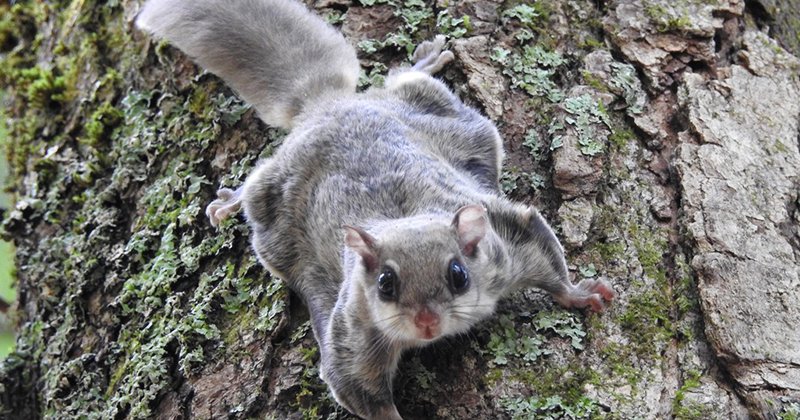
The Southern Flying Squirrel, a small glider distinguished by its white belly and flat tail, had been believed to inhabit only the southeast corner of Nebraska until a serendipitous discovery in December 2021 revealed their presence on UNL’s East Campus.
John Carroll, Emeritus Professor of Wildlife, recounted the discovery when a UNL landscape crew, while removing dying trees, stumbled upon the squirrels. “He turned his video on, and he got this really nice video of a bunch of flying squirrels coming out of the tree,” Carroll recalled.
The presence of these squirrels in Lincoln has sparked curiosity and debate about their origins. While some speculate that the squirrels might have been pets that escaped or were released, Carroll offers a more straightforward theory. He suggests that the squirrels naturally migrated west, using wooded stream corridors as passageways between Nebraska City and Lincoln.
As Lincoln’s landscape evolved over the past century, with the planting of nut-bearing trees, the environment became conducive to the squirrels’ habitat needs. Many of the city’s older neighborhoods now have trees with cavities and dying limbs, ideal for these creatures.
Enhancing Habitat and Public Engagement
To provide a safer and more sustainable habitat for the squirrels, Carroll and his team have started constructing and distributing specially designed nest boxes. These boxes offer an alternative to residing in attics or decaying trees. Carroll adapted the design of these boxes from a retired Ohio professor, who had studied flying squirrels for 25 years.
The project also envisions a public engagement component. Once the habitat map is completed, the team plans to create a self-guided tour and provide trail camera footage, allowing the public to witness these nocturnal animals in their natural environment.