Over recent years, the conversation around college students’ basic needs has shifted significantly, influencing the actions taken by institutions like UM-Flint. This evolution highlights the increasing recognition of challenges such as food insecurity and housing instability faced by students across the country.
Research conducted by the Wisconsin HOPE Lab, now the Hope Center for Student Basic Needs at Temple University, revealed a widespread but overlooked issue: many students face critical shortages in basic necessities. These findings have changed the perception of student hardships from isolated instances to systemic issues that require comprehensive solutions.

Between 2016 and 2019, efforts to address these needs advanced from sporadic measures to organized support systems, including the development of campus food pantries and the provision of emergency financial aid. This progress was further integrated into educational policies by several states, tying student retention and completion directly to their basic needs.
The COVID-19 pandemic further accelerated these efforts. Universities quickly allocated federal relief funds, provided essential technological resources, and expanded mental health services, underscoring the importance of addressing basic needs as a fundamental aspect of student success.
Evolution of Student Support at UM-Flint
In 2015, a study by UM-Flint’s Social Work program revealed that a significant portion of students faced food insecurity. This was a pivotal moment, as it laid the groundwork for future initiatives aimed at alleviating such hardships. The student-led study highlighted that 58% of participants struggled with food access, while 38% faced consistent scarcity.
This led to the establishment of the Wolverine Food Den in 2019, a joint venture by the Department of Social Work, the Division of Student Affairs, and the Food Bank of Eastern Michigan. Initially offering nonperishable items during limited hours, the pantry quickly saw rising demand, indicating a deeper need among students.
Expansion and Beyond
With grants from Michigan’s educational programs, UM-Flint expanded its support systems, implementing a comprehensive needs assessment in partnership with the Hope Impact Partnership. This assessment informed the enhancement of support services, which now include a variety of essentials such as clothing, hygiene products, and personal care items.


Now known as Wolverine Essentials, the initiative has grown into a multifaceted support hub. It offers comprehensive aid and individualized case management to assist students in accessing necessary resources, ensuring their stability and success.
Future Directions
Current efforts at institutions like UM-Flint emphasize the integration of basic needs support with academic success strategies. The focus has broadened to include housing support, child care, transportation, and financial education, acknowledging the complex economic challenges students face.
In alignment with this approach, UM-Flint recently secured a $300,000 grant from The Kresge Foundation. This funding supports the “Wolverine Essentials Informed Solutions” initiative, which aims to broaden services and incorporate students’ lived experiences into program development, particularly focusing on first-generation and parenting students.
As part of this commitment, UM-Flint continues to refine its support systems, ensuring they are equitable and proactive. This approach not only addresses immediate needs but also strengthens students’ overall educational journey, helping them to thrive without having to choose between essential needs and their academic pursuits.
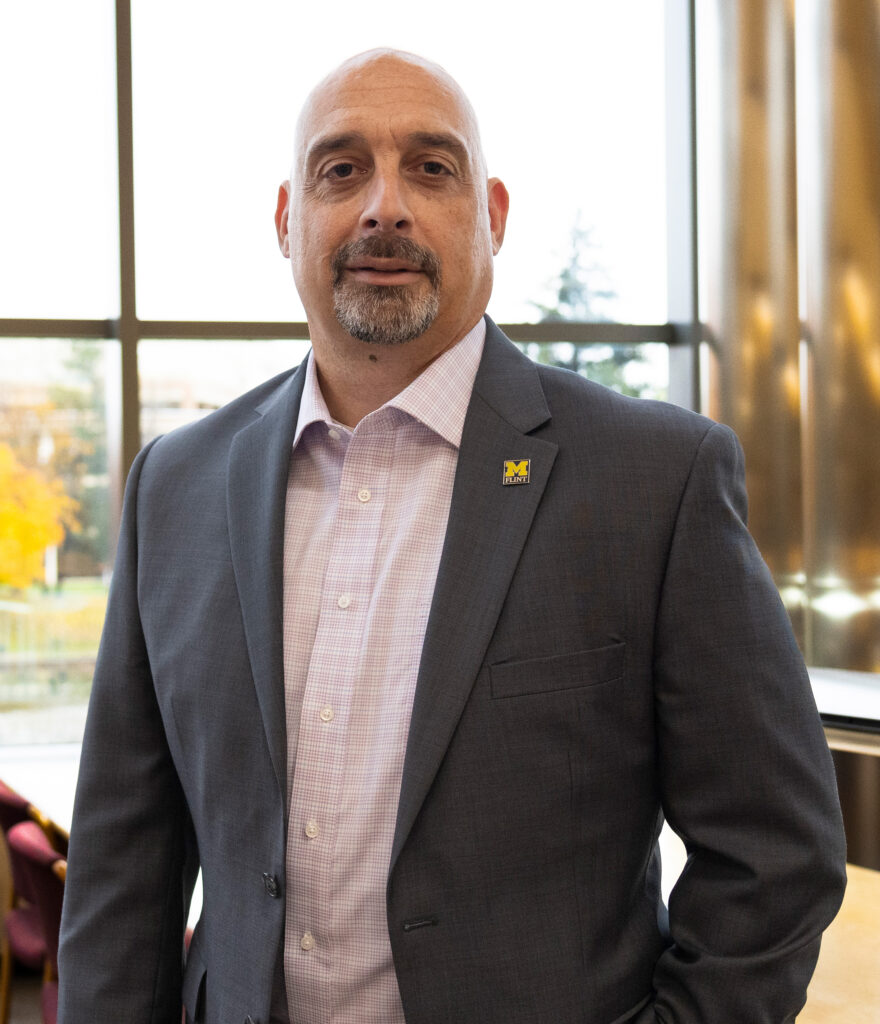
— By Christopher Giordano, vice chancellor for student affairs at UM-Flint, a position he has held since August 2018. Giordano has more than 30 years of experience in higher education and student affairs and a deep commitment to student success and urban higher education.