Innovation in sustainability is gaining significant recognition at the University of Michigan, where three projects focusing on waste reduction, food access, and reuse have been honored by a prestigious organization. These initiatives, recognized as Outstanding Case Studies by the Association for the Advancement of Sustainability in Higher Education (AASHE), are setting benchmarks for similar efforts at universities across the nation.
Included in the AASHE’s 2026 Sustainability Awards, the Lab Swap Shop, Maize and Blue Cupboard, and Returnable Shelves programs were recognized among 25 exemplary case studies nationwide for advancing sustainability in higher education institutions.
“These programs reflect an inspiring range of collaborations and initiatives that support students and the campus community in truly meaningful ways,” said Shana Weber, associate vice president for campus sustainability. “I’m excited to see the teams recognized at the national level.”
Lab Swap Shop
Established in 2024, the Lab Swap Shop is designed to facilitate the reuse of excess laboratory equipment and supplies throughout the University of Michigan campus. This initiative is a collaboration between the Office of Campus Sustainability and Innovation, Environment, Health & Safety, and LSA Sustainability. It builds on existing programs, such as the Door-to-Door delivery service, and organizes annual lab swap events to reallocate surplus chemicals and laboratory items, thereby reducing unnecessary purchases and waste.
Since its inception, the Lab Swap Shop has successfully saved the university’s researchers over $1 million in research costs.
Maize and Blue Cupboard
The Maize and Blue Cupboard, initially created by students, addresses the issue of food insecurity on campus by providing free food, personal care products, and household items. It is operated within the Division of Student Life in cooperation with Michigan Dining. The program’s impact is underscored by its record of over 26,000 visits in 2025, highlighting a significant demand and its essential role in aiding a campus where one-third of students face food insecurity.

Returnable Shelves
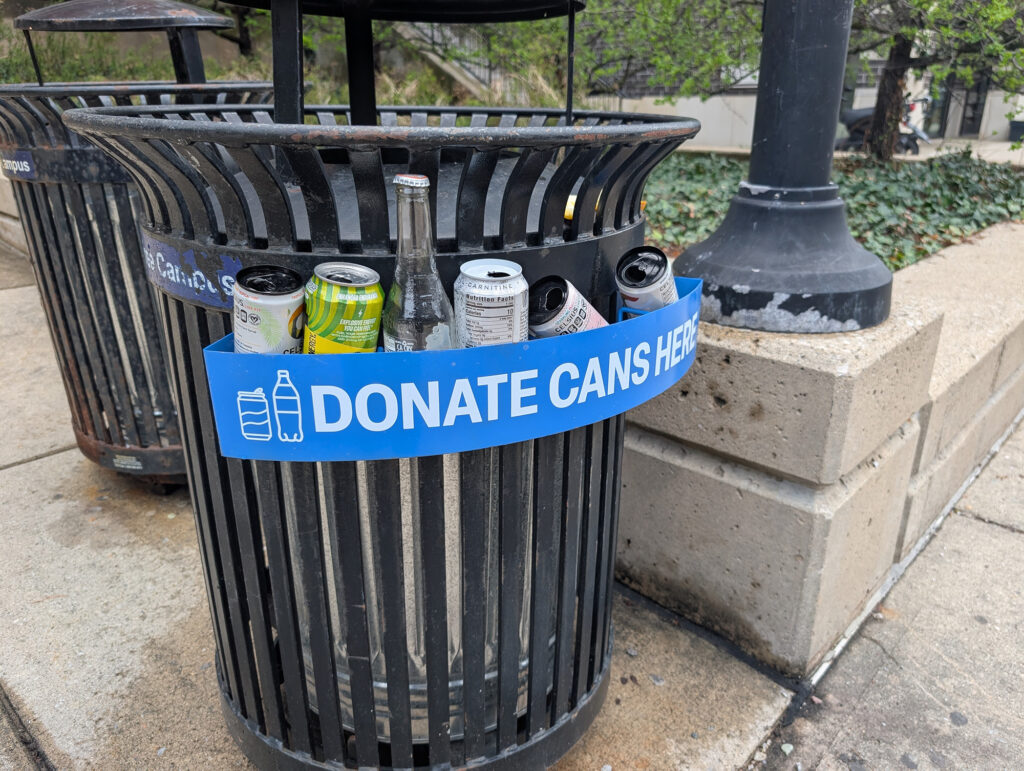
Promoting the reuse and recycling of returnable items, the Returnable Shelves program offers designated areas for students and staff to exchange reusable goods, thereby reducing waste. The program is part of Michigan’s broader recycling strategy and has proven effective. Michigan Dining staff and students recognized an opportunity to prevent returnable cans and bottles from ending up in garbage bins. By installing shelves on these bins, individuals can conveniently leave their returnables for others to redeem, thus supporting the state’s environmental initiatives.
“Student-led initiatives like the Maize and Blue Cupboard and the Returnable Shelf program bridge the gap between campus sustainability and broader community needs,” noted Keith Soster, MDining’s director of student engagement and sustainability. “By empowering students to lead, and fostering their development through health, sustainability and engagement, we strengthen our campus culture and create an environment where the entire university community thrives.”
National Recognition
The AASHE Sustainability Awards are given to initiatives that demonstrate quantifiable success and provide replicable models for other academic institutions. The Outstanding Case Study honor underscores the university’s commitment to tackling sustainability challenges with practical and innovative solutions.
Furthering these efforts, the university’s Campus as Lab initiative supports additional sustainability projects, encouraging the integration of academic research with practical campus operations and student engagement.