University of Michigan Expands Solar Power with New Installations
In a significant step toward renewable energy, the University of Michigan has expanded its solar power capacity on the North Campus, adding two new solar arrays. This development brings the university’s total solar generation capacity to 2.5 megawatts across seven locations in Ann Arbor and Dearborn.
The new solar installations align with U-M’s strategic initiative to enhance on-campus solar generation and boost energy resilience. These arrays are “behind-the-meter” systems, which means they supply electricity directly to the university’s grid, allowing immediate use and distribution among nearby campus buildings.
The operational sites reflect the university’s ongoing progress towards achieving 25 megawatts of on-campus solar power across its properties.

“These projects demonstrate continued momentum in building a more resilient and sustainable energy system for the university,” stated Brian Hall, assistant vice president for utilities. “Each installation helps us reduce emissions, strengthen operational resilience, and expand the role of renewable energy across our campuses.”
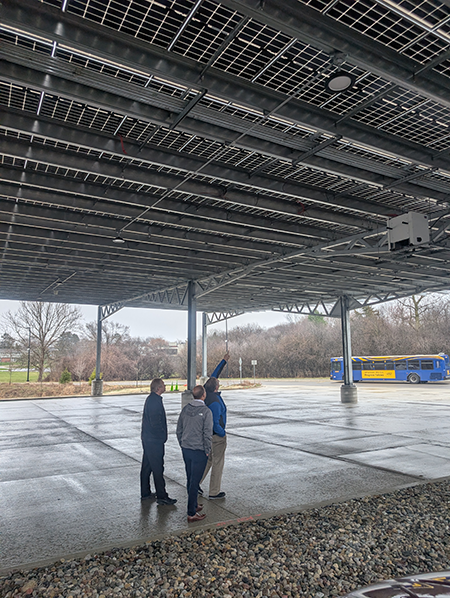
The latest installation, located at the Dean Road Transportation Facility within the North Campus Administrative Complex, features rooftop panels and solar carports with a combined capacity of roughly 0.73 megawatts. Completed in winter 2026, it is now operational and contributing to the campus’s energy needs.
The recent additions to the Maize Rays initiative complement earlier installations, including those at the North Campus Facilities Services Building and the Tony England Engineering Lab Building, which marked the first solar site on the UM-Dearborn campus. Collectively, these systems now generate enough clean energy to power approximately 300 average Michigan homes annually.
The Maize Rays initiative is integral to the university’s energy transition strategy, particularly in reducing Scope 2 greenhouse gas emissions from purchased electricity.
Currently, an additional 1.1 megawatts of solar capacity is under construction, with more projects slated for development as summer progresses.
“The continued expansion of Maize Rays reflects the university’s commitment to stewardship and energy transitions that are good for communities,” remarked Shana Weber, associate vice president for campus sustainability and innovation. “These projects not only reduce risk associated with reliance on fossil fuels but also create opportunities for learning and engagement across the university and broader community.”
The initiative is a collaborative effort among the Office of Campus Sustainability and Innovation, Facilities & Operations, Radial Power, and student groups such as Students for Clean Energy.
Future phases of Maize Rays aim to include community-engaging solar installations, developed in collaboration with nearby communities, extending the initiative’s impact beyond campus boundaries.