Education Board Stalemate Over Federal Mental Health Grants and Other Key Issues
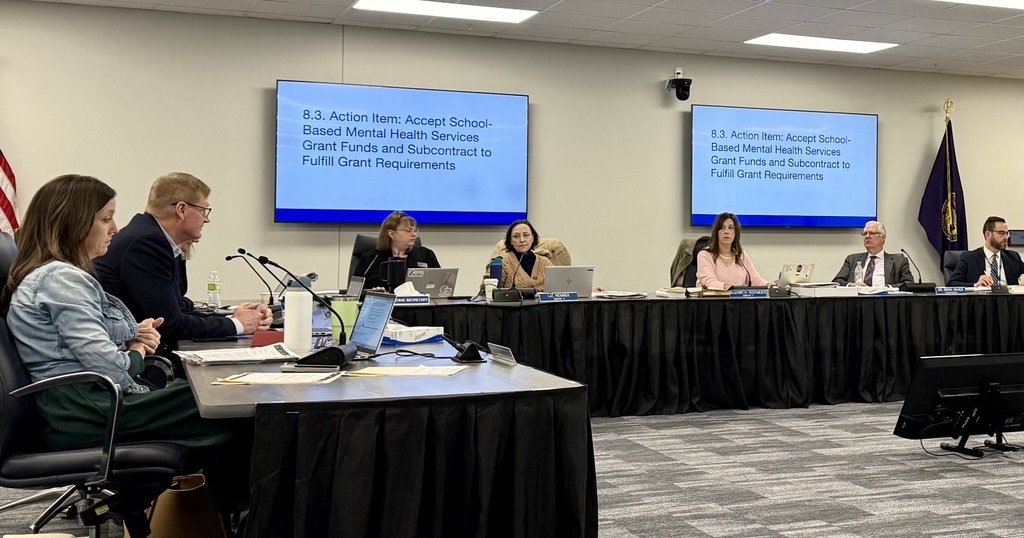
The Nebraska State Board of Education recently faced a stalemate, resulting in the deadlock of two critical federal mental health grants aimed at bolstering the recruitment and retention of school psychologists. This decision came amidst ongoing debates among board members over establishing clearer guidelines for mental health initiatives.
Republican board members, including Kirk Penner from southeast Nebraska, stood firm on their position against the mental health grants without the establishment of specific guidelines. Penner emphasized the need for “guardrails, safeguards, make it sustainable, data driven, parental notification and measurable” measures, echoing concerns he raised last year when a similar mental health grant was not approved.
Democratic members of the officially non-partisan board countered these concerns by highlighting existing guidelines for mental health professionals and requesting specific details on the additional safeguards desired by their Republican counterparts. Maggie Douglas, representing a different part of southeast Nebraska, shared her insights as a mental health counselor, explaining the multi-layered approval process required for her work in schools, involving the principal, the district, and parents.
During the public comment period, James McGown, an administrator with Educational Service Unit 16 in Ogallala, expressed support for the grant, stating, “This grant allows us to meet current needs and buys time for sustainable solutions.”
Debate on Educational Policy and Literacy Standards
In another tied vote, the board discussed their stance on a legislative bill that proposes holding back third graders who demonstrate a “proficient reading deficiency.” Introduced by Sen. Dave Murman on behalf of Gov. Jim Pillen, LB1050 would enable the Nebraska Department of Education to establish assessment score thresholds for identifying students not reading at grade level.
Deborah Neary, representing Omaha, suggested changing the board’s stance to oppose the bill, citing parental concerns of government overreach and the potential punitive nature of the bill, which could overshadow positive interventions. Despite these arguments, the motion did not pass, leaving the board’s stance neutral.
Board member Lisa Schonhoff, from northeast Nebraska, maintained a neutral position, recalling her decision to hold back a kindergartner during her teaching career to prevent long-term detriment, emphasizing that “everyone has a different brain. They advance at different levels.”
Rejected Contracts and Changes in Teacher Certification
The board also reached an impasse in a contract vote with ECDataLab, intended to merge state data on early childhood education and literacy. Concerns were raised about the necessity and impact of such data analysis, despite Melody Hobson from the Nebraska Department of Education assuring that the data would remain within Nebraska to improve understanding of early childhood education.
Additionally, the board approved a change affecting theater and speech education. Previously, these subjects required supplemental endorsements, necessitating a separate degree alongside theater or speech classes. With the recent rule change, students can now pursue a degree directly in theater or speech education, streamlining the pathway to become educators in these fields.
The next board meeting is scheduled for May 8 in Bellevue.