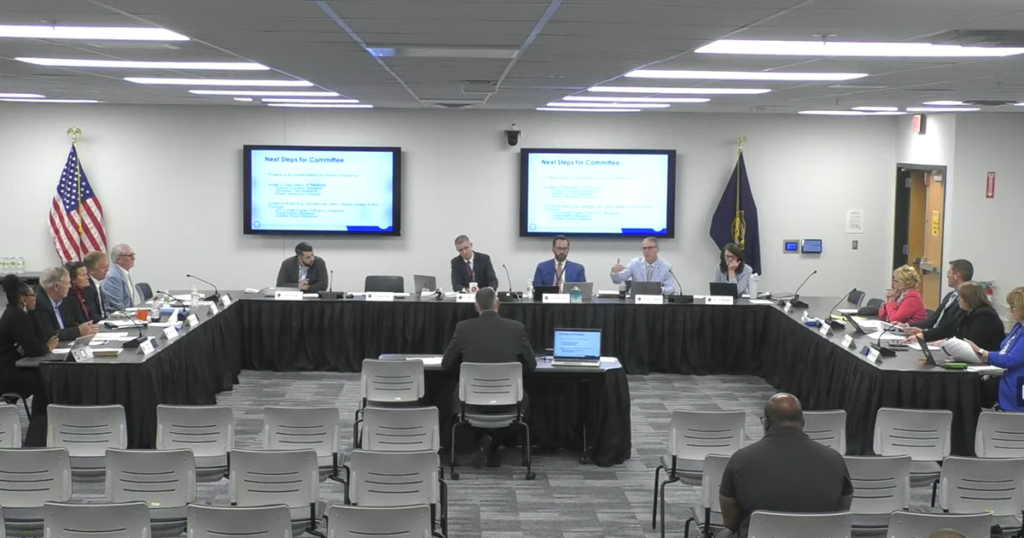
Rural schools in Nebraska might see changes in how they receive state aid, as discussed during a recent School Financing Review Commission meeting. The current formula, which relies heavily on property taxes, is under scrutiny for its effectiveness in supporting districts with significant farmland.
Nebraska’s formula for determining state aid compares a district’s financial needs to its potential property tax revenue. This method often results in rural districts with valuable farmland receiving little to no “equalization” aid. On Thursday, Sen. Dave Murman highlighted a critical issue with this approach, especially during times when farmers face financial losses.
“If 90% or all farmers in the district didn’t have income that year or negative income, they don’t have any more ability to pay property taxes, or they would still need extra state aid,” Murman explained.
One suggested reform involves considering factors such as the number of families in a district receiving food aid or welfare as a basis for allocating some state aid. This proposal aims to provide more equitable support to districts facing economic challenges.
Meanwhile, State Auditor Mike Foley has criticized the Department of Education for errors in calculating funds for schools teaching low-income students under the current formula. The state Board of Education plans to address this issue in its meeting scheduled for Friday, May 8.
The commission is anticipated to propose modifications to the funding formula later this year, aiming to make state aid distribution more equitable for all school districts.