Reading Initiatives in Pennsylvania Schools: A New Approach to Literacy
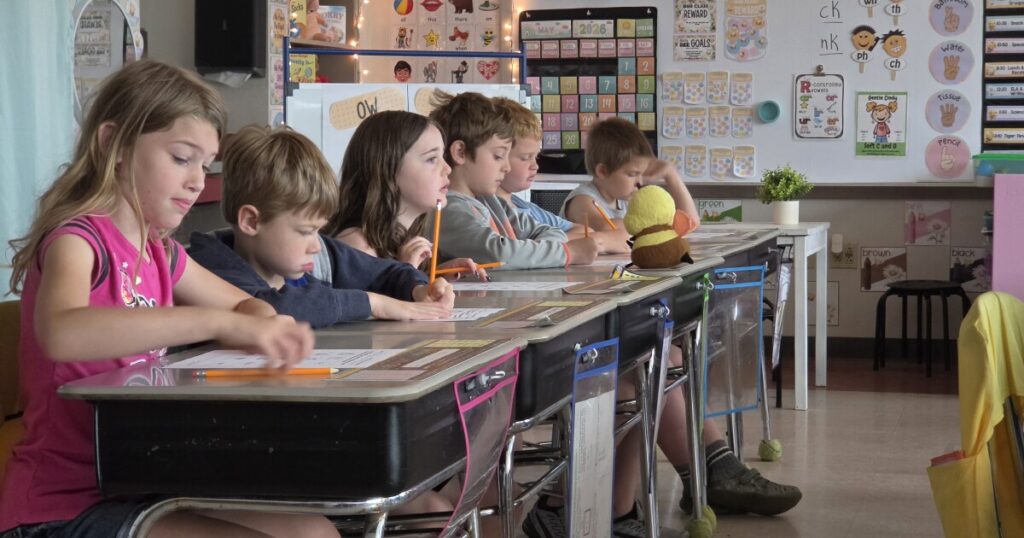
In the first-grade classroom of L.R. Appleman Elementary School, Benton, students eagerly engaged in phoneme substitution exercises, transitioning words like “bed” to “bird.” As summer break approached, teacher Joanne Steltz encouraged her students with words of praise, emphasizing the importance of listening and learning.
The Benton Area School District is making headlines for maintaining its English language arts proficiency scores amidst a state-wide decline since the COVID-19 pandemic. While most Pennsylvania districts have struggled with significant drops, Benton Area has only seen a slight 2.5% decrease since 2019, according to WVIA News’ annual PA School Report Card.
“No matter where you go or what you do, you have to be able to read. You have to be able to write,” stated Daniel Yarnell, principal at Appleman. “We’re making sure that we’re laying that foundation solid for the kids, so they’re successful moving forward.”
Addressing the Literacy Crisis
Concerns are mounting over a potential literacy crisis in the U.S. Recent data from the National Assessment of Educational Progress indicates that only 33% of Pennsylvania’s fourth graders read proficiently — a 20-year low. Moreover, reading proficiency among Black and Hispanic students stands at 20% and 18%, respectively. The Nation’s Report Card reveals no significant change in national reading scores since 1971, with Pennsylvania’s decline outpacing the national average.
The WVIA News’ PA School Report Card compares proficiency levels from the 2025 PSSA tests with those from 2019. Results show that while only four of 500 districts saw gains in English language arts, 187 districts managed to maintain or improve math scores. The pandemic highlighted the need for educational improvements, particularly in reading instruction.
Innovative Reading Instruction Methods
In Scranton’s McNichols Plaza Elementary, Suzie Shaffer’s reading classroom demonstrates a shift in teaching methodology. Moving away from a balanced literacy approach, Shaffer now focuses on phonics and phonemic awareness, reflecting the “science of reading” — a research-based approach to literacy.
This method has become a requirement in Pennsylvania. As part of the 2025-26 state budget, legislation was enacted mandating evidence-based reading curriculum and targeted support for students with reading deficiencies. Implementation is expected by the 2027-28 school year, with calls for legislative funding to support this transition.
Scranton’s Literacy Initiative
In Scranton, a concerted effort to overhaul reading education has led to significant improvements. Superintendent Erin Keating, alongside the Scranton Federation of Teachers, has unified the district’s curriculum and provided comprehensive training on the science of reading. “If you cannot read, you cannot learn,” Keating emphasized.
The focus is now on understanding how the brain processes reading, including decoding and sound awareness. Shaffer’s first graders, for instance, learn to differentiate vowel teams and diagraphs, securing a strong literacy foundation.
Community Efforts in Benton
Benton, a close-knit community in Columbia County, is committed to nurturing literacy in its schools. With class sizes averaging 15 students, teachers can offer personalized attention. The legacy of Frank Laubach, a local missionary who pioneered literacy programs, is a source of inspiration for educators like Cathy Williams, who emphasizes the goal of making every child a reader.
Innovative programs, like book bingos and reading incentives, keep students engaged. As summer break approaches, the commitment to learning remains steadfast, with new curricula aligning with research-backed literacy instruction set to be introduced.
Accessing PSSA Test Scores
To explore the standardized test scores for the state’s 500 school districts, comparing 2025 scores with those from 2019, visit the following databases: