In response to the growing energy needs driven by an influx of data centers, a task force in North Carolina has been working for six months to create strategies to meet these demands effectively. This collaborative group, consisting of policymakers, regulators, and energy experts, has now unveiled a comprehensive report outlining potential paths forward.
The 49-page report, released earlier this week, highlights both the challenges and prospects associated with the rising interest of data centers in North Carolina. The document reiterates key points from the N.C. Utilities Commission’s Large-Load Technical Conference held last October.
Established by Stein last year, the Energy Policy Task Force aims to provide guidance on managing increased energy consumption without burdening consumers with higher costs.
The report suggests implementing new tariffs for large loads, offering tax incentives, and enacting regulatory changes. A significant focus is on ensuring transparency, as there remains much to be understood about the full impact of data centers on the state.
N.C. Energy Policy Task Force
Data Centers: A Double-Edged Sword for Energy Demand
Although North Carolina already hosts numerous data centers, new project requests are pouring in to the state’s primary utility provider, Duke Energy. Currently, data centers represent about 75% of the energy demand in Duke’s economic development plans.
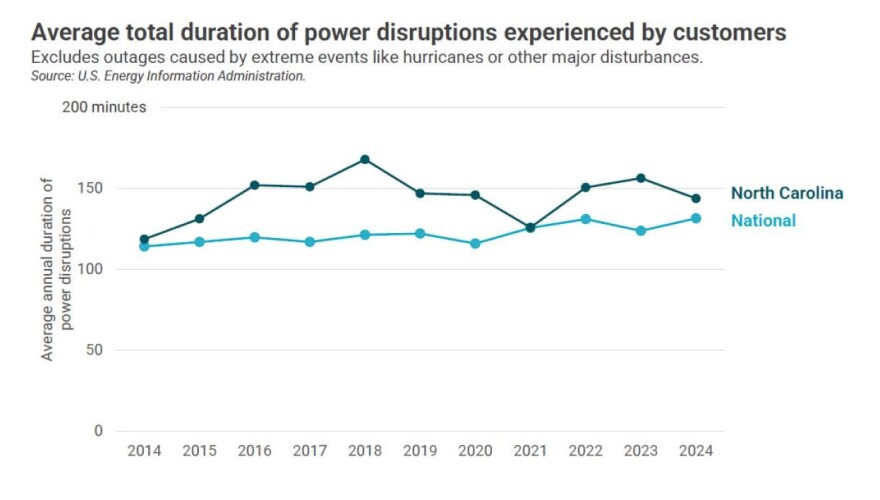
The report warns of potential risks, such as an increase in power outages if the power grid cannot keep up with the demand from these new centers. Presently, North Carolina residents experience more outages than the national average, with annual power loss ranging from 112 to 168 minutes.
N.C. Energy Policy Task Force
Building new power infrastructure to meet data center demands could potentially raise utility bills unless costs are specifically assigned to these centers. Despite the risks, successful navigation of this growth could lower rates, update the grid, and help meet North Carolina’s climate goals for 2050.
Learning from Neighbors
North Carolina isn’t alone in managing the energy surge from data centers and other large loads. According to the report, “33 utilities across 25 states had adopted large load tariffs.”
Such tariffs define specific conditions and costs for facilities with high energy demands, like data centers needing 25 megawatts or more. For example, Virginia’s tariff mandates that these facilities cover a significant portion of their energy and service costs.
North Carolina could adopt similar tariffs to manage construction costs, reduce peak demand, and encourage clean energy initiatives. Duke Energy, through Electric Service Agreements, already requires high-demand customers to cover the full costs of their energy needs.
Bill Norton, Duke Energy’s spokesperson, stated, “To protect residential customers, our contracts with data centers require these facilities to pay the full costs associated with delivering service to their sites.”
Additional tariffs might offer better terms for customers willing to adjust their energy use during peak times. Tax incentives could also be used to encourage desirable practices like demand flexibility and employment growth.
Climate and Energy Futures
While interim climate targets were removed by state lawmakers last year, Duke Energy has already cut its carbon emissions from electricity generation by 50% since 2005. However, future energy demand might rise by 16% to 60% over the next 15 years, with the lower end still twice the rate of the previous two decades.
The report indicates that Duke Energy’s carbon emissions might stabilize in the mid-2030s due to delayed coal plant retirements and new natural gas facilities.

N.C. Energy Policy Task Force
The task force plans to extend its policy recommendations over the coming year, with a Technical Advisory Subcommittee set to release a final report soon. Proposed actions include assessing the fiscal impact of data center tax incentives and developing plans to monitor their resource use.
Senator Tim Moffitt, co-chair of the state’s Energy Policy Commission, mentioned the possibility of presenting the report to the commission for further consideration.