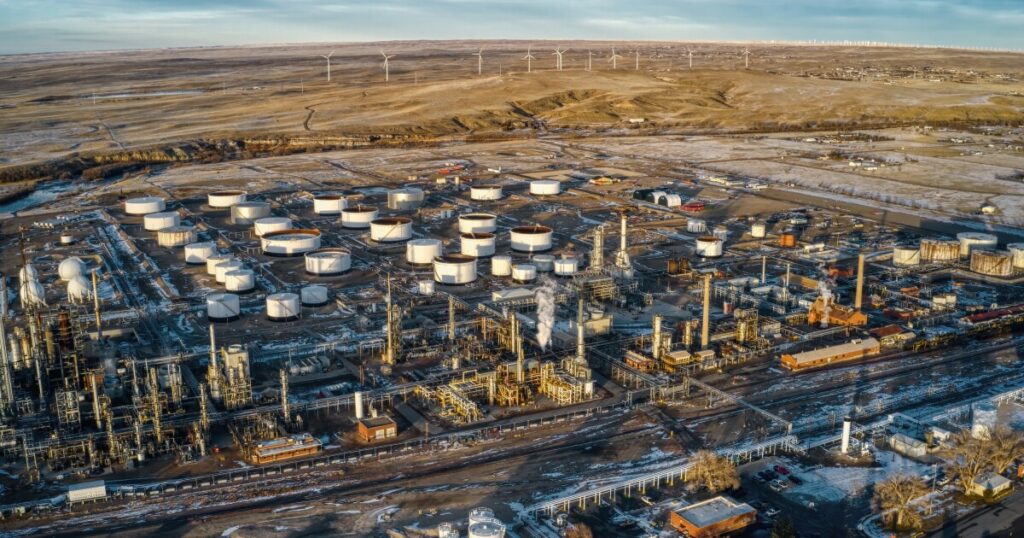
Exploring the Impact of Oil Refineries Across the U.S. Through a New Interactive Map
An innovative tool, known as the Refinery Risk Map, has been developed to better understand the environmental and health impacts of oil refineries in the contiguous United States. This comprehensive resource offers a unique combination of emissions data, air pollution modeling, and health impact projections, encompassing refineries in states like Utah, Wyoming, Montana, Colorado, Nevada, and New Mexico.
The map offers users the ability to explore individual refineries, providing detailed emissions statistics, potential health consequences, and information about surrounding communities. It also identifies critical sites like schools, hospitals, and nursing homes, which are particularly vulnerable to pollution.
Sofia Bisogno, an air quality scientist at PSE Healthy Energy, highlights the significance of the tool. “The strength of this tool is that it provides data behind some of those lived experiences,” she explained, noting how it can quantify the concerns of those residing near refineries.
For residents familiar with the sight of smoke plumes or the distinct smell of hydrogen sulfide, the map serves as a vital resource in understanding the implications of refinery emissions. It estimates health impacts primarily linked to fine particulate matter (PM 2.5), a pollutant associated with respiratory and cardiovascular issues. It’s essential to note that the mortality estimates provided are statistical projections and not actual death counts, grounded in established public health methodologies.
This map stands out as the first publicly accessible tool to offer estimates and visualize the PM 2.5-related mortality impacts stemming from nearly all oil refineries in the contiguous U.S.
Beyond serving residents, the map is a valuable asset for policymakers and regulators. According to Bisogno, it can aid in pinpointing pollution hotspots and prioritizing actions at facilities with the most significant community impact.
Research has also revealed disparities in refinery-related health burdens. Asian, Black, and Latino populations bear a disproportionate share of these impacts relative to their percentage of the U.S. population.
The Refinery Risk Map is freely available online for public use, providing an essential resource for both community members and decision-makers.
This article was produced by the Mountain West News Bureau, a collaborative effort of KUNR, Wyoming Public Media, Nevada Public Radio, Boise State Public Radio in Idaho, KUNC in Northern Colorado, KANW in New Mexico, Colorado Public Radio, KJZZ in Arizona, and NPR, with additional support from affiliate newsrooms across the region. Funding is partly provided by the Corporation for Public Broadcasting and Eric and Wendy Schmidt.