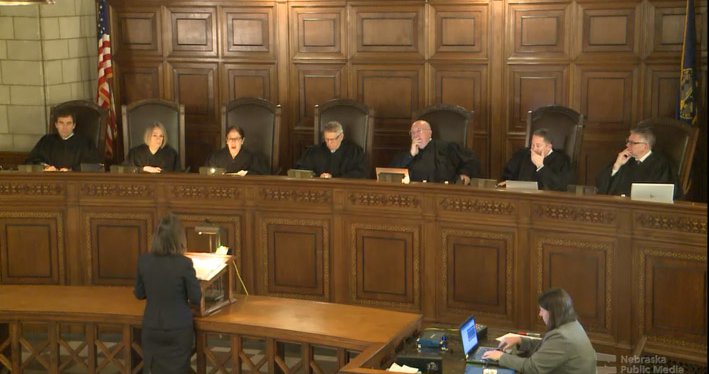
Nebraska Supreme Court Upholds Conviction in Decade-Old Murder Case
The Nebraska Supreme Court has upheld the conviction of Joshua Keadle, who was found guilty of second-degree murder in the mysterious disappearance of Tyler Thomas, a student at Peru State College. Keadle’s latest attempt to secure a new trial was denied, reinforcing the jury’s 2020 decision.
Tyler Thomas vanished on December 3, 2010, after leaving an off-campus party to return to her dorm. Joshua Keadle, who was with Thomas that night, told police he left her at a Missouri River boat ramp following an argument. Despite extensive searches, Thomas’s body was never recovered, but she was declared legally dead in 2013 at 19 years of age.
In a significant development seven years after her disappearance, the Nebraska Attorney General’s Office charged Keadle with murder in 2017. At that time, Keadle was already serving time for a prior conviction of first-degree sexual assault, with a sentence ranging from 15 to 20 years.
Keadle’s first appeal to the Nebraska Supreme Court in 2022, which contested the sufficiency of evidence, was unsuccessful. In 2023, he filed another appeal, this time claiming ineffective assistance from his defense team. He argued that his attorneys failed to challenge a key piece of testimony from a forensic pathologist during the trial.
During the trial, Keadle’s defense posited that Thomas, who was intoxicated and without a coat, might have succumbed to hypothermia and drowned. The pathologist’s testimony suggested the scenario could be considered a homicide if Keadle left Thomas in a perilous situation. However, Keadle’s attorneys did not contest this statement, nor did they cross-examine the pathologist further. One attorney later expressed regret for not contesting the witness’s testimony, feeling it contributed to Keadle’s conviction.
The Nebraska Supreme Court reviewed Keadle’s claims and found no merit in them, stating that his lawyers’ actions were strategic decisions. The court emphasized that an attorney’s admission of inadequate performance does not necessarily bind the court. “A rule that would permit lawyers to bind the court by impugning their own professional conduct, at least outside of disciplinary proceedings, could perversely incentivize lawyers to ‘confess’ deficient performance,” the court noted.
Joshua Keadle’s sentence of 71 years to life for the murder of Tyler Thomas will be served consecutively with his previous sentence for sexual assault. He will be eligible for parole in 2054.