Emerging markets, which house 86% of the global population and contribute to 60% of the world’s domestic product, paradoxically account for only a minor segment of global market capitalization—approximately 10-12%, as per Morgan Stanley International. This disparity highlights a significant investment gap that the International Investment Fund (IIF) seeks to address.
Established with the backing of the William Davidson Institute, the IIF aims to mitigate this gap by utilizing private capital to tackle social and environmental challenges in emerging markets. This initiative is part of a graduate-level course at the Stephen M. Ross School of Business, where students from the University of Michigan’s various schools, including the Ford School of Public Policy and the Rackham Graduate School of Engineering, engage in the due diligence process for financing small and medium-sized enterprises (SMEs) worldwide.
Under the guidance of Gautam Kaul, a Professor of Finance at Ross, the course immerses students in the intricacies of financing SMEs across India and several African nations. The IIF, supported by seed funding from WDI, has thus far invested in three startups, offering students the opportunity to learn various aspects of business through practical experience.
“The International Investment Fund (IIF) exemplifies a new model of education at a top research university—it is multidisciplinary, research- and action-based, in a global context,” said Kaul. “Instead of being exposed to different disciplines and skills in a classroom, our graduates learn all aspects of business—from strategy to marketing to financial valuation—by conducting due diligence on new companies, deciding whether to invest, and supporting our portfolio companies.”
Within its focus areas—agriculture, energy, healthcare, financial inclusion, transportation, and education technologies—students devise investment strategies while considering cultural contexts. Their roles involve conducting comprehensive due diligence on potential investments and executing capacity-building projects for portfolio organizations.
The program targets master’s and PhD students, offering management roles during their second year. For the academic year 2024–25, the course has 40 participants. A significant partnership formed with Baobab Network enhances IIF’s capacity, with Baobab having invested in over 65 companies across 16 African markets. Last year saw IIF’s student members conduct extensive due diligence on seven startups sourced from Baobab in sectors like healthcare and climate action.
Takudzwa Muravu, a second-year MBA student at Michigan Ross and Managing Director of IIF for 2025–26, highlighted the partnership’s significance: “Baobab has the boots on the ground, first-hand experience, and deep knowledge of the venture capital ecosystem across Africa,” Muravu stated. “We bring financial and commercial insights backed by a leading world-class institution—it’s a very synergistic partnership.”
Muravu, originally from Zimbabwe, has a background in management studies and experience with global firms like BDO, KPMG, and EY. He noted the personal growth afforded by his role: “From a personal perspective, I’ve been able to develop much more of an investor mindset. Thinking from the lens of the investor is a more holistic approach; I didn’t have that multifaceted mindset before joining IIF.”
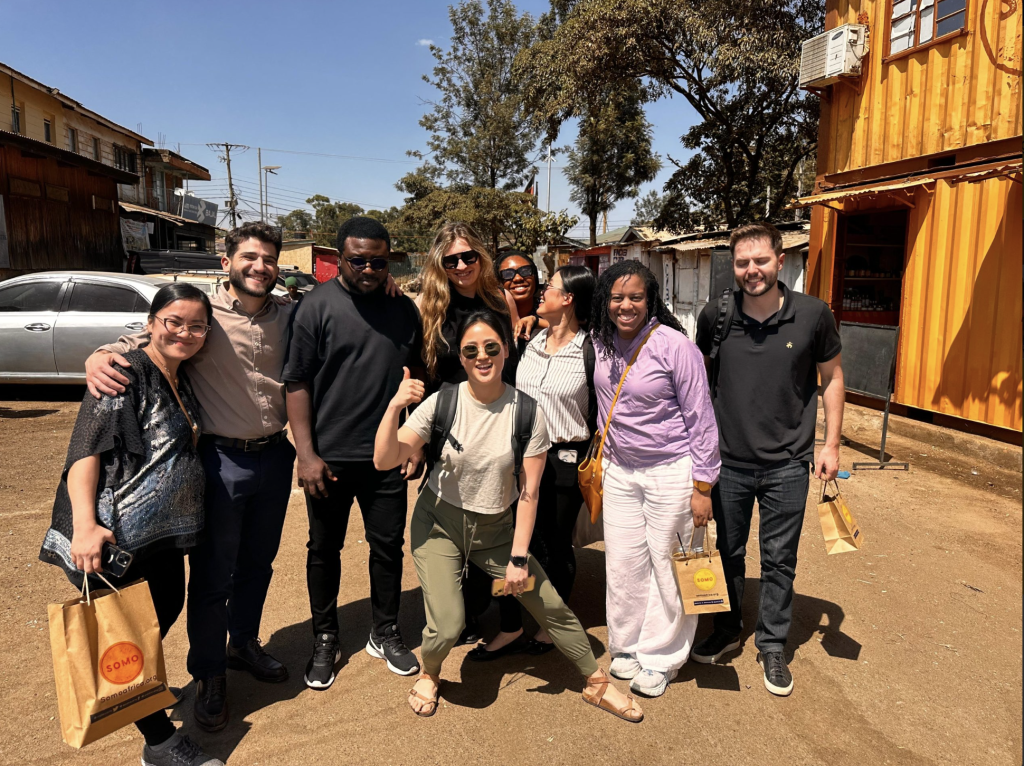
Throughout the year, the IIF team conducted due diligence in seven African countries, deepening their understanding of the entrepreneurial and venture capital ecosystems in Nairobi and India. These insights inform their future investment and due diligence decisions.
Notable investments by IIF include participation in a seed financing round in 2024 led by Baobab Network for Kawu, a fintech firm in Uganda. Previous investments include DohYangu in Kenya and Swyft in Cameroon, reflecting IIF’s commitment to supporting innovation across diverse sectors.
The University of Michigan Law School’s International Transactions Clinic (ITC) collaborates closely with IIF, providing legal due diligence. Entrepreneurs have lauded the fund’s multidisciplinary approach, as evidenced by Swyft Founder and CEO Franck Batchadji’s comments on their partnership.
“This partnership represents a pivotal milestone in our journey to modernize logistics across Cameroon and beyond. We’re solving real problems in first-to-last-mile delivery, and it’s incredibly validating to have a partner like IIF who not only believes in our mission but is committed to helping us scale,” Batchadji said. He further praised the students’ involvement, stating, “We also want to thank IIF for identifying the critical problems we are solving in the first-to-last-mile space, and we extend our appreciation to all the students who challenged our assumptions and provided invaluable, constructive insight throughout this process. We are incredibly excited for the continued mentorship and support we’ll receive from the entire IIF community.”
This focus on supporting entrepreneurial systems aligns with WDI’s strategy as an enterprise accelerator, noted Wendy Taylor, WDI President and CEO. “We’re incredibly proud of what IIF students have accomplished in just a few years,” Taylor said. “So much of WDI’s work is about creating connections and ultimately elevating impact. This fund immerses students in all aspects of the investor–investee relationship, while contributing to an ecosystem that fuels innovation not only in emerging markets but here in the U.S.”
Building on IIF’s success, WDI is launching the Frontier Finance Lab, a program offering U-M MBA and law students practical experience in impact finance while supporting enterprises in emerging markets. In collaboration with ITC and Ross, this lab aims to connect students with blended finance vehicles and donor-backed catalytic funds, preparing companies to attract private and impact capital for scaling their influence.
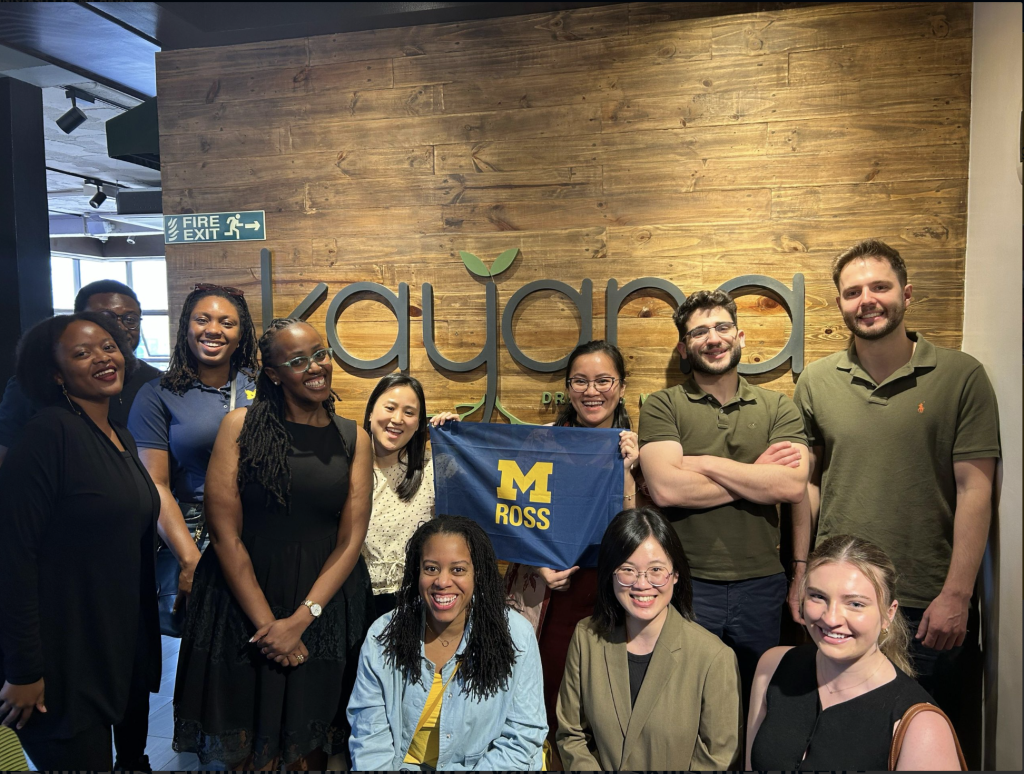
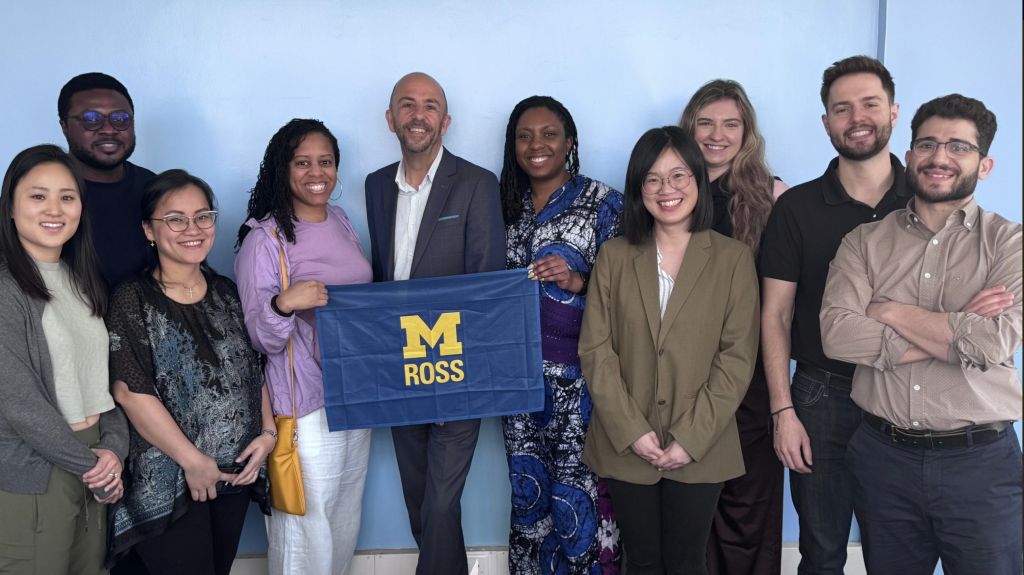
All images courtesy of the IIF team from their 2025 trip to Kenya.