Antibiotic resistance is a growing concern in the medical field, manifesting in the form of ineffective treatments as bacteria outsmart conventional drugs. This challenge has led researchers to explore innovative solutions to keep up with rapidly evolving bacterial strains.
“If you have an infection and you take amoxicillin, drink the pink liquid, but the infection doesn’t go away, that means the bacteria are no longer able to be killed by that drug. They’ve become resistant, and you have to keep hitting them with new antibiotics to kill them,” explained Amanda Wolfe, Chair of UNC Asheville’s chemistry department.
In response to this, Wolfe, along with biochemistry expert Ryan Steed, is focusing on novel research funded by a $500,000 grant from the National Institutes of Health. Their second grant aims to find alternative ways to combat bacterial infections.
Targeting Bacteria’s Energy Production
Traditional antibiotics typically attack a specific vulnerability within bacterial cells. However, bacteria often develop resistance to entire groups of drugs, making these strategies less effective over time. Instead of following this conventional path, Wolfe and Steed are investigating bacterial energy production as a potential weakness.
“My focus is on how cells produce energy,” Steed stated. “Human cells do this, bacterial cells do this, and we’re trying to look at the specific ways that bacteria do it so that we can find weaknesses that we can exploit.”
The duo’s research targets Pseudomonas aeruginosa and Acinetobacter baumannii, both of which are identified by the World Health Organization as critical priority pathogens due to their resistance to existing drugs and prevalence in hospital-acquired infections.
Engaging Undergraduates in Research
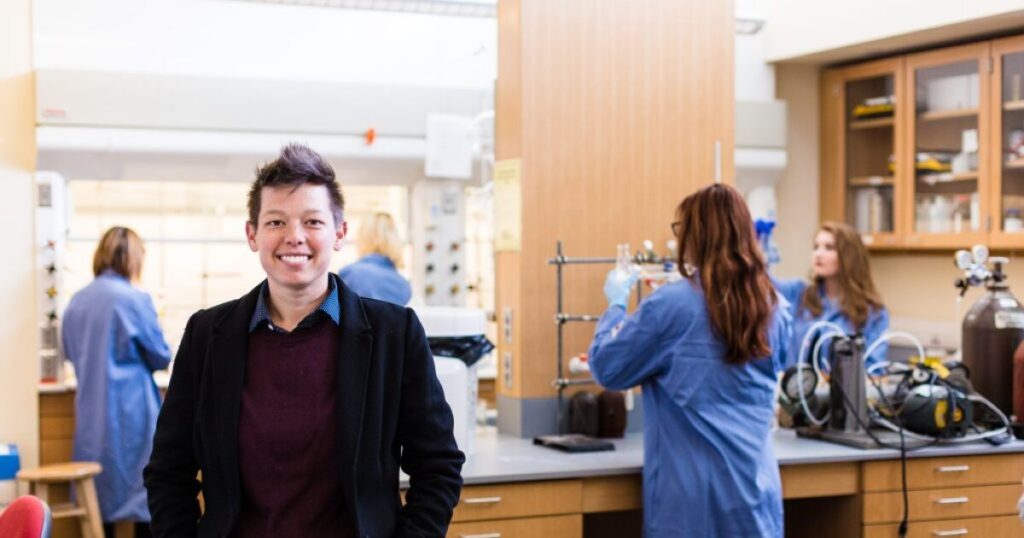
At UNC Asheville, the lack of graduate programs means undergraduates, guided by Wolfe and Steed, are at the forefront of this research. This experience provides them with unique opportunities to present at national conferences and contribute to published papers, enhancing their prospects in future academic and professional endeavors.
The NIH grant, designed for institutions without graduate programs, supports paid research positions, making it feasible for students from varying financial backgrounds to participate fully in research. “An unpaid internship is just not accessible to them,” Wolfe noted, emphasizing the importance of financial support in creating equal opportunities.
Future Steps
Currently, research is underway within UNC Asheville’s labs, with future plans to collaborate with the University of Massachusetts Amherst. There, Dr. Vince Rotello’s team will test potential antibiotics in a living infection model.
While acknowledging the lengthy process ahead before any potential treatments are realized, Wolfe and Steed remain committed to advancing their research, continually adapting to the challenges posed by evolving bacterial resistance.