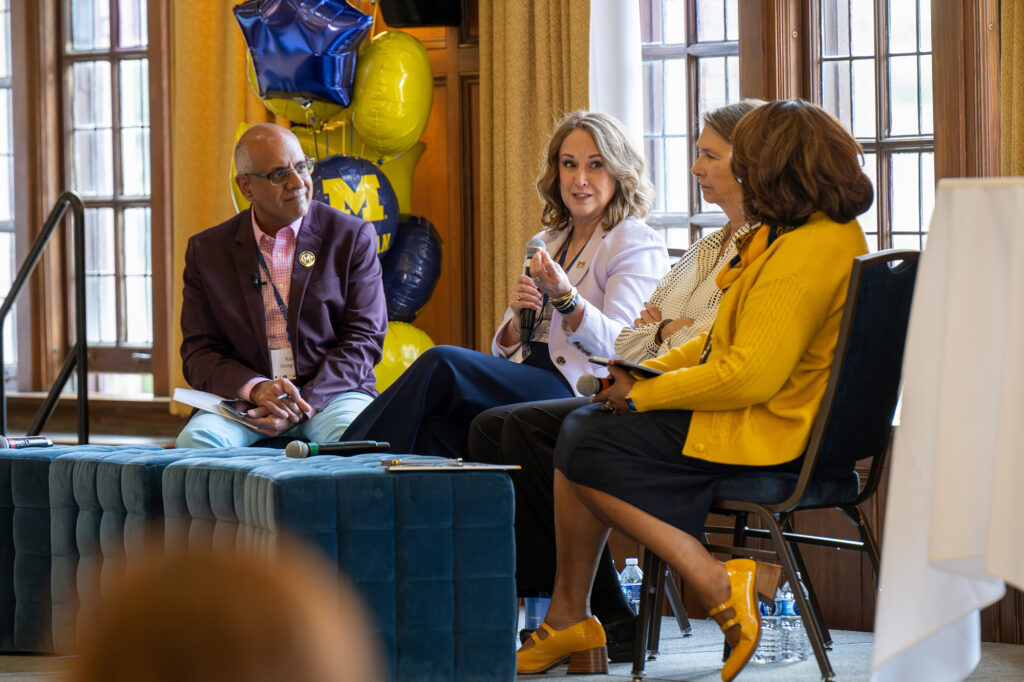
The University of Michigan recently hosted a significant gathering of health education professionals, drawing participants from Ann Arbor, Dearborn, Flint, and Michigan Medicine to the Michigan League for Health Professions Education Connect ’26. This event reflects U-M’s ongoing dedication to advancing health professions education across various campuses and fields.
This reimagined conference continues a tradition that began nearly 30 years ago. Initially known as Medical Education Day, the event evolved into Health Professions Education Day in 2015, led by the Department of Learning Health Sciences alongside the Center for Interprofessional Practice and Education (CIPE), highlighting an increasing focus on interdisciplinary learning.
Following a year-long hiatus, HPE Connect ’26 represented a refreshed take on the conference. Developed through comprehensive feedback from campus surveys and focus groups, the event was co-hosted by CIPE and RISE (Research. Innovation. Scholarship. Education.) with sponsorship from DLHS. It attracted nearly 200 faculty, staff, and students from U-M’s three main campuses and Michigan Medicine.
The event underscored a key message: collaborative learning and teamwork are essential for advancing health outcomes.

The day’s central theme emerged during the interactive leadership plenary panel moderated by Rajesh Mangrulkar, CIPE director and RISE’s executive director. Deans and vice deans from U-M’s various schools participated in discussions, sharing experiences and engaging with attendees to explore improving health professions education.
The conversation emphasized the necessity of collaborative efforts between participants and leaders, indicating that sustainable progress requires collective input, rather than directives from the top or grassroots movements alone.
Lou Edje, vice dean for medical education, highlighted a national shift towards educational methods that emphasize teamwork, adaptability, and innovation, aligning with contemporary healthcare challenges. Vicki Ellingrod, dean of the College of Pharmacy, advocated for extending teamwork beyond clinical settings to community interactions. Elizabeth Birr Moje, dean of the Marsal Family School of Education, stressed the importance of understanding how health and education impact each other, beginning with younger students.
These insights collectively called for a move beyond traditional educational and professional boundaries, focusing on patient and learner-centered approaches to health education.
Throughout the conference, these themes were evident in various sessions, including poster presentations and demonstrations, showcasing U-M’s innovative educational initiatives.
Recognition for excellence was a highlight, with the IPE Awards presented to Michelle Pardee and Michele Bird for their contributions. The RISE Prize for Education Innovation celebrated a street-based foot care project led by medical students, illustrating the impact of experiential learning.
Reflecting on the event, Mangrulkar stated, “There is real momentum across the University of Michigan community, driven by teams willing to think creatively and work across disciplines and professions. When we bring diverse partners together, the work becomes more purposeful and effective. Just as importantly, we have to elevate voices that are too often left out of the conversation, especially learners, patients, and the communities we serve. That inclusion is what will shape a more responsive future for health professions education.”
HPE Connect ’26 reinforced the idea that significant progress in health sciences hinges on collaborative learning and work. The event demonstrated a commitment to fostering these connections across campuses, disciplines, and communities, ensuring education continues to enhance health outcomes.