North Carolina’s Bold Step to Tackle Housing Crisis
With a pressing need to address the housing shortage in North Carolina, Governor Josh Stein has issued an executive order aimed at fostering collaboration among state agencies to alleviate the deficit of hundreds of thousands of homes across the state.
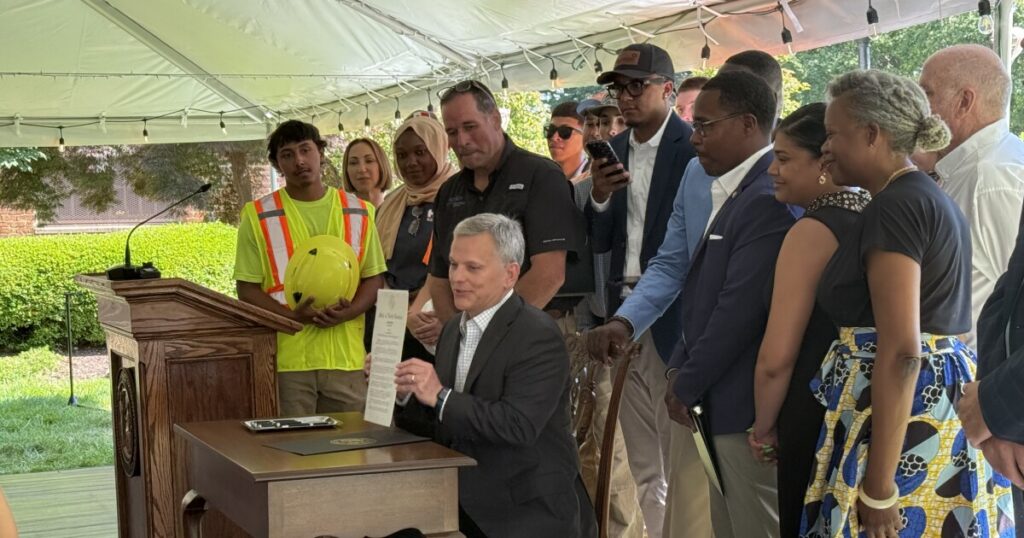
At a press conference held at the Executive Mansion, Stein emphasized the urgency of the situation, stating, “We already know a lot about what we need to do to build more housing. We’ve just got to get to work doing it.”
The signed Executive Order 36 mandates state agencies to prioritize housing in their policies, coordinate efforts that could enhance housing availability, and collaborate with external organizations such as nonprofits and financial institutions to support builders and local governments in increasing housing stock.
Highlighting the critical nature of the executive order, Stein referenced a study released last year, which projected that the state’s housing shortage might escalate to nearly 765,000 homes by 2029. This study was commissioned by the NC Chamber Foundation, the NC Home Builders Association, and the NC Realtors.
Stein pointed out the economic strain on key professionals, noting that teachers in 23 counties cannot afford average rent, and carpenters in major cities like Charlotte and Raleigh can only afford a fraction of available homes. “They can build the homes. They just can’t afford to live in the homes they’re building,” Stein remarked.
To spearhead the initiative, Stein appointed Janneke Ratcliffe as the new senior director for housing policy. A North Carolina native, Ratcliffe transitions from her role at the Urban Institute, where she led the Housing and Communities Division.
Ratcliffe plans to implement dashboards and metrics to monitor the state’s housing progress, acknowledging the diverse needs of communities across North Carolina. “We recognize that every community, every town has different needs. At the same time, we understand that there are universal problems and universal solutions,” Ratcliffe stated.
Her approach remains flexible, advocating for solutions ranging from adding backyard cottages to preserving deteriorating housing and facilitating factory-built homes. “A big tent approach to housing affordability and housing access is what this state needs now and what we need for its long-term future to ensure that every North Carolinian has a safe, stable, affordable place to call home,” she explained.