Innovative Technology Enhances Remote Healthcare in Nebraska
In a significant move to revolutionize healthcare access, particularly in rural regions, Nebraska is leveraging advanced technology funded by federal grants. This initiative enables medical professionals to remotely monitor patients, providing timely interventions and reducing emergency room visits.
According to Toline, this cutting-edge technology can be deployed both in clinical environments and at patients’ homes. Through remote monitoring, medical staff can effectively manage emergencies and improve healthcare outcomes. A portion of the grant is allocated to integrate data from these remote monitors into a centralized database, fostering collaborative efforts to demonstrate their impact on reducing ER visits and better managing conditions such as hypertension.
Toline emphasized the essential role of federal funding in this initiative, stating, “Anybody could buy the monitors, but to be able to actually set it up to be able to prove the value of them and prove what you’re doing, I don’t think we would have had the capital funds to be able to do it.”
Enhancing Rural Health Through Strategic Initiatives
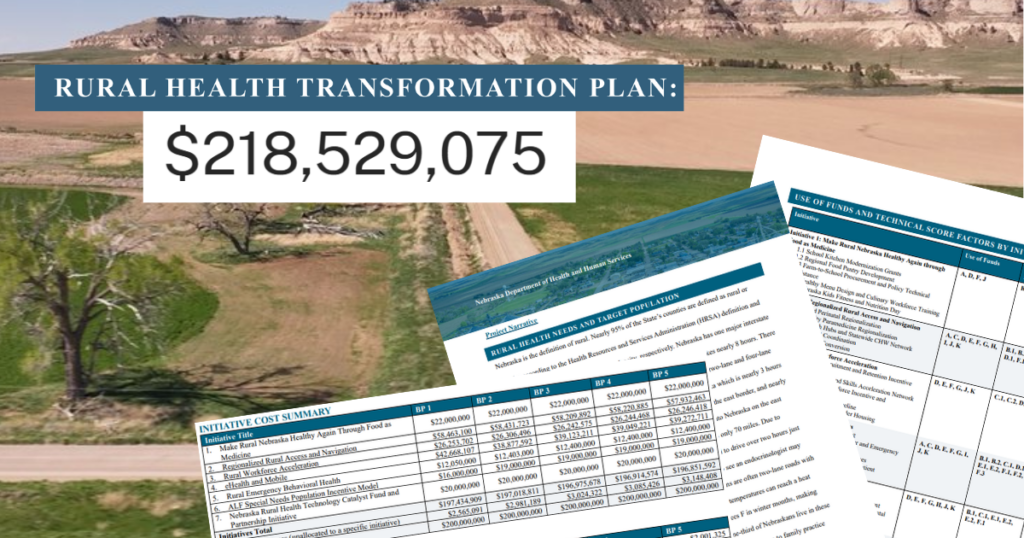
Ashley Newmyer, who directs the Division of Public Health at the Nebraska Department of Health and Human Services, oversees operations of the RHTP in Nebraska. She expressed optimism about the project’s potential to enhance healthcare access in rural regions, stating, “I believe that we’re positioned really well to maximize this once-in-a-generation opportunity to help improve access to care in rural areas, help to keep rural families in rural communities, help to keep people close to care.”
Alongside remote monitoring, the Department of Health and Human Services has introduced several other initiatives. These include promoting health literacy, assisting with infrastructure upgrades for rural hospitals, and expanding crisis care for mental health. Furthermore, schools and food pantries are encouraged to source fresh foods locally, while emergency medical services benefit from virtual reality training.
Grant Distribution and Impact
The RHTP Dashboard provides detailed insights into the allocation of funds, with data current as of July 7, 2026. Although the map shows concentrations in urban regions, Newmyer clarified that these reflect the headquarters of awardees. The actual impact is felt in rural areas through satellite clinics and training programs.
Universities and businesses in urban centers are instrumental in launching workforce incentive programs, which financially support medical professionals committed to serving rural communities for at least five years. Newmyer highlighted the program’s success in recruiting and retaining healthcare providers, stating, “We have received huge interest in that program, which is really helping to either recruit or retain those desired healthcare providers in rural areas.”
Additionally, approximately $3 million has been allocated to collaborations with out-of-state entities, further strengthening Nebraska’s healthcare initiatives.