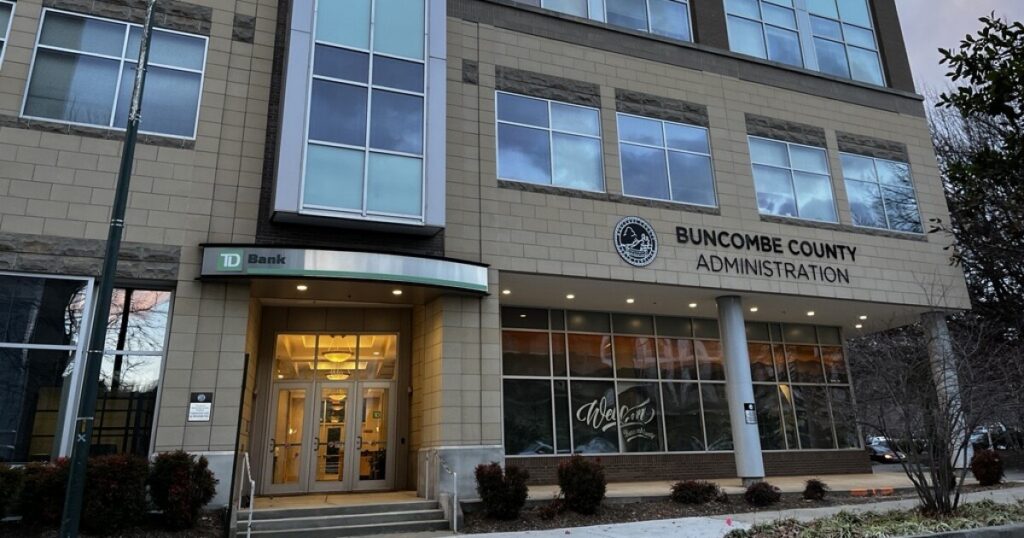
Buncombe County is set to decide on a significant financial undertaking this November, as residents will vote on a proposed $70 million in new government debt. This decision comes after the county Board of Commissioners unanimously agreed to include two special bond referenda on the upcoming general election ballot.
Echoing efforts from 2022, the county is seeking $40 million for affordable housing initiatives and an additional $30 million for projects dedicated to preserving open spaces, such as farmland and park development. Commissioner Terri Wells highlighted the community’s commitment to these causes, referencing both the 2043 comprehensive plan and the 2030 strategic plan as guiding documents. “Additionally, we must invest in our own recovery and utilize these bonds to leverage millions more investment in our community to ensure we protect our drinking water and natural resources and provide affordable housing for seniors and families,” Wells told BPR.
During the public hearings, only two community members voiced their opinions, both in favor. David Nutter, from the nonprofit Connect Buncombe, expressed his excitement over the open space investments, stating he was “utterly thrilled”. Meanwhile, Susan Bean from MountainTrue emphasized that the bond issues would help tackle both housing and climate challenges by creating diverse housing options and preserving regional farms and forests.
Despite broad support in opinion polls conducted by the Trust for Public Land, enthusiasm for the bond referenda has slightly waned compared to 2022. Polls from the previous bond cycle showed 71% support for open space and 63% for housing bonds, with actual election results at 69% and 62%, respectively. Current polling indicates 65% support for open space and 54% for housing.
Melissa Moore, Buncombe’s finance officer, informed the commissioners that the total cost of repaying the bonds, including interest, would reach about $111.1 million over 20 years. To cover this, a property tax increase of approximately $43 per year for a home valued at the county median of $446,000 would be necessary.
Election Day is set for Tuesday, November 3.
Hurricane Helene Recovery Efforts
- The board approved a $1.8 million contract with ECS Southeast for landslide mitigation in Garren Creek, following landslides that impacted over 72 acres and resulted in 13 fatalities. The Federal Emergency Management Agency will reimburse the county for the project, expected to take about eight months. Previously, a $794,000 contract was approved for similar efforts in Swannanoa’s Grovemont neighborhood.
- Changes were made to the Buncombe Madison Regional Hazard Mitigation Plan to reflect lessons learned from Hurricane Helene. The updated plan emphasizes infrastructure resilience and positions the region for further FEMA funding.
Additional Highlights
- The commissioners initiated steps for Buncombe County to take full control of local air quality management, previously shared with the city of Asheville, costing local taxpayers about $350,000 annually.
- Four residents were recognized with the 2026 Governor’s Volunteer Service Award for their community contributions. Board Chair Amanda Edwards praised them as “shining examples of what makes Buncombe County the best county in North Carolina.”
- Internal staff policies saw significant changes, including the elimination of comp time as an overtime option, aligning with federal standards.
- A $40,000 grant from the Dogwood Health Trust was accepted to enhance digital access, providing laptops and charging stations at county libraries.
The Buncombe County Board of Commissioners convenes every first and third Tuesday at 200 College St., Room 326, in Asheville, starting at 5 p.m. The board will not meet the first week of July, with the next session scheduled for Tuesday, July 21. The full recording and documents from the June 16 meeting are available online.