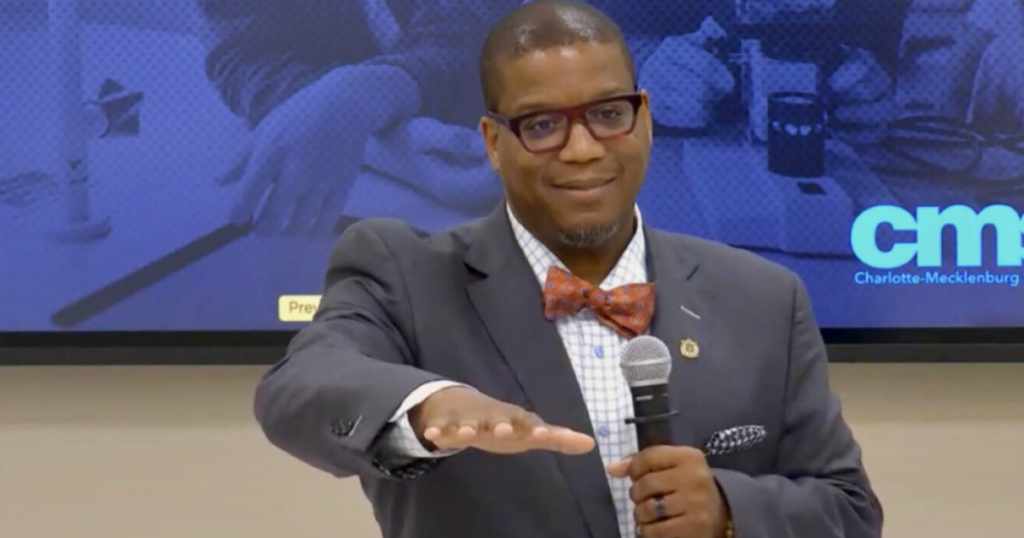
The ongoing debate over the expansion of toll lanes on Interstate 77 in south Charlotte continues to stir emotions within the community. Raki McGregor, a prominent figure in the Black Political Caucus of Charlotte-Mecklenburg, expresses disappointment in the City Council’s lack of decisive action on the matter.
As the chair of the BPC’s transportation committee, McGregor suggests that the issue could influence the organization’s endorsements in the upcoming city elections. With half of Charlotte’s Democratic primary voters being African American, the BPC’s backing is vital, especially as the mayoral seat may be vacant in 2027.
McGregor criticizes the City Council for its inaction, particularly when most members have voiced concerns about the I-77 toll lane project. He questions the absence of “decisive leadership” and highlights the significance of this issue in future endorsements.
Not typically involved in City Council politics, McGregor supports Charlotte-Mecklenburg Schools Superintendent Crystal Hill and works to elect like-minded School Board members. Yet, his attention has turned toward the mayoral race, with potential candidates like Malcolm Graham, James Mitchell, and others showing concern but lacking public initiative to alter the toll lane plans.
The North Carolina Department of Transportation (DOT) intends to construct two express toll lanes in each direction, covering an 11-mile span from uptown to the South Carolina border. This $3.2 billion project aims to link existing and new toll lanes, despite opposition from central neighborhoods fearing adverse impacts.
The DOT has postponed the project to gather more public input in response to a BPC lawsuit. However, the project’s scope remains unchanged, posing challenges for contractors to reduce its impact on nearby historically Black communities.
McGregor questions the reliance on outdated toll lane data from 2007, arguing it’s an unwise basis for long-term decisions. While the Charlotte Regional Business Alliance supports toll lanes as a necessary traffic solution, McGregor remains skeptical of their fairness and effectiveness.
Despite having significant influence within the Charlotte Regional Transportation Planning Organization, council members have refrained from advocating for extended delays to explore alternatives. McGregor points out that toll lanes in north Mecklenburg have not alleviated congestion, as intended.
He also draws attention to Gaston County’s approach, where I-85 is being widened without tolls, funded by dividing the project into segments. This method allowed access to state funds multiple times, a strategy not considered for I-77, leading McGregor to urge for a study of the Gaston model.
For more information, visit Gaston County’s highway expansion project.