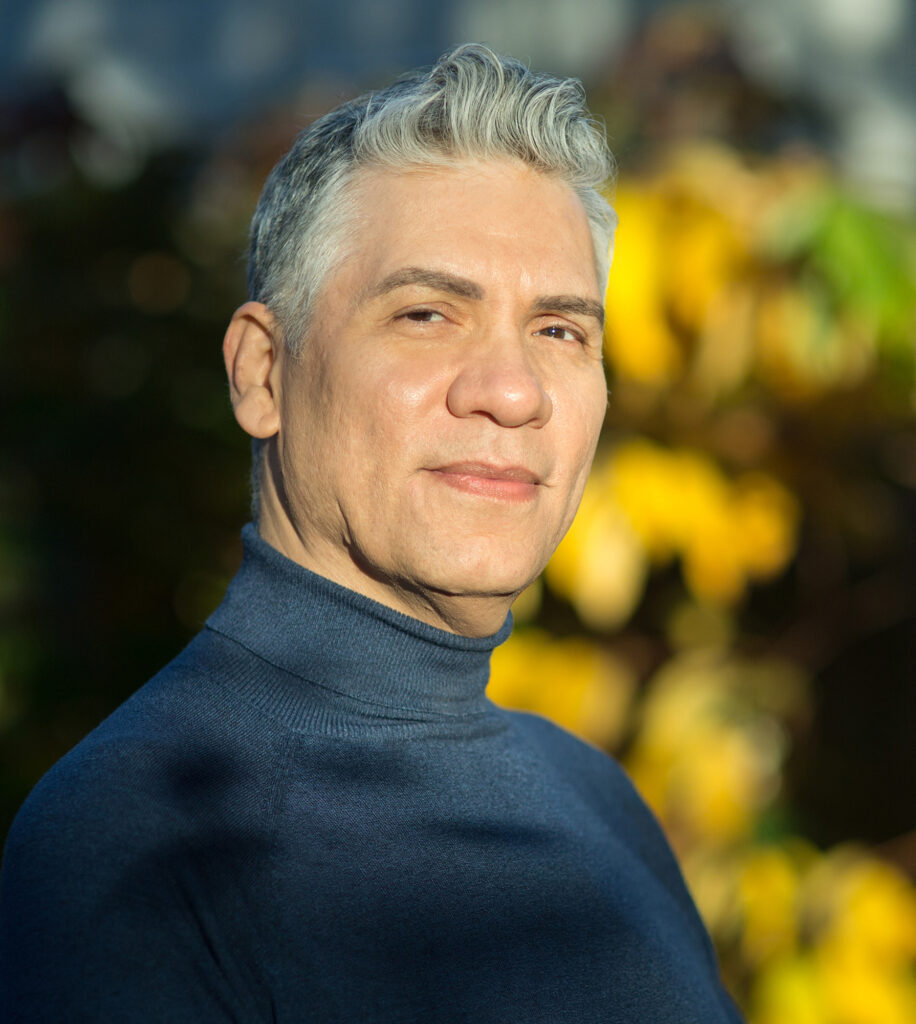
Amidst the oppressive backdrop of a military dictatorship in Brazil, creativity found its voice in the silence. Rogério M. Pinto, born in Belo Horizonte during the tumultuous 1960s, grew up weaving stories and songs into the fabric of resistance. Now a prominent educator at the University of Michigan, Pinto continues to harness the transformative power of art to challenge perceptions and inspire change.
“You learned early on that there were things you couldn’t say directly, so we created other ways to speak — through songs, stories and symbols that carried meanings we all understood, even if we couldn’t name them aloud,” Pinto, a professor at the School of Social Work, shared, emphasizing the role of art as a lifeline in oppressive regimes.

Experiencing poverty and discrimination as a queer individual in Brazil, and later as a minority in the U.S., Pinto’s journey was shaped by a profound understanding of metaphorical expression. “Art becomes a vehicle for survival,” he noted, illustrating how creativity can be a shield and a weapon in navigating systemic inequalities.
Innovative Teaching Methods
With a background in biological sciences from Brazil and advanced studies from Columbia University, Pinto’s academic path led him to New York City and eventually to Michigan in 2015. In his classes, students engage in unconventional learning experiences, often involving drawing, performing, and participating in “critical dialogues,” a concept rooted in the philosophies of Paulo Freire and Augusto Boal.
Freire and Boal, influential Brazilian thinkers, believed in the potential of art to awaken critical consciousness and challenge societal norms. “Freire believed that even when people are lied to, they can still recognize the truth if given the chance to reflect,” Pinto explained. This ethos is central to Pinto’s teaching methodology.
The Dream Flag Project
Pinto’s initiative, The Dream Flag Project, exemplifies his belief in art as a tool for empathy and self-discovery. Inspired by a workshop at Brazil’s Center for the Theatre of the Oppressed, the project involved participants repainting the American flag from memory, sparking intense discussions about symbolism and identity.
“The flag, as a symbol, carries so much meaning,” Pinto stated. The exercise challenged participants to question inherited meanings and create flags that better represented their personal identities and ideals. The collaborative nature of the project encouraged dialogue and shared understanding, embodying the essence of Freire’s “critical consciousness.”

Through this initiative, more than 40 participants at the School of Social Work’s annual Impact Awards event discovered how personal and collective narratives can reshape perceptions of national identity.
Research Through Art
Pinto extends his artistic approach to research, using art to explore themes of trauma and healing. In one study, he collaborated with incarcerated men to discuss internalized homophobia and sexism, using illustrations to facilitate conversations about identity and power.
He also crafted an autobiographical monologue titled “Marília,” in memory of his sister, blending personal history with social commentary, performed in diverse settings such as New York City and South Africa.
Pinto likens his artistic endeavors to academic research, stating, “The writing of a play is akin to the results section of any of my other publications.” His work bridges the gap between artistic expression and scholarly inquiry, offering new perspectives on addressing contemporary social issues.
Looking Ahead
Currently, Pinto is preparing for the release of his new book in 2026, “Freire and Drama: ‘Marília,’ a Play — Anti-Oppression and Healing in the Arts.” The book aims to engage readers in the arts and social sciences by examining how drama and narrative can inspire critical dialogue and societal change.
As Pinto continues to explore the intersections of art and education, his work remains a testament to the enduring power of creativity in fostering understanding and transformation. “Critical reflection is not just about despair,” he concluded. “It’s about possibility.”