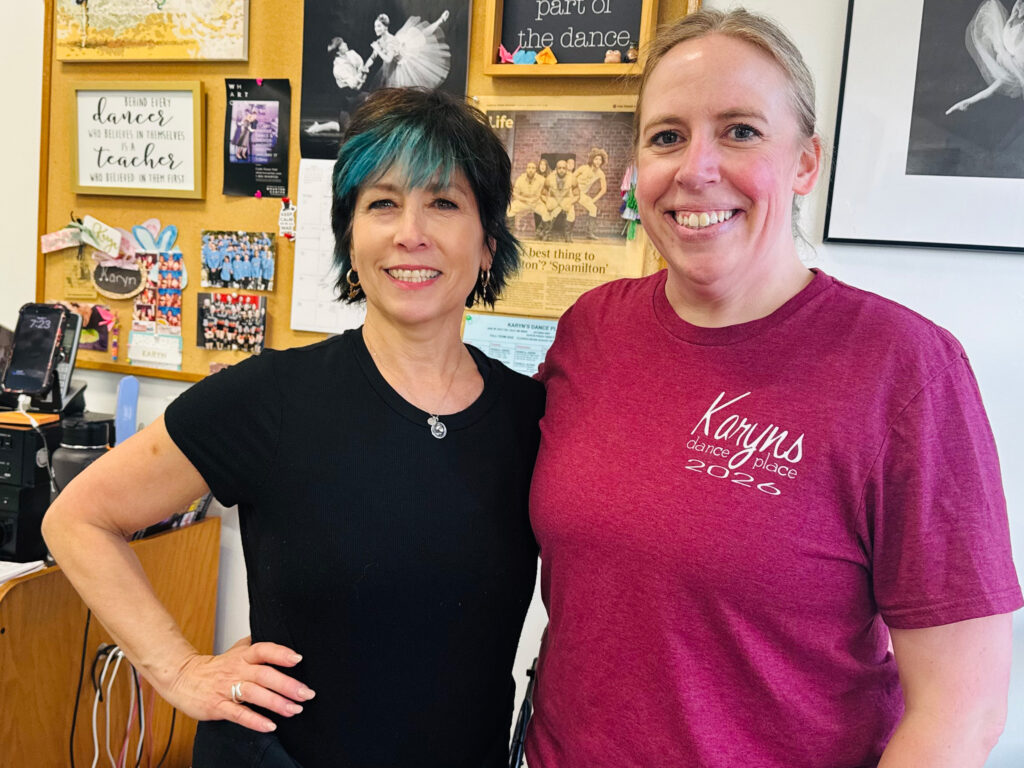
In the serene town of Holt, just outside of Lansing, a weekly ritual brings Annie Weaver back to her roots. Each Tuesday after work, she embarks on a journey westward, returning to her childhood dance studio, Karyn’s Dance Place.
Karyn’s Dance Place holds a special place in Weaver’s heart, as it was here that she first immersed herself in the vibrant world of dance. Introduced to ballet at the tender age of three, she soon ventured into jazz and tap, with the latter capturing her heart instantly.
“I loved tap right away,” Weaver, now the associate director of global initiatives at the Stephen M. Ross School of Business, reminisced. “I could get the rhythms. I could get the footwork. It felt innate to me.”

Tap dance offered something unique. The crisp sound of the shoes, the rhythmic noise made with her feet—these elements appealed to Weaver more than the flexibility demands of ballet and jazz. “There’s something about the rhythm or the pattern I just connect to,” she explained.
Finding Her Rhythm
Throughout high school, Weaver was a frequent presence at the dance studio, even taking a job at the front desk to earn free dance classes. “I was definitely not taking extra ballet,” she admitted with a laugh. “But I would take whatever tap I could.”

A memorable moment from her senior year was a solo tap performance at the company recital, for which she donned a suit jacket and new black-and-white tap shoes. “I loved those shoes so much. I wore them for years, until they basically disintegrated,” she recalled.
Forging Connections
As Weaver moved through life, from Central Michigan University to Nebraska for graduate school and then to Illinois, she continuously sought dance studios in each new locale, using tap classes as a means to form community ties.
Through these experiences, she encountered a variety of teaching styles and expanded her understanding of tap dancing itself. “I thought I knew everything about tap,” she said, laughing, “And then I was like, oh — I did not.”
This openness to learning has kept her passion for tap alive across decades, enhanced by the sense of community she has fostered around it.

Her childhood friend Leah, whom she met through dance, remains a close companion, with both having worked at Karyn’s studio front desk during high school. This friendship endures, even as Weaver returned to Michigan from Illinois three years ago when her husband accepted a position at U-M.
Returning Home
With a longing to tap once more, Weaver reached out to her childhood mentor, Karyn Perry, and was welcomed back into the studio to join adult classes. So now, every Tuesday, she and Leah meet for tap and jazz classes.

Through tap, Weaver finds a refreshing detour from her screen-focused job at Ross, engaging a different part of her mind and connecting her with her past and her community. “I think it’s really important for me to use my brain in creative ways,” she shared. “When you can step away from a screen and use your brain in a totally different way, I think that keeps you fresh.”
For Weaver, tap dancing is more than just a creative outlet; it’s a lifelong passion that continues to connect her with friends, her hometown, and a childhood joy that endures.