At just 22, Amanda Barbour faced a life-altering diagnosis of cancer, immediately after completing her studies at Taubman College. Now, as the founder and CEO of the Children’s Healing Center, she attributes the skills and design mindset gained from her education to the creation of innovative spaces for children and young adults with weakened immune systems.
Barbour, who graduated with a B.S. in Architecture in 2009, initially worked with former dean Mónica Ponce de León before moving back to Grand Rapids, Michigan. While working at AMDG Architects, persistent illness led to the discovery of stage four Hodgkin’s Lymphoma, a cancer affecting mostly young adults and the elderly. “By the time they found it, it had spread throughout my body,” Barbour recounts.
As part of her treatment in a pediatric unit, she connected with other young patients who felt similarly isolated. Reflecting on her experience, she recalls, “We all understand it now post-COVID, but in 2010, not a lot of people knew what it felt like to be told you couldn’t go into public places or the movies or the mall or to hang out and do normal young adult things.”
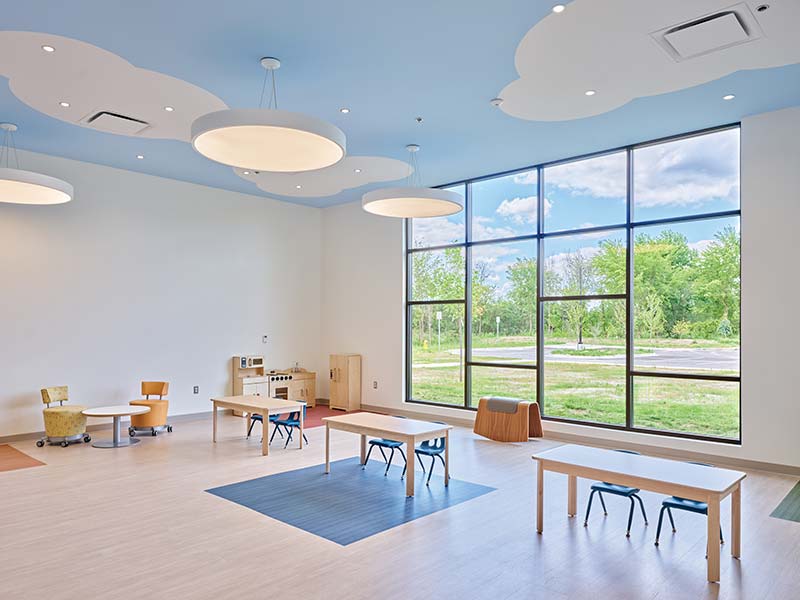
During her hospital stay, Barbour envisioned a space where children and families could gather safely. “How can I use this to shape and inform and help people and places?” she pondered. This idea was the seed for the Children’s Healing Center.
Even while undergoing treatment, Barbour continued working, keeping her architectural identity alive. However, her vision for a new project grew stronger, fueled by her educational background. “A lot of the reason that I came up with the Children’s Healing Center and brought it to fruition is because of the education I received at Taubman College,” she explains. “I learned to always be looking for how I could improve environments and spaces.”
Proof of Concept
After completing her recovery, Barbour launched a nonprofit in 2011, which led to the opening of the first center in Grand Rapids in 2015. Early supporters were mainly clients from her architectural projects. Barbour attributes her success in pitching the center to the skills acquired at Taubman College, stating, “In the studio, you come up with your project and then you present it to critics… That’s basically what I did for five years to get the center open.”
These centers are uniquely designed with hospital-grade facilities, including HEPA air filtration, ensuring a safe environment for participants. The centers offer a diverse range of programs, such as art, music, fitness, and recreational therapy, through partnerships with local organizations.
Barbour emphasizes the sanctuary the center provides, “Their families and friends don’t understand what they’re going through, but when they come to the center, they can be in a space where they can exhale.”
Following the success in Grand Rapids, a second center opened in Ypsilanti in June 2024, thanks to state funding and donations. The expansion was initiated by interest from a physician at U-M’s Mott Children’s Hospital.
Ask an Alum
To support the organization’s growth, Barbour brought on Sarah Velliky, a fellow Taubman alum, as the manager of design & construction. Velliky transitioned from her role at OX Studio in 2022 and oversees the centers’ mechanical systems and volunteers. Reflecting on the impact, she shares, “Seeing these kids and hearing their parents tell us… That makes it worth it.”
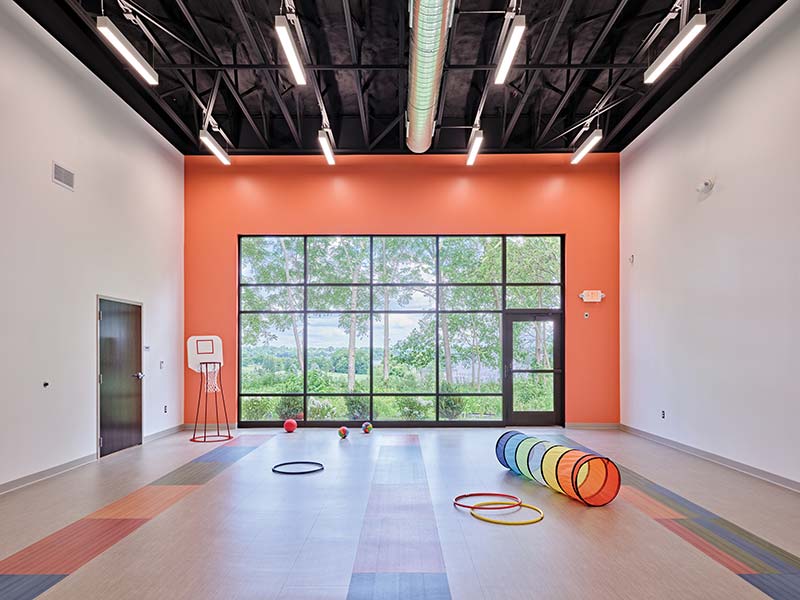
Barbour’s journey to establish the Children’s Healing Center began even before she was officially an architecture student, suggesting a lifelong passion for creating inclusive spaces. “I liked being in the second-floor studio space,” she recalls fondly.
Through her work, Barbour continues to embody the spirit of creativity and innovation nurtured at Taubman College. “Taubman College empowers students to come up with unique ideas… A Taubman education gives you that confidence,” she notes, encouraging others to persist in their creative endeavors.