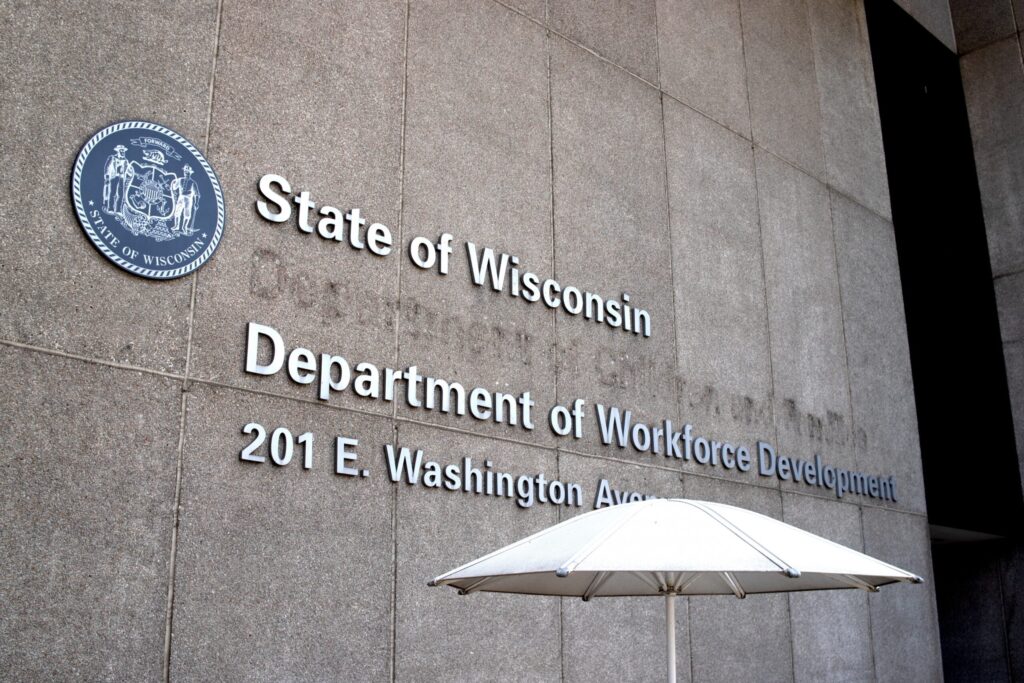
Federal Shutdown Jeopardizes Wisconsin Workforce Development Funding
The ongoing federal government shutdown is placing significant strain on Wisconsin’s job support programs, as federal funding has come to a halt. The state’s Department of Workforce Development (DWD) finds itself in a precarious financial situation, with 75% of its $500 million budget reliant on federal dollars, according to DWD Secretary Amy Pechacek.
Federal funds are crucial for various programs, including career counseling, unemployment administration, and apprenticeships. Currently, the DWD is surviving on leftover federal money and state funds, but the reserves are dwindling, Pechacek explained in a recent discussion with reporters.
“The majority of the job support programs — working with people with disabilities, unemployment administration, job centers, career counseling — are all federally-funded programs,” Pechacek stated during the call. “We need the federal government to come together, come up with a funding mechanism and continue to support their obligations to the state.”
The agency used the call to address the effects of the shutdown on Wisconsin’s workforce and economy instead of its usual monthly labor force briefing on unemployment data. Pechacek noted that the state cannot release its jobs report due to the suspension of the U.S. Bureau of Labor Statistics, which shares employment data with the state.
Missing data isn’t limited to labor statistics. Scott Hodek, an economist with the DWD, mentioned the absence of Census data and information from the Bureau of Economic Analysis, which complicates efforts to maintain an accurate economic overview. “It’s all of the government data that we end up losing here,” Hodek said.
The lack of data also affects decision-making for employers and policymakers who depend on this information for business operations and workforce planning. Pechacek emphasized, “Without that data, employers are putting off important decisions, essentially fumbling around in the dark until Congress can get around to turning back the lights on.”
Wisconsin is home to about 18,000 federal employees, with approximately 8,000 potentially impacted by the shutdown. The state has already processed 30 initial unemployment claims from federal workers. Pechacek explained that furloughed workers who receive unemployment benefits must repay them if they receive back pay once the government reopens. However, if they are laid off and receive no back pay, they will not have to repay those benefits.
The shutdown’s repercussions extend to the issuance of H-2A visas for temporary seasonal agricultural work. Last year, Wisconsin issued about 3,000 of these visas, but current processes are stalled. Though immigration officials are issuing visas, the Department of Labor’s inability to certify worker shortage verifications due to the shutdown means that “H-2A visas have ceased to be issued,” Pechacek said.
As the shutdown persists, the risk grows for Wisconsin’s agricultural sector, which may struggle to meet labor needs during peak months of December and January. Pechacek urged, “The longer this goes, the continued adverse and exponentially worse impacts to our workforce will compound.”