As rural America explores paths to economic growth, renewable energy emerges as a promising yet controversial avenue. Recent studies highlight potential benefits from wind and solar farms, even as some regions tighten regulations on these developments.
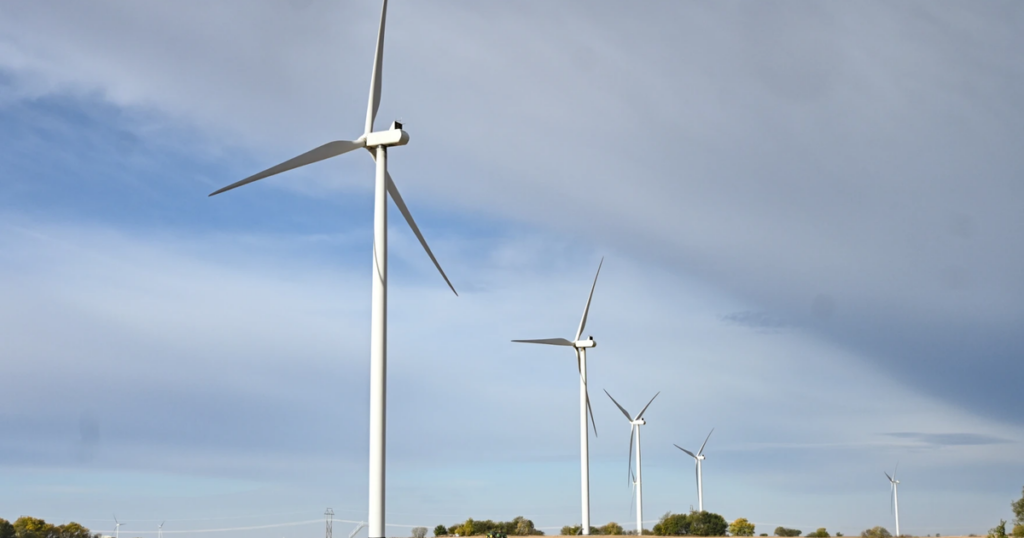
With power companies increasingly shifting from fossil fuels to renewable energy sources, a surge in wind and solar energy production has been observed. A report by the University of Missouri’s Center for Rural Energy Security delves into the economic impacts these energy sources have in rural counties.
Lead researcher and economist Adrienne Ohler analyzed data from 2001 to 2023, contrasting counties with renewable energy plants against those without. The study reveals that sectors such as utilities, construction, and transportation in solar energy-hosting counties experienced employment and wage growth between 10% and 20%. Meanwhile, communities with wind energy installations reported a GDP increase of around 7%.
Ohler, who hails from a rural community, acknowledges the divisiveness of energy projects. She states, “Renewable energy isn’t right for every community. There are good reasons to adopt it and good reasons to sort of set up ordinances and permitting that would sort of limit what it would look like in a community.”
Josh Moenning, director of New Power Nebraska, emphasizes the absence of a “consequence-free” energy source. “Those counties who have said yes to the opportunity — or at least allowed the investment to come in by adopting reasonable regulations that permit development — have seen benefits,” he notes.
The report further indicates that neither wind nor solar developments have led to a decline in agricultural GDP, employment, or wages, suggesting minimal disruption to agricultural activities.
In Missouri, nearly 10% of electricity is derived from wind, while solar accounts for slightly over 1%. Despite this, recent legislative proposals have sought to restrict or prohibit renewable energy projects, citing concerns about property rights and rural quality of life.
James Owen, executive director of Renew Missouri, advocates for the benefits renewable energy brings to rural areas, even if long-term job creation is limited. “What’s going to benefit a school district, fire district, ambulance district? Those are the things that I think rural communities certainly do care about, should care about,” Owen stated, highlighting the potential for increased tax revenues.
Owen also points out the reliability of domestically produced power over imported oil and gas. “Solar and wind do not go through the Strait of Hormuz. It can be produced right here,” he remarked, emphasizing the strategic advantage of local energy production.