WASHINGTON — The United States saw a decline of 92,000 jobs in February, slightly raising unemployment levels, as reported by the Bureau of Labor Statistics on Friday. This recent employment report marks the third job loss in five months, showing declines particularly in nonfarm sectors, the information industry, and federal employment. The federal workforce has shrunk by 11% since its peak in October 2024. The health care sector also saw a decrease in jobs, attributed to ongoing strike activities.
Unemployment rose to 4.4% from 4.3% in January, with higher rates for women, teenagers, and non-white workers. Administration officials pointed to severe winter weather on the East Coast and labor disputes among West Coast health care workers as culprits for the job loss. However, Democrats criticized President Donald Trump’s policies, such as military actions in Iran and the reinstatement of tariffs, which they argue are damaging the economy.
U.S. Senate Minority Leader Chuck Schumer stated that the report is a “blaring alarm that Donald Trump’s economy is deteriorating rapidly,” warning that the conflict in Iran could exacerbate the situation. Schumer highlighted issues like spiking gas prices and increased tariffs, attributing them to the current administration’s failure to bolster the economy.
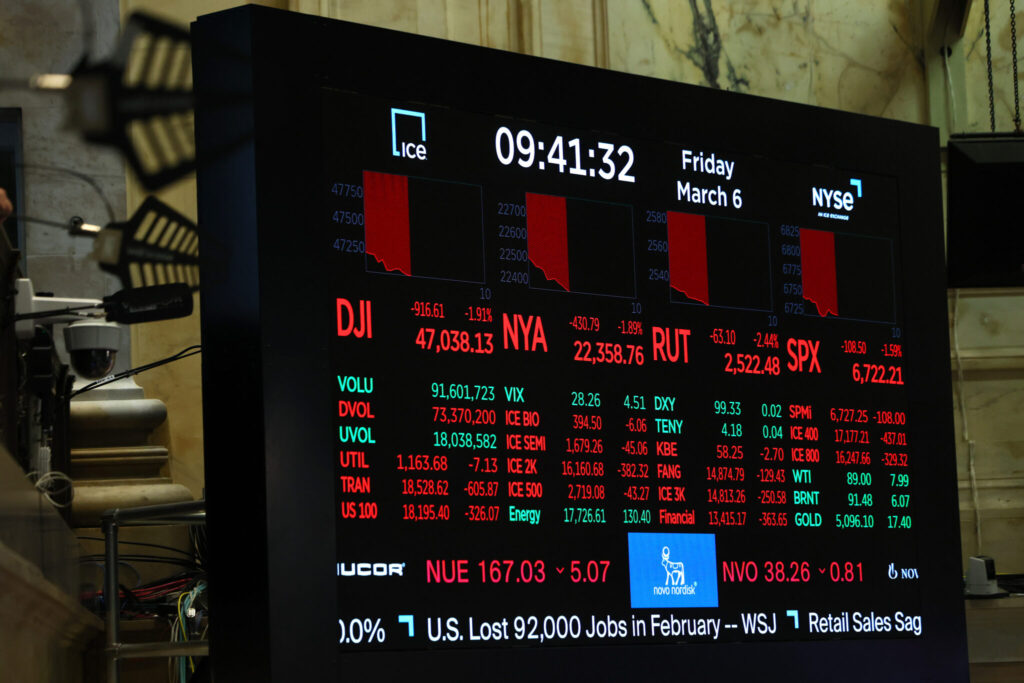
The unexpected job report, coupled with uncertainty due to the war in Iran, caused a downturn in U.S. markets, as noted in a market update from the New York Stock Exchange. While economists had predicted a February job gain of around 59,000, the current figures are a stark contrast to January’s 130,000 job increase.
Trump officials project optimism
Despite negative headlines, the administration attributes the weak report to February’s harsh weather and a strike by Kaiser Permanente workers. Labor Secretary Lorie Chavez DeReemer stated that the massive tax and spending cuts enacted in July are beneficial for the economy.
Kevin Hassett, director of the White House National Economic Council, told CNBC that averaging job numbers over a few months could provide a clearer picture, noting that immigration decreases are leading to “break-even employment.”
No growth
Economists warn that the jobs report contributes to a grim economic outlook. Daniel Hornung from Stanford Institute of Economic Policy Research noted complications for the Federal Reserve’s efforts to manage unemployment and inflation, particularly with inflation remaining high and oil price shocks looming.
David Kelly, JPMorgan Asset Management’s chief global strategist, described the report as “weak.” He told CNBC that the economy shows no job growth, with immigration drops keeping unemployment rates stable despite a slow economy.