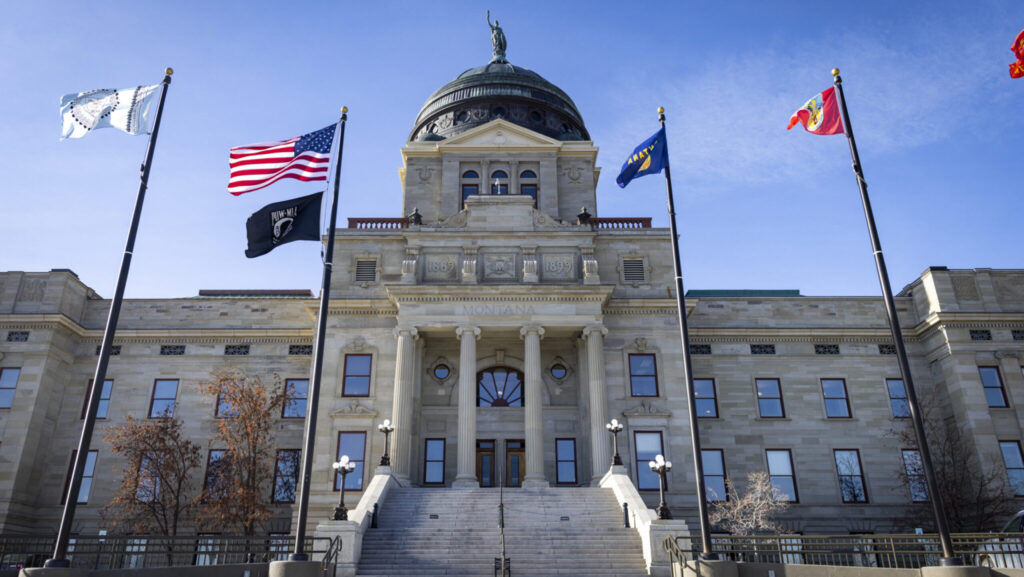
President Donald Trump’s executive order has raised questions about state-level artificial intelligence laws, like those recently enacted in Montana. The Montana state legislature passed several laws addressing the rapidly advancing field of AI, including regulations on generative AI and its use in elections and government operations.
Despite the executive order’s potential impact, Montana lawmakers urge caution, emphasizing the importance of local control. “They voted for us to go to the legislature and pass laws that are in their best interest,” said Rep. Jill Cohenour, a Helena Democrat. The order tasks the U.S. Attorney’s Office with reviewing state AI laws, stating that a national policy framework is essential for maintaining U.S. global AI leadership while warning that some state laws might hinder innovation.
Additionally, the order targets the Broadband Equity Access and Deployment (BEAD) program, part of the Infrastructure Investment and Jobs Act under President Joe Biden, which has allocated substantial federal funds to improve connectivity in Montana. However, some projects face challenges, including issues with fiber optic companies and railroad companies. Under Trump, BEAD now includes contracts with Amazon and SpaceX for satellite internet, both utilizing AI technology.
State Sen. Daniel Zolnikov, a Billings Republican, advises patience amid the executive order’s uncertainty. Critics, like the Alliance for Secure AI, argue the order might pressure states by potentially cutting BEAD funds to enforce federal AI preferences. A letter signed by 280 state lawmakers opposes federal preemption of state AI laws, fearing it would stifle legislative debate. Cohenour, among the signatories, emphasizes the importance of state-level action in the absence of federal guidelines.
Montana’s AI laws, such as Senate Bill 212, the Right to Compute Act, and House Bill 514 on personal rights, have bipartisan support. The state is also tackling election deepfakes with Senate Bill 25, highlighting the need for tailored policies. Sen. Shane Morigeau, a Missoula Democrat, stresses the need for federal collaboration that considers Montana’s unique needs, ensuring AI advancements don’t turn into a “Wild West” scenario.