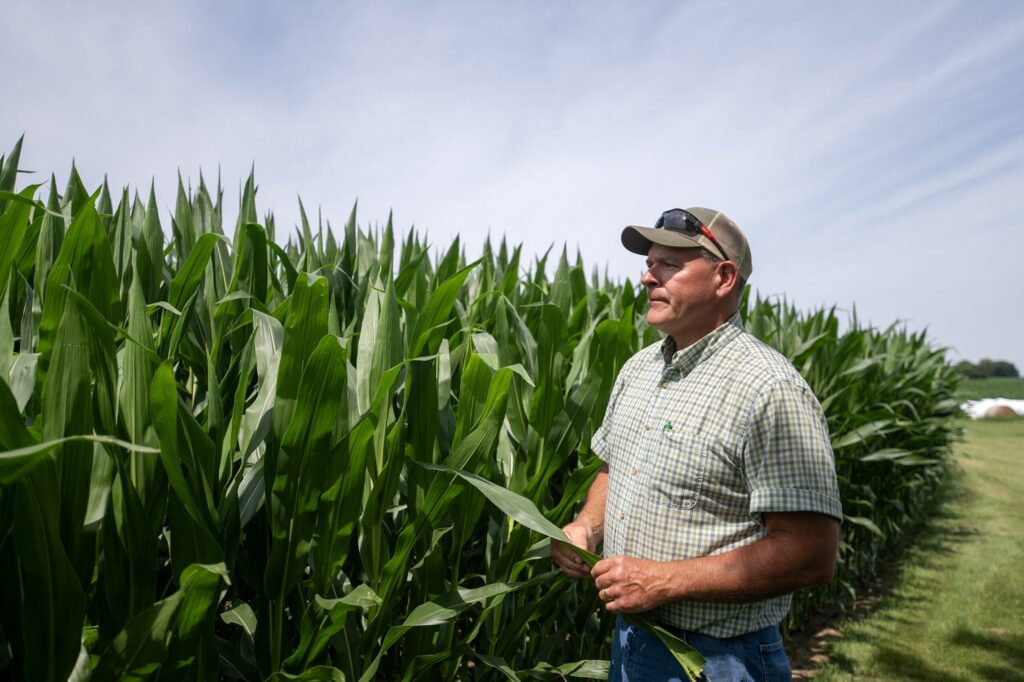
In the heart of southern Wisconsin, Pat Mullooly’s farm stretches across vast fields of green corn, a testament to generations of agricultural dedication. As the sixth-generation owner, Mullooly now faces an unpredictable future where nature and economics collide.
“Now, the crop is a little bit in Mother Nature’s hands,” Mullooly remarked about the current state of his farm operations, which lie just north of Illinois. Despite successful yields in past years, uncertainty looms as he notes, “Sitting here today, our crop doesn’t appear to be as good as last year. That’s the risk we take.”
This sentiment is echoed across many Midwest farms grappling with persistent economic challenges that draw parallels to the notorious 1980s farm crisis. During that era, a combination of falling crop prices, plummeting farmland values, and escalating debt led to the downfall of an estimated 300,000 farms.
Today, U.S. corn and soybean profit margins have remained negative over the past two years, according to the U.S. Department of Agriculture. Rising production costs, fueled by the ongoing conflict in Iran, are expected to exacerbate the situation further, impacting fertilizer and fuel prices.
Federal Safety Net and Farm Debt
Despite these challenges, there are key differences from four decades ago, says Seth Meyer, agriculture economist at the University of Missouri’s Food and Agricultural Policy Institute. Unlike the 1980s, farmers now have access to crop insurance and federal programs such as Agriculture Risk Coverage and Price Loss Coverage. Meyer notes, “It won’t keep people from exiting. It’s an attempt to make a more orderly result. So folks aren’t knocked out by one bad situation, some of which is out of their control.”
The federal government’s role has expanded with substantial financial interventions. In late 2024, Congress approved $10 billion in direct payments to farmers, followed by an additional $12 billion announced by the Trump administration.
Interest rates have posed another hurdle, climbing from 3 percent during the pandemic to nearly 7 percent. However, Joe Springer of Compeer Financial asserts that today’s rates are still manageable compared to the approximately 20 percent seen in the ‘80s.
Springer also highlights that many farms entered the current downturn with less debt due to the prosperous period from 2020 to 2022. “We’re coming off of record years, where our row crop producers made more money than maybe they ever had in their careers,” he shared, though he acknowledges these profits are now dwindling.
As Mullooly and his fellow farmers navigate these complex challenges, the future remains uncertain. Yet, with strategic planning and cautious optimism, they hope to weather the economic storm and anticipate a more prosperous horizon.