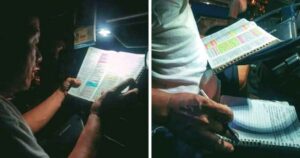
In a digital age where technology permeates classrooms, one teacher in Fort Worth is charting a different course. Chanea Bond, an educator at Southwest High School, has reverted to traditional methods, emphasizing pen and paper over laptops to foster genuine learning experiences.
Bond’s classroom is a testament to this analog approach, with students dedicating time to journaling and submitting handwritten assignments. “If you walk into almost any one of my classes today, you will see that all of my students are handwriting,” Bond explains, highlighting her focus on developing her students’ writing skills.
Her decision stems from a desire to mitigate the influence of generative artificial intelligence in her American literature and composition classes. Bond asserts, “I know that when my students leave my class that they know how to think and they know how to write.”
While many educators are integrating AI into their teaching strategies—60% according to a July 2025 EdWeek Research Center poll—Bond initially experimented with AI but found the results lacking. Her students struggled to engage deeply with texts when AI was involved, prompting her to question the value it added to the learning process.
Embracing the Analog Teaching Method
Bond’s methodology involves a hands-on approach to writing, beginning each class with journaling to build students’ confidence and familiarity with their own writing voice. “I like to give them low stakes opportunities to start cultivating what they want to say and how they want to say it,” she notes.
The process-oriented grading system she employs further discourages reliance on AI, as students are assessed on various components of their assignments, from thesis development to bibliographies. Bond believes this comprehensive approach ensures authentic student engagement.
Computers are seldom used, except when students type their final essays. This method, Bond believes, ensures that students gain essential skills without shortcuts.
Student Perspectives on the AI-Free Zone
Initially skeptical, junior Meyah Alvarez now appreciates Bond’s insistence on handwritten work, noting, “I feel like it actually does get my brain thinking.” The interactive nature of Bond’s assignments has turned literature into one of Alvarez’s preferred subjects.
The sentiment is shared among Bond’s students, who recognize the value of focusing on personal insights rather than AI-generated content. Sophomore Eligh Ellison, who has used AI for brainstorming, appreciates the opportunity to develop his own ideas in Bond’s class.
Even students who have used AI in Bond’s class, like T, a junior, have learned valuable lessons. After using AI for a bibliography, T realized the importance of genuine effort and critical thinking in learning.
Alternative Views on AI in Education
Not all educators share Bond’s perspective. Brett Vogelsinger, an English teacher in Pennsylvania, embraces AI as a tool to enhance learning, teaching students to discern between beneficial and detrimental uses of the technology.
Vogelsinger allows AI in certain assignments, provided students transparently document its use. He emphasizes the experimental nature of AI integration in education, a sentiment echoed by the federal and local initiatives aimed at promoting AI in classrooms.
In contrast, Bond remains cautious, prioritizing foundational skills over technological integration. “It’s less harmful to me to make sure that they can do the things without the AI,” she asserts, underlining her commitment to developing her students’ critical thinking abilities.