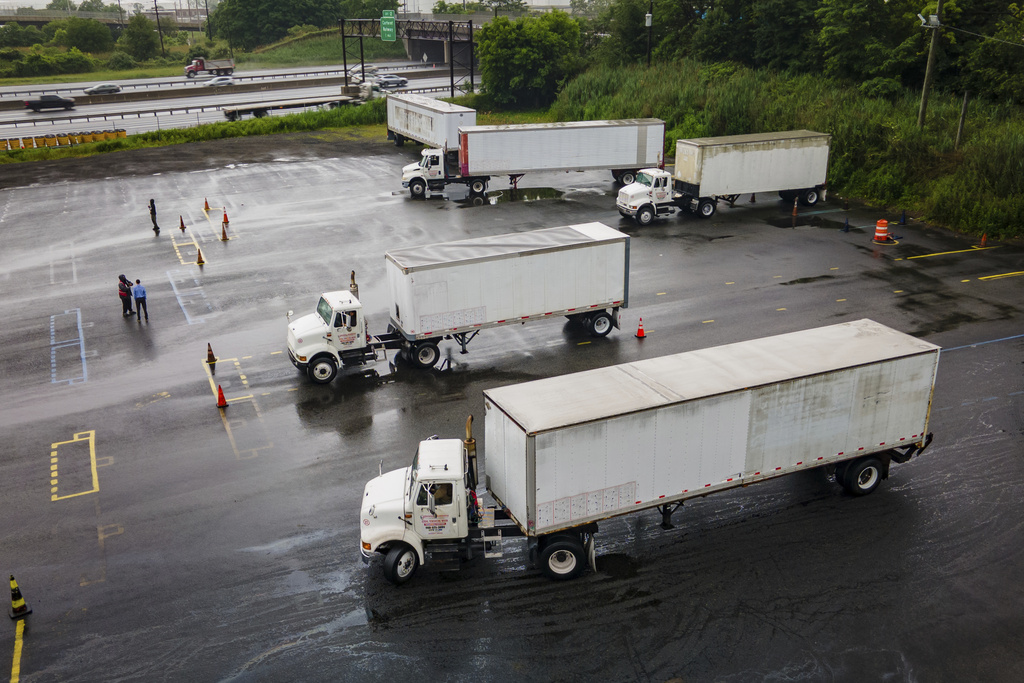
The long-haul trucking industry in the U.S. is set to undergo significant reforms, according to recent announcements by Transportation Secretary Sean Duffy. These initiatives, which include changes to regulations and new pilot programs, are being hailed by Wisconsin trucking companies as a much-needed reprieve from the industry’s ongoing struggles.
Key elements of the reform include increased funding for truck parking, the withdrawal of a proposed speed limiter rule, and a crackdown on illegal double-brokering. These measures align with President Donald Trump’s executive order emphasizing stricter enforcement of English proficiency requirements for truck drivers.
Industry Leaders React to Policy Changes
Dan Johnson, president and CEO of the Wisconsin Motor Carriers Association, highlighted the challenges faced by the industry in recent years. Speaking on WPR’s “Wisconsin Today,” he noted the slow recovery from a freight recession post-pandemic. “The last couple of years have been a little difficult for some of our trucking companies in Wisconsin,” he stated. “But we are optimistic that things will start to improve.”
Pam Polyak, owner of Polyak Trucking in Lisbon, expressed optimism about the government’s response to truck drivers’ concerns. “I’m very excited for some of the new things that Sean Duffy has put out already, and he’s kind of hinting at more to come,” she commented.
Regulatory Flexibility and Innovative Programs
The package introduces regulatory changes designed to eliminate blanket mandates. One notable change is the withdrawal of a proposed rule requiring speed limiters on trucks, which Johnson criticized for potentially causing congestion. “Driving too slow can also be a problem,” he explained.
Moreover, pilot programs are set to offer more flexibility in drivers’ working hours, including a “pause clock” feature to accommodate delays and rest periods. Johnson emphasized that safety will not be compromised by these adjustments, saying it allows drivers to make decisions based on their own needs.
Addressing the Truck Parking Dilemma
A significant part of the reform is the allocation of $275 million for truck parking, an issue Johnson described as critical. The shortage of safe parking spaces forces drivers to stop in unsuitable locations, potentially disrupting the supply chain. Wisconsin is already enhancing its facilities, such as increasing truck parking at a rest stop near Sparta.
Most of the funds, $180 million, are designated for Florida, with the remainder available to other states through grants.
Combating Freight Fraud
Freight fraud, including the activities of “ghost carriers,” is another area targeted by the new measures. Polyak Trucking has experienced such fraud, where carriers vanish after receiving payment. The reforms propose tightening registration requirements, including identity verification through facial recognition.
Polyak believes these changes could significantly reduce the prevalence of ghost carriers. “I think that could be a huge win for the industry,” she said.