Electricity Demand and Rates Surge in Nebraska Amid Data Center Boom
Nebraska, like much of the United States, is grappling with a significant increase in electricity demand and prices. A major factor contributing to this surge is the rapid expansion of data centers, which are projected to consume nearly half of the electricity provided by Omaha Public Power District (OPPD) by 2035.
Data centers accounted for just 1% of electricity consumption from OPPD in 2018. This figure rose to 21% by 2024 and is expected to reach 41% by 2035. However, OPPD Chief Financial Officer Brad Underwood emphasizes that data centers are not the sole drivers of increased demand.
“You have school systems expanding. You have medical facilities expanding. You have other box store growth. On the larger commercial side of things, you have communities and towns that are growing, whether it be Bennington or Gretna or other towns that are growing in our Greater Omaha area. And so we’re really trying to make sure we rise to the demand of the totality of the customer growth,” Underwood stated.
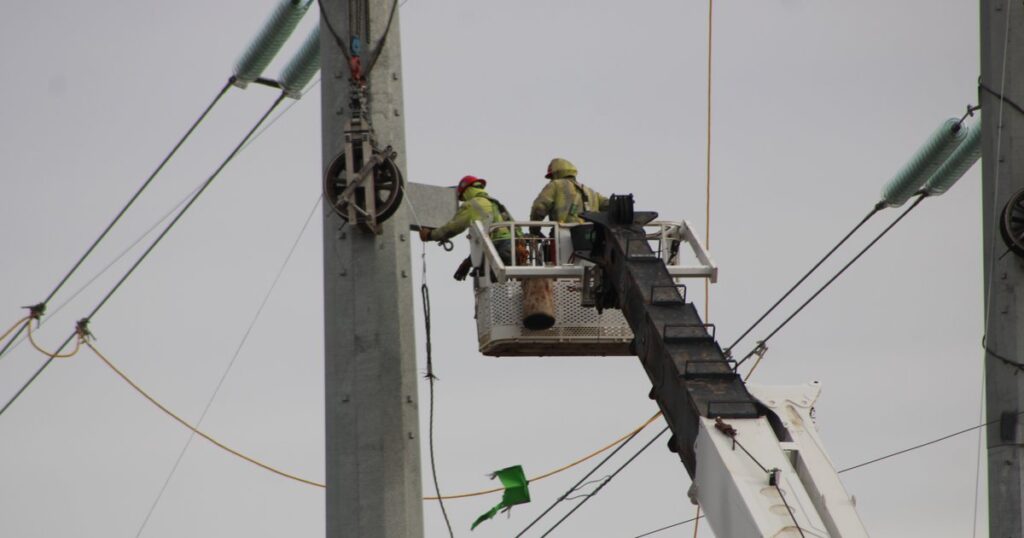
To address this growing demand, extensive developments are underway, including the construction of generators producing a total of 450 megawatts at the Turtle Creek generating station in Sarpy County, with plans for an additional 225 megawatts, and another 675 megawatts in Cass County. Meanwhile, Lincoln Electric System (LES) is adding 100 megawatts of generating capacity in Lincoln.
The ambitious expansion projects coincide with a period of rising electricity rates. After maintaining stable rates for 11 years, Nebraska Public Power District (NPPD) increased rates by 2% for 2025, with a further 3% hike anticipated next year. Lincoln Electric System, after a five-year rate freeze, has seen increases exceeding 15% since 2023. OPPD, too, has experienced a 20% retail rate increase since 2021 after holding rates steady for five years.
Despite the rising cost, Underwood refutes claims that data centers are the primary cause of increased residential rates. “The cost of service is a methodical process that we use, that others in the industry use, to make sure that cost-causers are cost-payers, and we get the right cost recovery from the right customer,” he explained.
Underwood highlighted additional reasons for the rise in residential rates, including service improvements and infrastructure enhancements. “We’re offering residential customers service improvements. We’re burying overhead customer lines. We’re building out substations to ensure new communities are growing. We’re trimming more trees. We have a new outage map. We’re hardening infrastructure. All of those things are part of our cost to serve,” he noted.
OPPD’s residential rates are set to climb 6% next year, while industrial rates will see a more significant increase of 8.9%. Similarly, LES Vice President for Power Supply Jason Fortik pointed to factors beyond data centers impacting rate increases.
LES’s demand growth, historically at .4% annually, is now accelerating to 2.7% per year with new large-scale loads such as a Google data center. However, Fortik emphasized that the 2021 winter storm Uri, which led to power outages in Texas and Nebraska, has increased reserve requirements for utilities’ generating capacity, having a more substantial impact than growing demand.
“Far and away, the bigger impact came from our generators getting a lower rating. That’s really the driver for us on why we’re needing to add generation and do some things to improve the performance of our existing generation,” Fortik commented.
Fortik attributed 2025’s mid-year rate increase of 4% to these reserve requirements, while next year’s 3% increase is due to inflation and other routine factors.
Despite these challenges, Nebraska’s electricity rates remain below the national average. As of September, Nebraska’s rates averaged just over 10 cents per kilowatt hour, compared to the national average of 14 cents, according to the U.S. Energy Information Administration.
While other states have seen political backlash due to rising electricity prices, NPPD’s Kent believes that Nebraska will experience milder increases. “We will see increased costs as we move into the future. Again, it’s kind of the difference in timing a little bit there, but I believe it will be to a lesser extent than what you’re seeing nationally,” he stated.