Michigan Schools Await State Support for Literacy Improvement
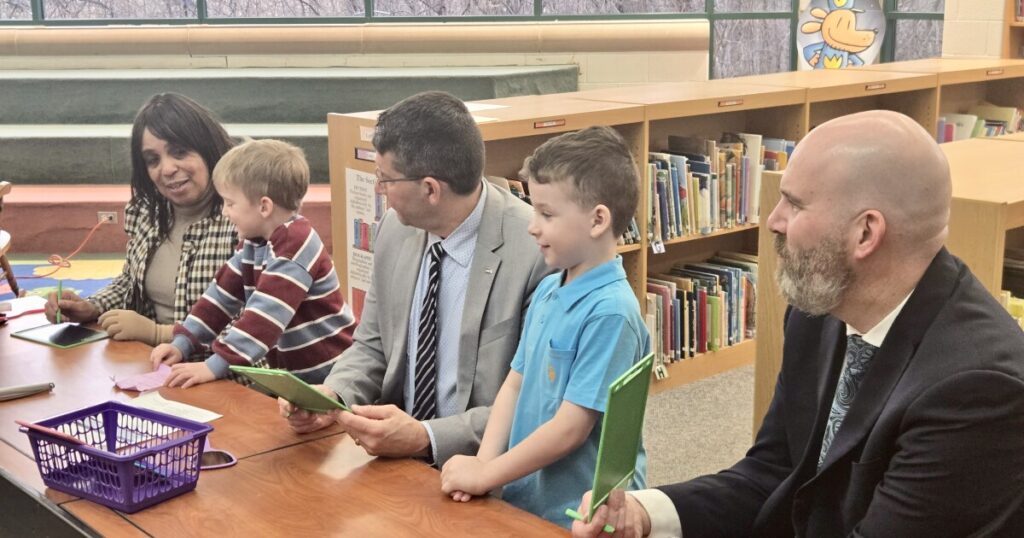
In Michigan, the advancement of children’s literacy may hinge on the level of support schools receive from the state in the upcoming budget cycle. This was emphasized by state officials during a recent gathering at an elementary school located in Waterford Township, near Detroit.
Governor Gretchen Whitmer has highlighted literacy as a crucial focus for her last year in office. Concerns have mounted following the revelation that Michigan’s fourth-graders ranked among the lowest nationwide in recent reading assessments. The governor’s proposal includes an allocation of $625 million to enhance literacy initiatives, aiming to procure updated learning materials, increase the number of tutors, and train educators through the Language Essentials for Teachers of Reading and Spelling (LETRS) program.
Dr. Beverly Walker-Griffea of the Michigan Department of Lifelong Education, Advancement, and Potential stressed the shared responsibility in elevating children’s reading skills. “If we don’t work together to have this continuum, this playbook, where are we going to be economically, in our communities, in our families, as well as the state?” she stated during the press conference.
The Waterford School District has already implemented LETRS training for its teachers, reportedly leading to improved outcomes in the classroom. State Superintendent Glenn Maleyko has expressed his commitment to supporting statewide training efforts, emphasizing the governor’s budget provision for funding this initiative. “We’re not talking about an unfunded mandate here. We’re talking about a mandate with funding the governor has put in her executive budget to make this happen,” he affirmed.
The budget proposal includes a $50 million allocation over five years specifically for LETRS training. However, securing legislative backing is necessary, particularly from figures like Representative Tim Kelly, who plays a key role in the education budget process. While Kelly endorses the teacher training aspect, he questions other financial allocations, advocating instead for more stringent accountability measures for educators and the potential retention of students not meeting third-grade reading standards.
Discussions are also underway regarding legislative measures that would mandate specific literacy training in teacher certification programs. Representative Kelly noted that a related bill is likely to surface in committee discussions shortly.
As the legislative process unfolds, both chambers are anticipated to unveil their budget proposals for Fiscal Year 2027 later this spring, with a final budget expected by 2026.